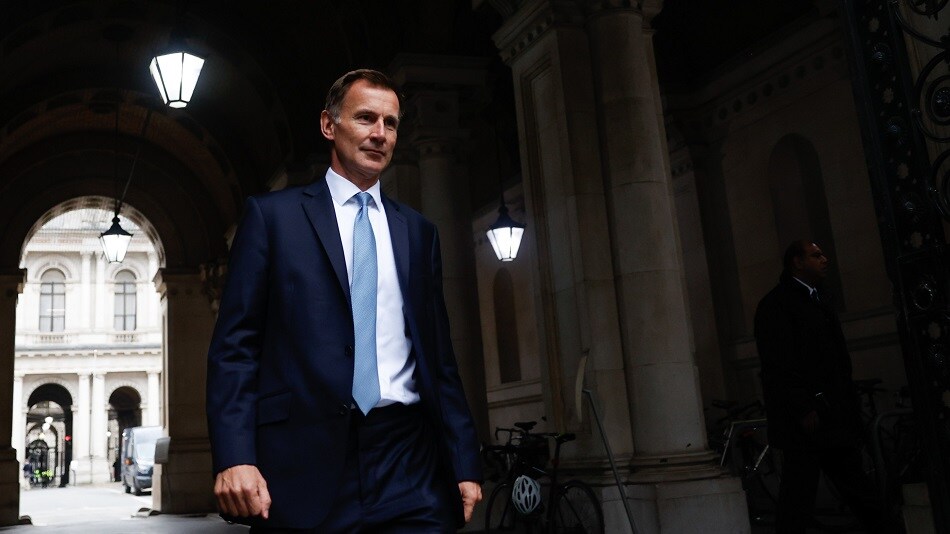
(Bloomberg) -- UK Chancellor of the Exchequer Jeremy Hunt will have about £10 billion ($12.3 billion) less for public services or tax cuts in his autumn statement this month as a result of the Bank of England selling off government bonds it bought under quantitative easing, according to economists.
The warning shows how choices made by the BOE are creating a fiscal straitjacket for Hunt at a time when he has little room to deliver the tax cuts that many in his beleaguered Conservative Party want ahead of a general election expected next year.
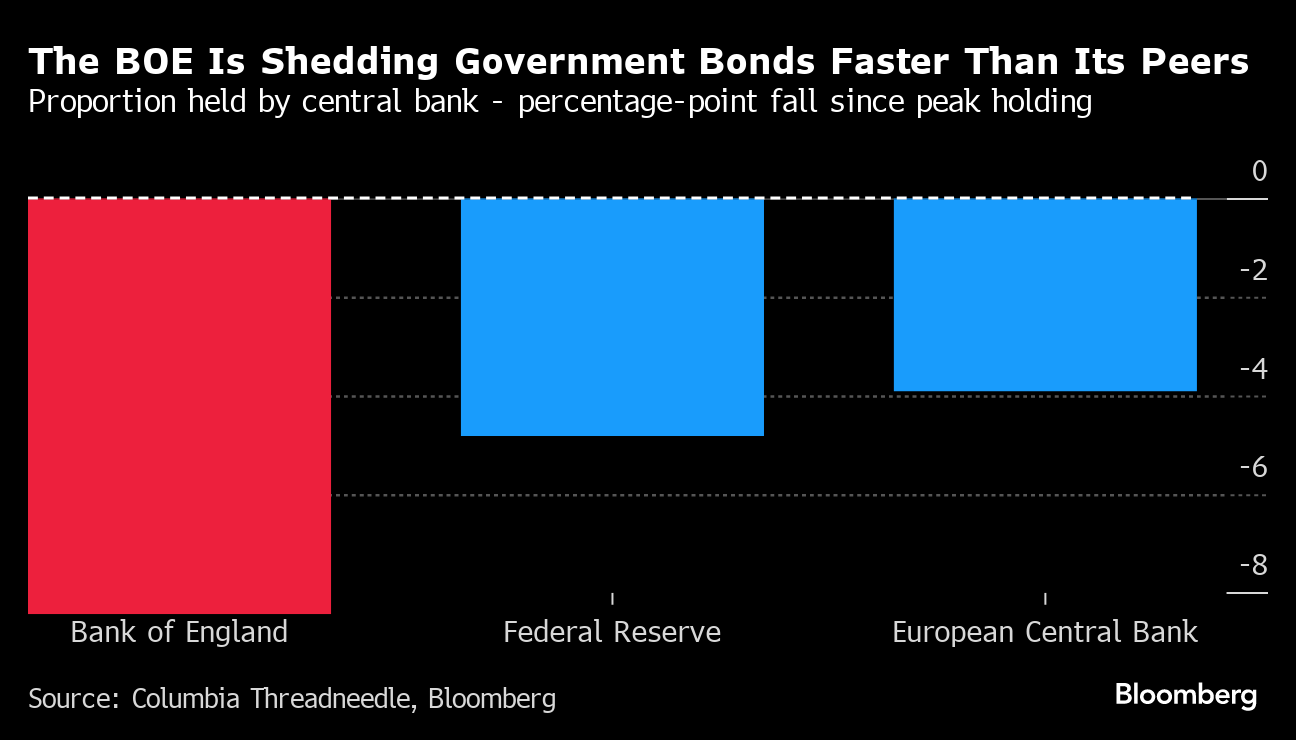
No other Group of Seven central bank is doing active bond sales as part of so-called quantitative tightening. Instead, they are opting to shrink their balance sheets by allowing securities they hold to mature and roll off.
Calculations by Oxford Economics and Deutsche Bank show that on balance losses due to gilt sales will amount to £10 billion in 2028-29 — the year fiscal rules require the national debt burden to be falling — relative to letting bonds run off naturally. Under a government indemnity, the taxpayer has to cover the losses.
Michael Saunders, a former BOE ratesetter and now senior policy advisor at Oxford Economics, said: “There is a direct read-across from sales to the fiscal position.”
He said the chancellor should exclude the program from his debt target entirely on the grounds that the losses are a crisis cost that is now distorting economic planning.
The BOE bought £895 billion of bonds between 2009 and 2021 to stimulate the economy during the financial crisis and the pandemic once interest rates had been cut as far as they could go. That generated a huge £124 billion windfall for the Treasury that previous chancellors spent.
High interest rates have since reversed the flows and the government now faces £300 billion of losses over 10 years, BOE analysis shows. That's added to public criticism of a program blamed by some politicians and economists including former BOE Governor Mervyn King for inflating prices and assets and widening social inequalities.
Hunt has played down the prospect of tax cuts in his Nov. 22 economic statement, angering many Conservatives as Prime Minister Rishi Sunak's party trails far behind the Labour opposition in opinion polls.
He is also being urged by economists to lift investment and fix public services, which are creaking after years of spending restraint with prisons full, schools crumbling and National Health Service backlogs near record highs.
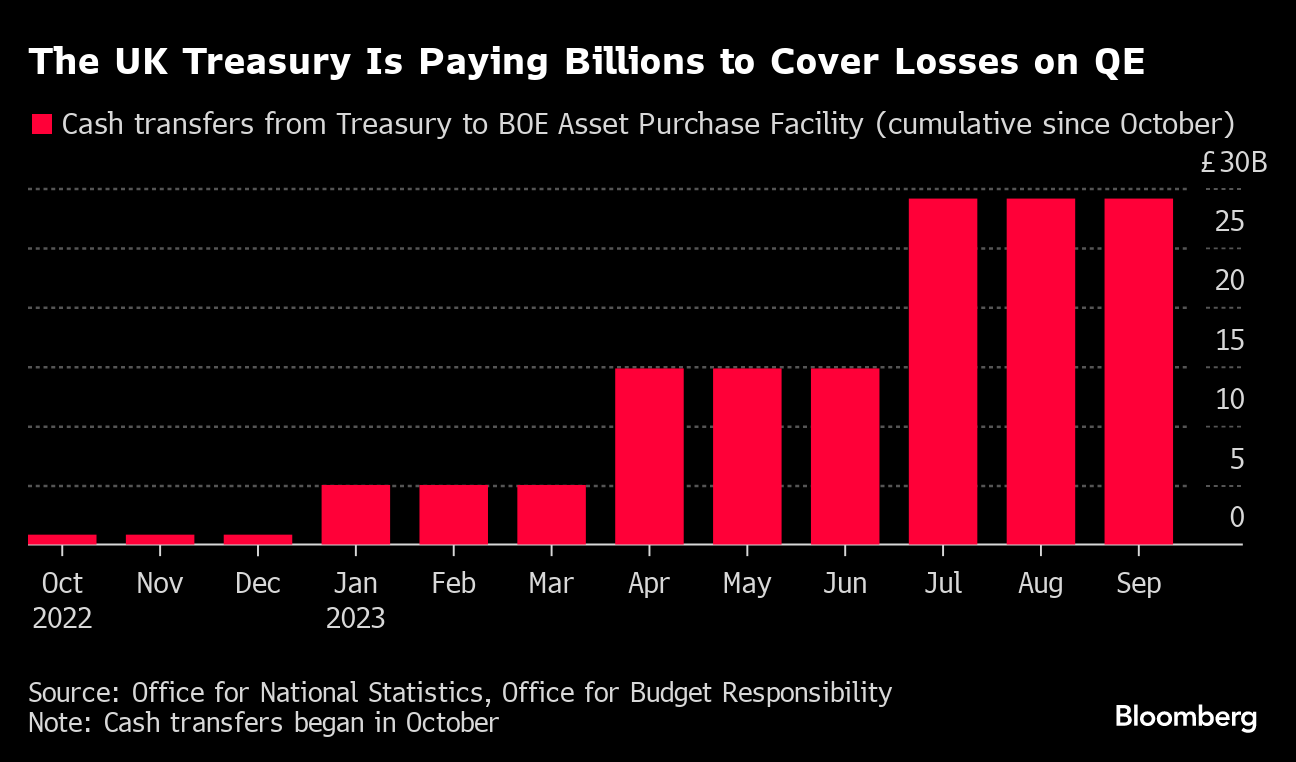
To demonstrate the impact the QT program is having on the public finances, Saunders said the chancellor would have met his debt-reduction rule with one year to spare at the March budget, had the losses been excluded.
Instead, Hunt was judged to have just £6.5 billion of headroom, the smallest ever, in the final year of the forecast. The Resolution Foundation think tank estimates the headroom will be £13 billion in the autumn statement, which would still be historically low.
The fiscal constraint meant Hunt had to limit his “full expensing” tax relief on capital investment to three years, rather than deliver the permanent scheme he wanted. The Office for Budget Responsibility said a permanent scheme would have been growth enhancing.
Losses on BOE bond holdings are unavoidable at high rates but the decision to undertake active sales has brought those losses forward.
For 2028-29, Deutsche Bank Chief UK economist Sanjay Raja estimates active sales will create £15 billion of losses. Saunders estimates the cost will be a little bit more. These figures are partially offset by reduced interest costs on a smaller stock of bonds than if the program was left to run off.
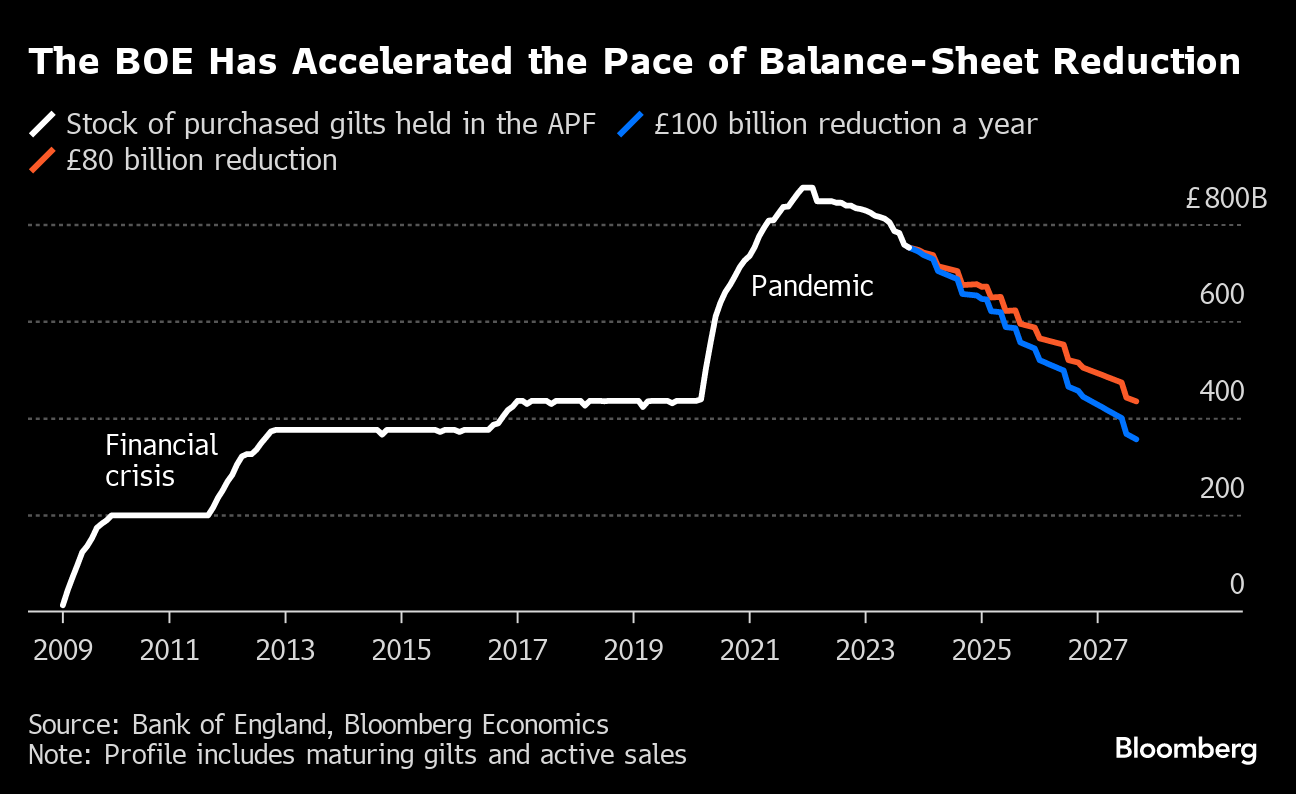
In September, the BOE decided to increase the pace of annual gilt reduction, through both sales and maturities, from £80 billion to £100 billion a year. That creates an extra £5 billion of losses a year over the next parliamentary term, according to the central bank.
The BOE is pursuing QT more aggressively than other central banks to get rid of the government indemnity, which has posed questions about the BOE's independence. Saunders said fiscal considerations “create strong incentives for the Treasury to influence monetary policy committee decisions on the pace of rundown.”
Andrew Hauser, BOE Executive Director for Markets, said last week that running QT “down to zero,” which would remove the indemnity so “the Bank of England is standing on its own two feet again,” is “exactly my personal first best. It would be in many ways a very good, a nice outcome.”
He added that it was a decision for the Monetary Policy Committee. The BOE declined to comment further.
--With assistance from Irina Anghel.
More stories like this are available on bloomberg.com
©2023 Bloomberg L.P.
Essential Business Intelligence, Sharp Market Insights, Practical Personal Finance Advice, Daily Fuel, Gold and Silver Prices and Latest Stories — On NDTV Profit.