US wholesale inflation decelerated in July from a year earlier by more than estimated, helped by a further decline in energy and food costs.
The producer price index rose 4.7% from July 2025 after a 5.5% annual increase in June, according to Bureau of Labor Statistics data out Thursday. On a month-over-month basis, the PPI was unchanged.
ALSO READ: India In Regular Contact With US On Bilateral Trade Agreement, Says Commerce Secretary
Excluding food and energy, producer prices climbed 4.2% from a year ago and 0.2% compared with June.
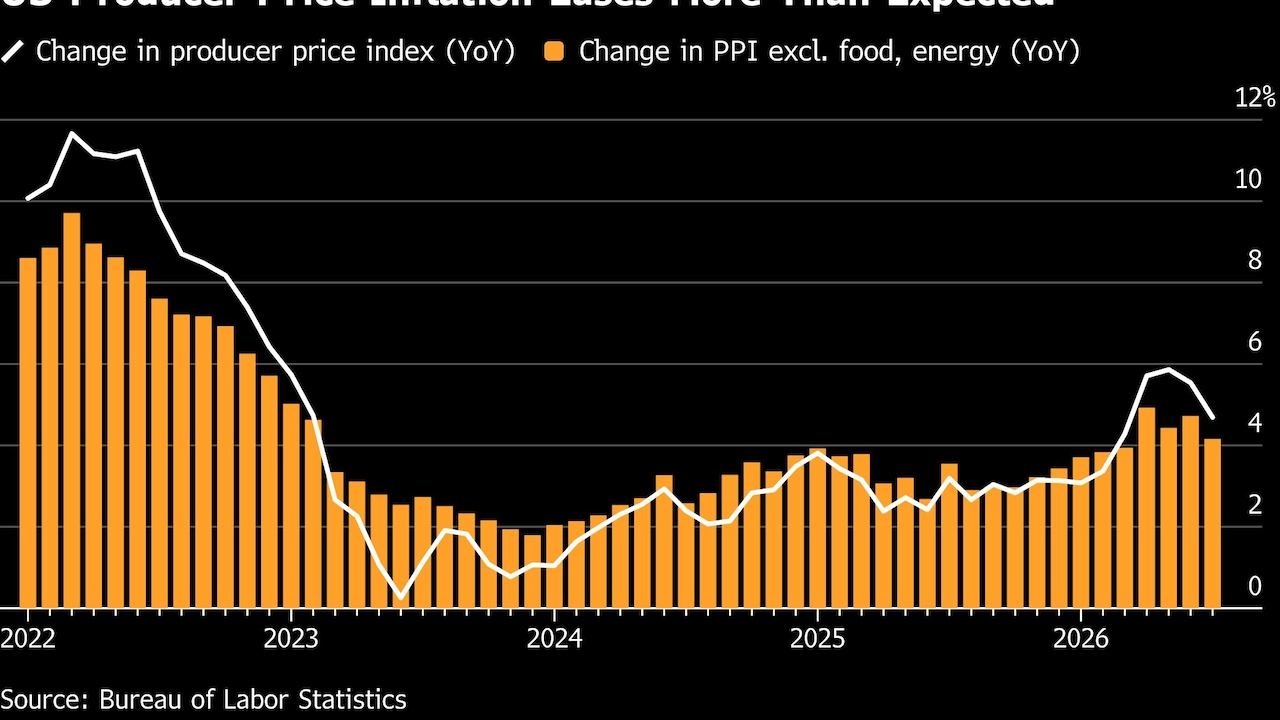
Photo Credit: Bloomberg
The PPI report follows consumer price data showing moderating inflation, adding to evidence that the initial war-driven energy shock is continuing to fade. That said, the recent flare-up in the Middle East is raising concerns about stubborn inflation.
Federal Reserve officials will have access to additional consumer and producer price data before their next policy decision in mid-September, as well as another report on the labor market. So far, policymakers are having to weigh lingering inflation pressures against a recent slowdown in hiring.
Energy prices declined 3.1% from June, the second straight decline, while food prices dropped by the most since the start of the year.
Several components of the PPI are also of particular interest to the Fed because they feed into its preferred inflation gauge, the personal consumption expenditures price index.
Those categories offered mixed signals. Portfolio management fees jumped by the most in more than a year, while hospital outpatient care also posted a big increase. Prices for physician care and hospital inpatient care were tame, while a measure of airfares slid by the most since early last year.
The Bureau of Economic Analysis is scheduled to release July PCE price data, along with income and spending figures, on Aug. 26. In the wake of the PPI figures, economists at Citigroup Inc., Morgan Stanley and Jefferies project a 0.2% advance in the July core PCE price index.
The PPI report also showed transportation and warehousing costs declined 1.8% in July, the most since April 2023 and adding to evidence that the impact from high fuel costs is diminishing.
At the same time, the report also showed ongoing price pressures from another source this year — data centers. The cost of electronic components and accessories was up a near-record 28% in July from a year ago. The price of computers and computer equipment increased a record 9.8% from a year earlier.
A measure of inflationary pressures earlier in the production process — prices of processed goods for intermediate demand excluding food and energy — rose the least since November.
Details in the PPI report on wholesale and retail trade services margins have also been under scrutiny for clues on the extent to which companies are absorbing tariff-related costs or passing them on to customers. In July, margins retreated slightly after jumping in the prior month.
ALSO READ: $5,000 Per Violation: This US State Permits Parents To Take Social Media Giants To Court
While many tariffs were struck down by the Supreme Court earlier this year, the Trump administration is seeking other routes to tariff imports. The White House has recently announced duties of at least 10% on imports from most major trading partners.
A separate government report out Thursday showed applications for unemployment benefits rose last week but remained at a low level. Data out last week suggested employment growth, however, is weaker than previously thought.
(This story has not been edited by NDTV staff and is auto-generated from a syndicated feed.)
Essential Business Intelligence, Sharp Market Insights, Practical Personal Finance Advice, Daily Fuel, Gold and Silver Prices and Latest Stories — On NDTV Profit.