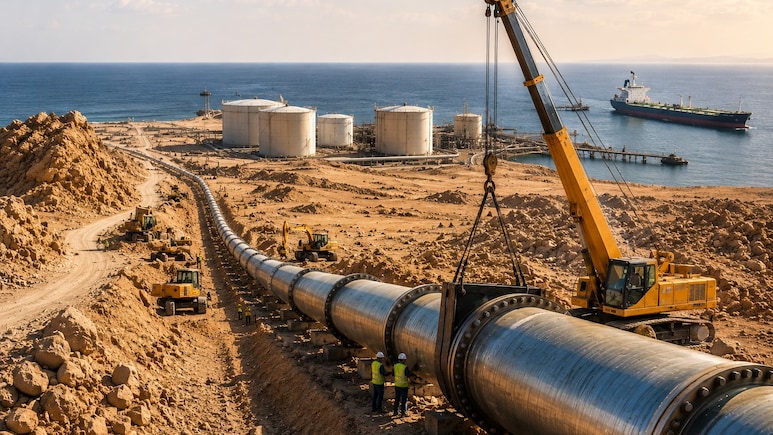
The United Arab Emirates has completed nearly half of a second pipeline designed to bypass the Strait of Hormuz, the chief executive officer of Abu Dhabi National Oil Company said on Wednesday.
The development came as the ongoing blockade of the world's most critical oil chokepoint continues to drain global energy supplies at a pace never seen before.
Sultan Ahmed Al Jaber, speaking at the Atlantic Council, said the new pipeline will double ADNOC's export capacity through Fujairah, a port on the Gulf of Oman just beyond the strait. The pipeline is expected to become operational in 2027.
Also Read | Layoffs Are Rising In Tech, But These Skills Are Helping People Unlock Better Pay
The announcement comes against the backdrop of one of the most severe energy crises in modern history. Iran has blockaded the Strait of Hormuz since early March, choking off oil and gas exports from the UAE and other Gulf producers.
More than one billion barrels of oil have been lost since the strait's closure, with nearly 100 million additional barrels lost every week it remains shut, reports suggest.
Al Jaber said it would take at least four months to ramp oil flows back up to 80% of normal levels even if the conflict ends immediately, and full normalisation of oil flows will not happen until the first or second quarter of 2027.
The context behind the crisis is stark. Iran blockaded Hormuz after the US and Israel launched a massive wave of airstrikes on Feb. 28, which killed top Iranian leaders including Supreme Leader Ayatollah Ali Khamenei. Before the war, roughly 20% of the world's oil supply passed through the narrow waterway daily.
The UAE does have an existing pipeline — the Abu Dhabi Crude Oil Pipeline — running to Fujairah, but it is estimated to handle only 1.5–1.8 million barrels per day, a fraction of what previously moved through Hormuz.
Al Jaber did not mince words about the geopolitical implications. "This is not just an economic problem," he said. "This sets a dangerous precedent once you accept that a single country can hold the world's most important waterway hostage."
The new pipeline, when complete, will offer the UAE a permanent workaround — but the world will be waiting until 2027 for it.
Essential Business Intelligence, Sharp Market Insights, Practical Personal Finance Advice, Daily Fuel, Gold and Silver Prices and Latest Stories — On NDTV Profit.