(Bloomberg) -- Finance Minister Naci Agbal said Turkey's budget deficit is likely to be wider than forecast this year as the government boosts spending to spur the economy, though the expansion won't hurt fiscal discipline.
The ratio of Turkey's budget deficit to gross domestic product may be as much as one percentage point higher than the government's target, Agbal said in an interview in Ankara on Thursday. Its medium-term program published in October forecasts a central government budget gap of 1.9 percent of GDP and a shortfall of 1.7 percent in the general state balance at the end of this year.
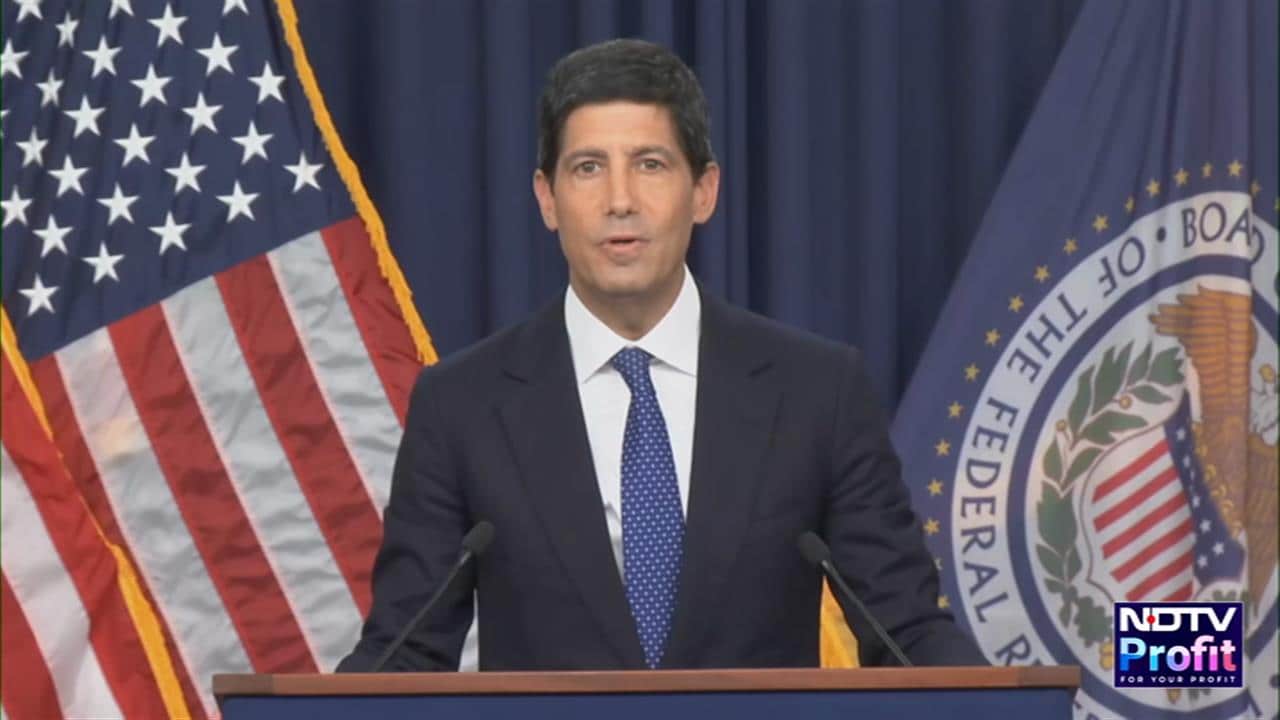
Naci Agbal on March 2.
Also Read | Layoffs Are Rising In Tech, But These Skills Are Helping People Unlock Better Pay
Agbal struck a balance between talking up the government's stimulus since July's failed coup and its positive impact on economic activity, while also emphasizing that it wouldn't undermine the country's long-term fiscal health. Increased spending, which is aimed more at investments than consumption, will be partly offset by higher-than-expected tax income in January, Agbal said.
“It is certain that these decisions we have made in the fourth quarter of 2016 or in 2017 will create upward pressure on this year's budget,” Agbal said. “As long as the budget gap is at manageable and controllable levels, a certain amount of increase will not hurt the perception of fiscal discipline.”
The lira traded 0.1 percent stronger at 3.7245 per dollar at 13:59 p.m. in Istanbul.
Fiscal discipline became a mantra for Turkish policy makers after a banking crisis caused a deep recession nearly two decades ago. Since then, successive governments led by then-Prime Minister Recep Tayyip Erdogan -- faced with warnings from international lenders -- curbed government spending. Even at times when investors considered Turkey's expanding current-account deficit to be unsustainable, the country's low debt stock and tight budgets have provided a source of stability.
One-Time
Most of the government's recent measures, including tax breaks and cheaper credit for non-financial companies, are one-time in nature and their impact on the budget will disappear by 2020, Agbal said. The government has some fiscal room due to previous years of keeping a tight grip on public finances, allowing for counter-cyclical measures, he said.
The International Monetary Fund said last month that Turkey's “strong fiscal position” was a key pillar of its economy's resilience to shocks.
“We recommend a fiscal loosening of about half a percentage point of GDP for 2017,” Antonio Spilimbergo, an assistant director at the fund, said following Article IV consultations. While a looser policy could be useful for a limited time, “it is very difficult to reverse fiscal measures in the medium term, so we do not recommend it,” he said.
Privatization
Turkey's privatization plan, a key source of central government income, will continue even though some assets up for sale have been transferred to the new sovereign wealth fund, Agbal said. The program is expected to yield more than 32 billion liras ($8.6 billion) through 2019. Ideally, sales would increase to between 0.5 percent to 0.7 percent of GDP, or as much as $6 billion a year, he said, though that isn't a government commitment.
The government is considering adding parts of the Turkish Standards Institution, a quality inspection body, to the list of assets for sale that already includes the state maritime agency, sugar factories and ports, Agbal said. More sales of state land will also boost revenue, he said.
Turkey has transferred some of its most-prized assets to the new wealth fund, including public holdings in Turkish Airlines and Ziraat Bank. But there are no such plans for state-backed lender Turkiye Vakiflar Bankasi, Agbal said.
To contact the reporters on this story: Benjamin Harvey in Istanbul at bharvey11@bloomberg.net, Firat Kozok in Ankara at fkozok@bloomberg.net, Onur Ant in Ankara at oant@bloomberg.net.
To contact the editors responsible for this story: Alaa Shahine at asalha@bloomberg.net, Stuart Biggs, Caroline Alexander
Essential Business Intelligence, Sharp Market Insights, Practical Personal Finance Advice, Daily Fuel, Gold and Silver Prices and Latest Stories — On NDTV Profit.