Central banks from Washington to London to Jakarta are about to make their first assessments of economic damage after more than two weeks of conflict between the US and Iran.
Decisions in the coming week encompassing every member of the Group of Seven and eight of the world's 10 most-traded currency jurisdictions are likely to confirm to investors that the specter of a new inflation shock is already worrying enough to prompt heightened caution.
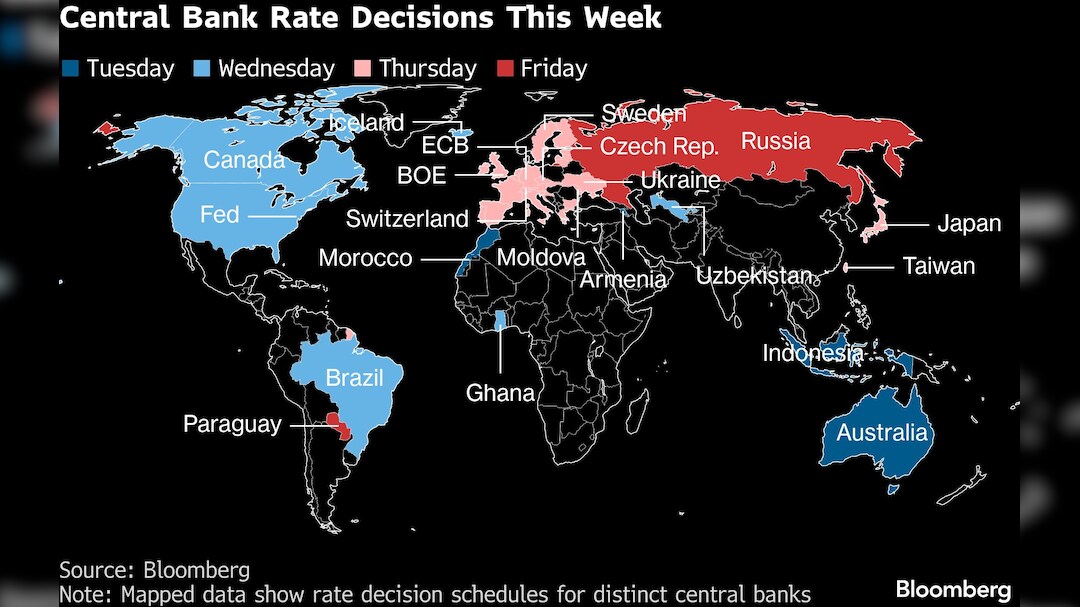
Photo Credit: Bloomberg News
Also Read | Layoffs Are Rising In Tech, But These Skills Are Helping People Unlock Better Pay
Interest-rate bets that fully anticipated easing in the US have eroded, while possible hikes in the UK and euro zone later in the year are now being priced in. Such shifts will force policymakers to explain the extent to which such wagers are justified.
What Bloomberg Economics Says:
“For the Fed, much depends on how the conflict evolves. If the war ends quickly, we expect the unemployment rate to edge higher and core inflation to cool, allowing rate cuts of about 100 basis points this year. If the conflict drags on, keeping energy prices high and pushing inflation expectations higher, the calculus becomes far more difficult.”
—Eliza Winger and Anna Wong, economists.
The Iran war is the second time in just over a year that US President Donald Trump's policies have collectively jolted global central banks, after his so-called Liberation Day tariffs in April attempted to rewire world trade. That experience of uncertainty and risk will ensure that policymakers' nerves stay taut in the months ahead.
US Federal Reserve
The Fed is widely expected to do exactly what everyone anticipated weeks ahead of their March 17-18 policy gathering: hold rates steady. But in recent days the narrative surrounding that hold — that it may comfortably endure for months — has been smashed by renewed tremors in the labor market and a war in the Middle East that's sent oil prices surging.
The combination puts the Fed's dual mandates in conflict, clouding the outlook for rates, at least for the near-term.
Market pricing: Money markets imply a 90% chance of a quarter-point rate cut in 2026, more likely than not from September onwards.
On Wednesday morning, while Fed officials are still meeting, the government will release another piece of the US inflation puzzle with the February producer price index. Economists see a smaller increase in the measure of wholesale costs than in January, when services prices jumped.
Other economic data over the coming week include February industrial production and January new-home sales.
European Central Bank
Officials in Frankfurt are widely anticipated to keep the deposit rate unchanged on Thursday. But the Middle East crisis has all but dislodged ECB policy from the “good place” that President Christine Lagarde and colleagues previously claimed to inhabit.
The spike in energy prices, which has spurred bets on rate hikes, puts the onus on the Governing Council to explain how inflation risks have shifted, along with clues on how close they are to meeting those market expectations.
Investors have seized on parallels between the current energy shock and the 2022 crisis following Russia's invasion of Ukraine, when the ECB stood out for its stubborn resistance to market pressure for higher rates. But while the central bank will strive to avoid a repeat of its mistakes, it's unlikely to rush a hike either.
Market pricing: Having only recently been settled on a year-long hold, traders are now betting the ECB will raise rates at least once in 2026. One quarter-point hike is fully priced from July onwards, and swaps imply a 70% chance of a second hike by year-end.Bank of Japan
The BOJ is widely expected to hold its benchmark rate steady on Thursday, while assuring markets that it remains on the path toward policy normalization.
Governor Kazuo Ueda is likely to emphasize the need to closely monitor developments given the country's heavy reliance on oil imports from the Middle East.
While sustained high crude prices could hurt Japan's economy, they would also add to inflationary pressures. Policymakers must additionally assess the risk of further weakening the yen if they strike an overly dovish tone. The currency on Friday slid to its lowest level against the dollar since 2024.
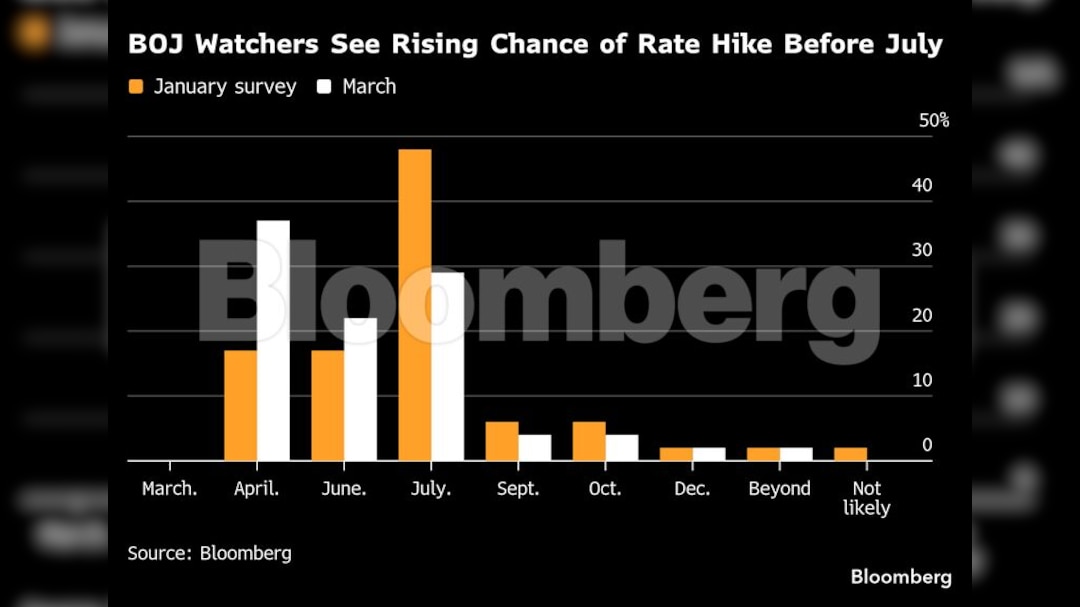
Photo Credit: Bloomberg News
Traders will parse the BOJ's statement and Ueda's remarks for clues, with investors keenly gauging the chances of a rate hike by April. The possibility of a move then hasn't been ruled out, people familiar with the matter said earlier this month.
Market pricing: Traders favor one quarter-point hike by July and price a 90% chance of a second increase by December.
Bank of England
A decision that appeared just last month to be tilted “50-50” toward a potential cut, according to Governor Andrew Bailey, is now highly likely to favor unchanged rates on Thursday.
Economists at ING and RSM UK reckon that inflation could rebound to more than double the central bank's 2% target if the recent jump in oil and gas costs proves enduring.
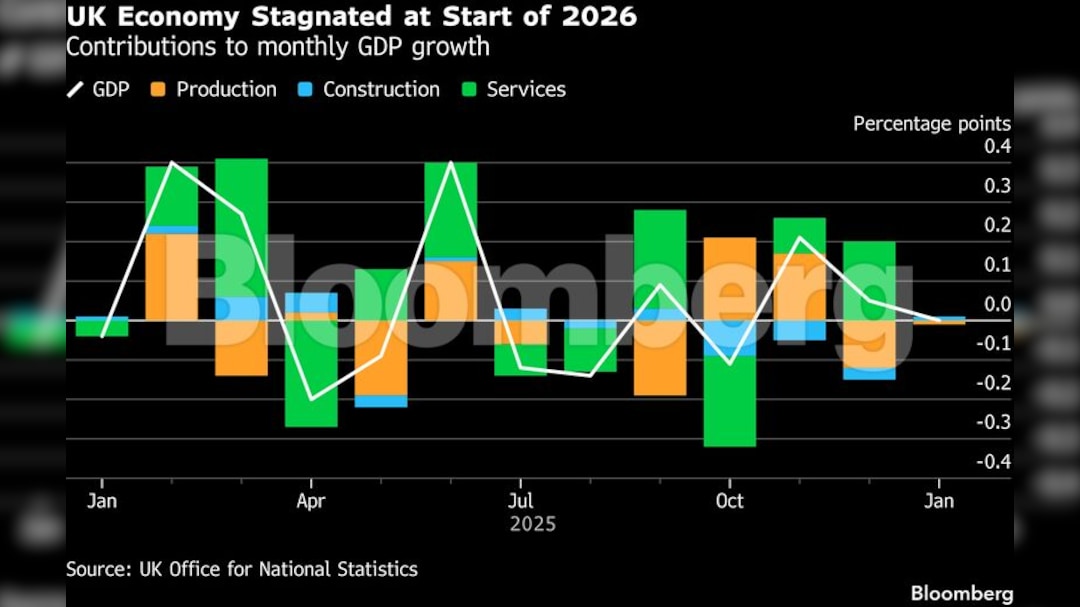
Photo Credit: Bloomberg News
Such risks are forcing officials to pivot toward vigilance about consumer prices, despite signs of sputtering growth even before the current energy shock. Data on Friday showed the UK economy unexpectedly failed to expand in January, threatening to undershoot the BOE's first-quarter forecast for gross domestic product to rise 0.3%.
Market pricing: Money markets imply a 60% chance the BOE will hike rates in 2026, most likely from July onwards. Before the US and Israel began airstrikes on Iran, and the rise in oil prices followed, two quarter-point cuts were fully priced by year-end.
Bank of Canada
Inflation data for February released two days before the Bank of Canada decision on Wednesday will provide policymakers with an important read on price pressures before the Middle East conflict pushed oil prices higher.
Also on their minds will be Friday's data that showed the economy lost more jobs during February than in any month over the past four years.
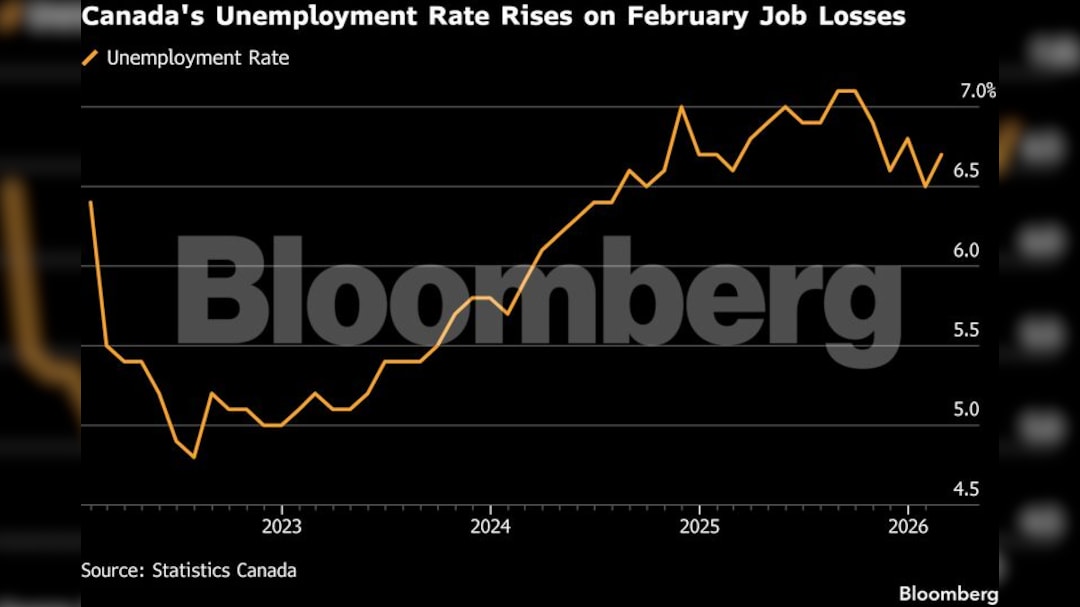
Photo Credit: Bloomberg News
With headline inflation hovering near the central bank's 2% target, markets expect policymakers to hold their policy rate at 2.25% on Wednesday, while watching Governor Tiff Macklem's news conference for signals on how the Iran crisis may affect the outlook.
Market pricing: A quarter-point rate hike in October is fully priced by money markets.
Swiss National Bank
The central bank's resolve to cap gains that pushed the franc to decade highs against the euro will draw close scrutiny at its first quarterly decision of the year on Thursday, after Swiss policymakers broke their usual silence to reveal increased willingness for intervention.
While any change in language on foreign exchange will be notable, economists are unanimous in predicting the rate will stay at zero, meaning that they judge the present juncture won't warrant the more drastic and economically harmful option of a return to negative borrowing costs.
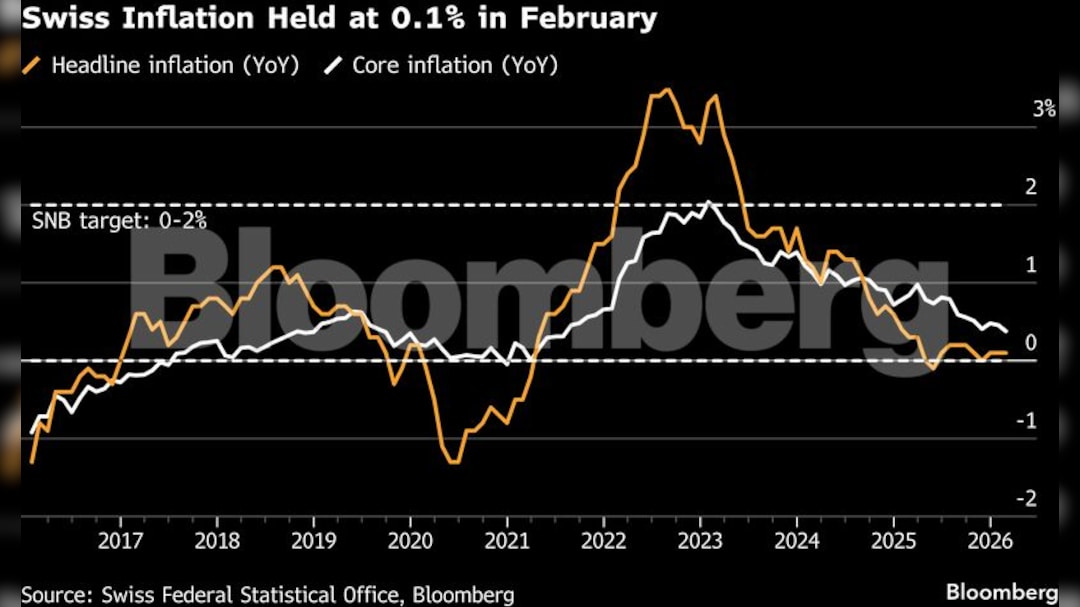
Photo Credit: Bloomberg News
The franc is a key focus for SNB officials because its gains weigh on already feeble inflation via lower import costs. Even so, the higher oil price could generate some price growth, mitigating pressure on them to act.
Market pricing: Swaps imply an 85% chance of a rate hike in 2026, priced from September onwards.
Riksbank
The Swedish central bank is widely expected to leave its benchmark unchanged at 1.75% on Thursday, in line with previous signals, as the economy continues to strengthen at the same time as inflation ebbs below the 2% target.
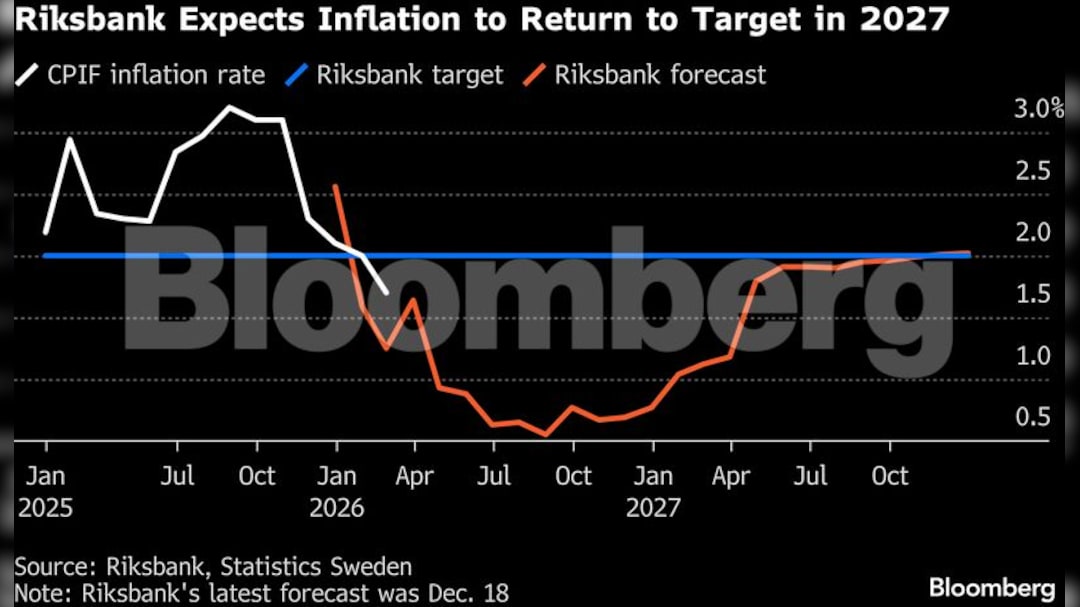
Photo Credit: Bloomberg News
New economic forecasts and a revised rate path will be in focus as investors look to see whether turbulence in the Middle East has caused policymakers to change their view that the next move will be a hike next year.
Market pricing: Traders assign a 50% chance to a 25-basis-point hike from June onwards.
Reserve Bank of Australia
Australian policymakers on Tuesday are due to set the cash rate, currently at 3.85%, with markets pricing a solid chance of a second consecutive increase.
The RBA last month became the first major developed-market central bank this year to lift borrowing costs, citing stubborn price pressures and excess demand in a supply-constrained economy. Since then, data have reinforced the picture of resilience, while the Iran war has heightened concerns about domestic price pressures.
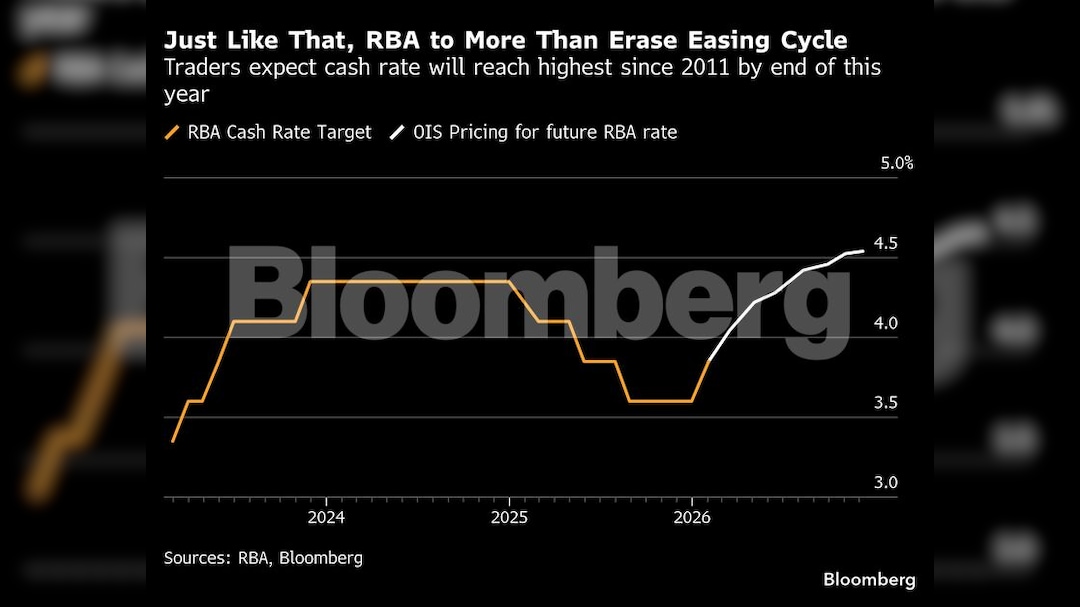
Photo Credit: Bloomberg News
Officials have the difficult task of assessing whether another hike would bolster credibility or risk tightening into an increasingly uncertain global backdrop. Markets will scrutinize the post-meeting statement as well as Governor Michele Bullock's press conference for signals on whether February marked the start of a renewed tightening phase.
Market pricing: Money markets are leaning toward three more rate hikes from the RBA in 2026, starting on Tuesday.
Brazil
Until the war in Iran broke out, Brazil's central bank had been all but certain to begin an easing campaign: policymakers in January signaled that a March cut was their base case, while disinflation and lower expectations gave them more than a little room for maneuver.
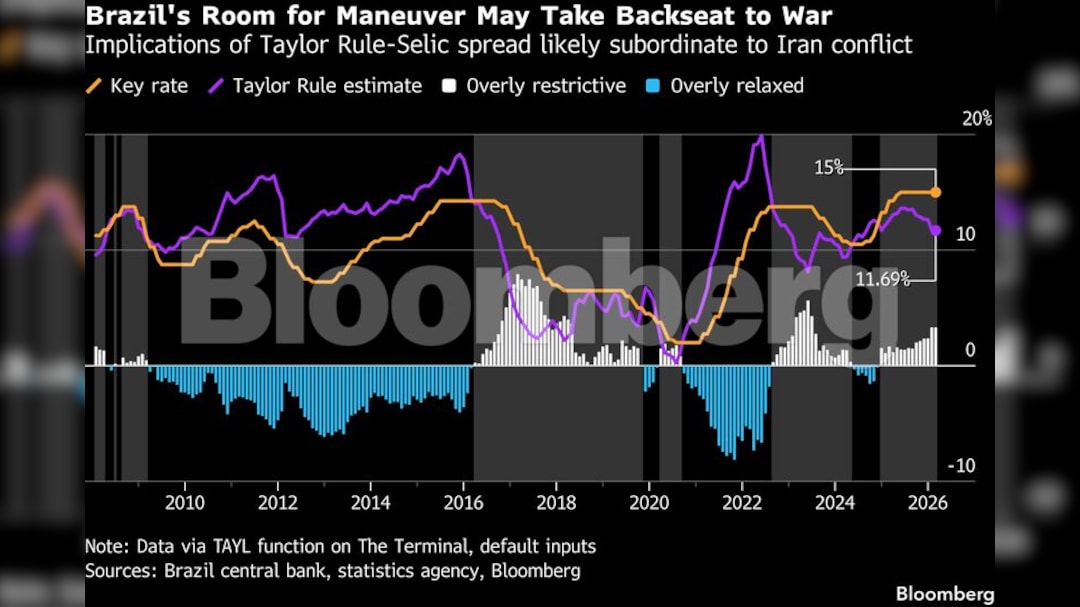
Photo Credit: Bloomberg News
Now, rather than the half-point cut that many analysts had anticipated, the consensus now expects a quarter-point reduction, and some Brazil-watchers can also see the cautious board giving some consideration to holding yet again at 15%.
Bank Indonesia
The central bank in Jakarta is widely expected to keep its rate steady at 4.75% on Tuesday, a decision that will force officials to balance rupiah stability against renewed worries about consumer prices.
While fuel subsidies will probably cushion faster inflation, such measures risk bloating the deficit amid heightened fiscal concerns. That could spur more capital outflows and undermine officials' efforts to maintain a stable currency.
Russia
Bank of Russia officials on Friday will weigh whether an uptick in inflation after an increase in the value-added-tax rate is easing sufficiently to allow a seventh straight cut in its key interest rate.
Policymakers shaved 50 basis points off the rate at each of the past three meetings. Their decision will take place just before consumer-price data for February are due.
Some Other Decisions
Tuesday
- Morocco's king is expected to appoint a new governor before the quarterly rate decision. The central bank will likely leave rates unchanged as policymakers monitor the inflationary impact of the Iran conflict.
Wednesday
- Iceland's central bank is expected to hike its rate by a quarter point to 7.5% in a reversal from easing that started in 2024. Inflation has lingered at 5.2%, with higher oil costs increasing price pressures.
- After four jumbo cuts since July that reduced Ghana's benchmark by 12.5 percentage points to 15.5%, the central bank may slow easing or pause cutting altogether as it weighs the inflation fallout from the war.
Thursday
- Czech policymakers are also anticipated to keep borrowing costs steady, with developments around Iran likely to add to arguments to doing so.
- The Ukrainian central bank's decision is expected to result in unchanged policy after a cut in January.
- Taiwan's economy has been buoyed by strong global demand for its technology products that support AI development. But the island's central bank is unlikely to raise rates now after inflation stayed well below 2% in recent months.
Friday
- Banco Central del Paraguay is contending with a fairly unique issue: inflation has slowed for six straight months and at 2.3% is now well under its 3.5% goal. Consecutive rate cuts have trimmed borrowing costs to 5.5%.
Essential Business Intelligence, Sharp Market Insights, Practical Personal Finance Advice, Daily Fuel, Gold and Silver Prices and Latest Stories — On NDTV Profit.