- US President Trump extended H-1B visa entry restrictions for 12 months from Sept 21, 2026
- H-1B beneficiaries outside the US must have a $100,000 payment with their petition for entry
- Employers must prove payment before filing; US agencies verify during visa processing
US President Donald Trump has signed a proclamation extending restrictions on the entry of certain H-1B nonimmigrant workers into the United States, continuing a policy first introduced in September 2025. The renewed restrictions will remain in effect for 12 months, beginning on September 21, 2026, unless extended or otherwise modified.
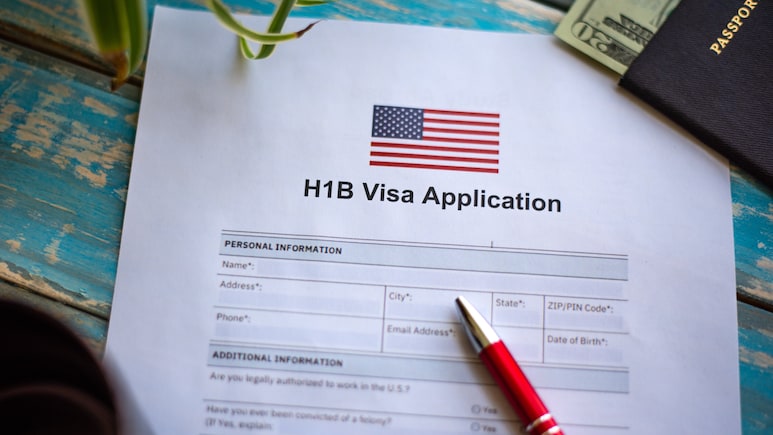
Under the proclamation, certain foreign nationals seeking entry to the US through H-1B specialty-occupation petitions must have their petition accompanied or supplemented by a $100,000 payment from the petitioner. The requirement primarily applies to H-1B beneficiaries who are outside the United States and seeking admission based on covered petitions.
ALSO READ: US Drafts Rules To Spare Pharma From Strictest China Investment Curbs: Report
Also Read | Layoffs Are Rising In Tech, But These Skills Are Helping People Unlock Better Pay
Employers must obtain and retain proof of the payment before filing an affected H-1B petition. The US Department of State is directed to verify the payment during visa processing, while the Department of Homeland Security can restrict or withhold decisions on covered petitions where the payment requirement has not been met.
The proclamation also gives the Secretary of Homeland Security discretion to grant exemptions to individual workers, companies or industries when their employment is determined to be in the US national interest and consistent with national security and welfare.
The administration said the policy is intended to address what it describes as abuse of the H-1B program, protect US wages, reduce underemployment among American college graduates and discourage the use of lower-cost outsourced labor.
The White House cited data showing that 66.1% of FY2027 H-1B cap registrants were US master's degree holders, compared with 45.1% in FY2026. It also said more than 700 petitions paid the $100,000 amount during the previous year.
ALSO READ: Trump-Xi Meeting: White House Releases Itinerary For Chinese President's Washington Visit
The Secretaries of State, Labor, and Homeland Security, together with the Attorney General, must evaluate the entry restriction and submit a joint recommendation to the President through the Homeland Security Advisor no later than 30 days after the next H-1B lottery on whether to further extend or renew it in the national interest.
Essential Business Intelligence, Sharp Market Insights, Practical Personal Finance Advice, Daily Fuel, Gold and Silver Prices and Latest Stories — On NDTV Profit.