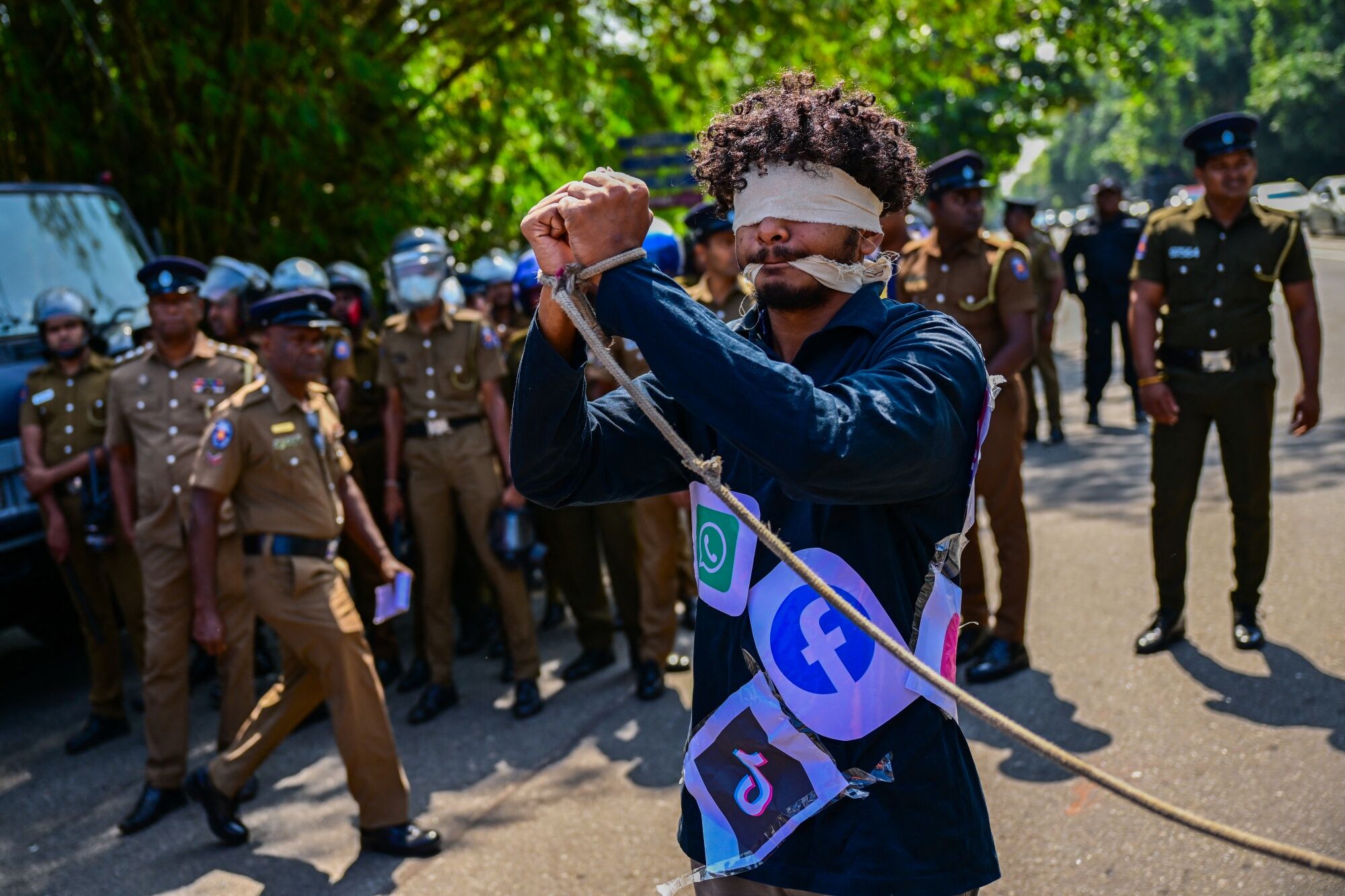
(Bloomberg) -- Sri Lanka's parliament has passed a law that grants the government sweeping powers to regulate social media and online speech, which opposition legislators have said will undermine democracy and the nascent internet economy.
The 225-member legislature passed the Online Safety Bill into law with 108 members voting for and 62 against. The bill allows Sri Lanka to set up a commission with the authority to order internet firms or individuals to remove prohibited posts. It can also take legal action against publishers of content deemed illegal, including hate speech, impersonations and posts that may cause harm to persons or the government.
The law takes effect just as Sri Lanka — still recovering from its worst economic crisis in decades — is due to hold presidential elections later this year.
“Sri Lanka's digital ecosystem stands at the precipice of substantial growth, and it is essential to foster an environment that encourages innovation and investment,” said the Asian Internet Coalition, which represents firms including Google, Meta Platforms Inc. and Apple Inc.
“The concerns raised in our submission with regard to criminal liabilities, safe harbor provisions, turnaround times, user data access, and other critical aspects of the bill underscore the urgency of reconsidering the current draft,” the coalition said in a statement before the bill was passed.
Sri Lanka's Supreme Court earlier ruled that more than two dozen provisions in the bill violated the nation's constitution and had to be amended before passage, amid public concerns the country was back-sliding to authoritarian rule. Opposition lawmakers said the final bill still undermines online discourse.
More stories like this are available on bloomberg.com
©2024 Bloomberg L.P.
Essential Business Intelligence, Sharp Market Insights, Practical Personal Finance Advice, Daily Fuel, Gold and Silver Prices and Latest Stories — On NDTV Profit.