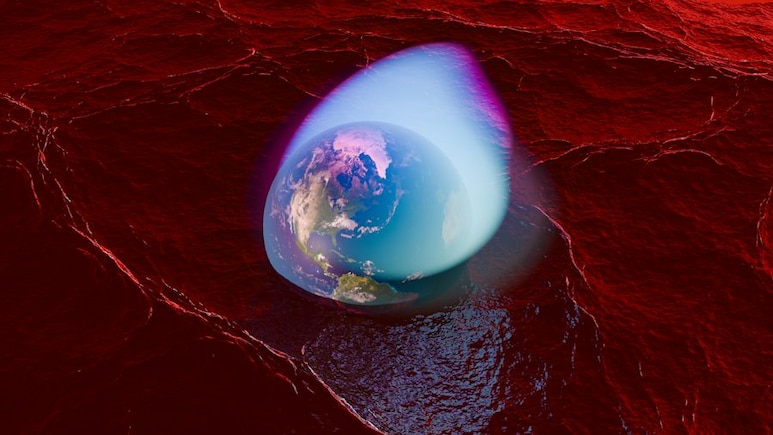
Over the years, ozone depletion has been taking place gradually. Driven by unusual atmospheric conditions and an exceptionally powerful polar vortex, the ozone hole over Antarctica has now expanded to its largest size in a decade in 2026. Scientists clarify that the expansion was not due to severe pollution. Long-term ozone recovery remains on track, thanks to global agreements phasing out harmful chemicals.
According to findings released by NASA and the National Oceanic and Atmospheric Administration (NOAA) on November 4, the 2026 ozone hole ranked as the seventh largest in 48 years of satellite monitoring.
How Does the Ozone Hole Form?
Reported by Daily Mail, the ozone hole is not an actual opening in Earth's atmosphere but a region where stratospheric ozone concentrations fall below 220 Dobson units.
Also Read | Layoffs Are Rising In Tech, But These Skills Are Helping People Unlock Better Pay

-
 Indian Markets Turning Corner After Two Tough Years, Says Sandeep Tandon
-
 NDTV Profit Ignite 2026: Experts See Opportunity In Equities, Stay Bullish For Long-Term
-
 Buy Right, Sit Tight Does Not Work for Individual Stocks, Says Dinshaw Irani
-
 'Worst Is Behind': Quant MF Sees Market Bottom, Flags 'Extreme Euphoria' In Midcaps
-
 India's Mutual Fund Industry Could Become A $1 Trillion Opportunity, Say Fund Managers
-
 'Foreign Investors Are Baraatis': Raamdeo Agrawal's Take On LTCG Tax
-
 Stay Invested Through Market Cycles: Raamdeo Agrawal at NDTV Profit Ignite
-
 Ramesh Damani Remains Bullish On India For Next 20-30 Years, Sees Bargains Amid Market Weakness
-
 CAS Came After A Long Consultation Process: SEBI Chairman Tuhin Kanta Pandey AT NDTV PROFIT IGNITE
-
 Aim To Cut FPI Onboarding Time From Mth To Five Days: SEBI Chairman Tuhin Kanta Pandey AT NDTV PROFI
Human-made chemicals, particularly chlorofluorocarbons (CFCs) and other compounds containing chlorine and bromine generally released from home appliances, contribute to ozone destruction. Under extremely cold Antarctic conditions, these substances trigger chemical reactions that break down ozone molecules.
The ozone layer protects humans, animals and plants from harmful ultraviolet radiation, which can increase the risks of skin cancer, cataracts and environmental damage.
Scientists estimate that the Antarctic ozone hole could recover by the 2070s as these chemicals gradually disappear from the atmosphere.
Ozone Hole Covers 10.5 Million Square Miles
Between September 7 and October 13, the peak depletion window, the Antarctic ozone hole spanned an average of 25 million square kilometres). It hit a single-day peak of roughly 27.1 million square kilometres on September 18, reaching nearly 90% of the record size logged in September 2000.
Despite its expansion, scientists noted that the ozone hole remained approximately 1–2 million square miles smaller than it would have been without international restrictions on ozone-depleting chemicals.
Powerful Polar Vortex Drives Ozone Depletion
Antarctic polar vortex, a seasonal circulation of winds that traps extremely cold air around the continent.
Because planetary-scale atmospheric waves were unusually weak in August and September, they couldn't disrupt the polar vortex as effectively as normal. This meant colder temperatures hung around over a broader area, creating ideal conditions for ozone depletion.
ALSO READ: SpaceX Director Resigns From Board One Day After US Election
NOAA scientist Amy Butler said weaker atmospheric wave activity helped maintain the powerful polar vortex and extend ozone loss.
Essential Business Intelligence, Sharp Market Insights, Practical Personal Finance Advice, Daily Fuel, Gold and Silver Prices and Latest Stories — On NDTV Profit.