About 3,500 AI-guided laser units now patrol salmon pens along the Norwegian coast, picking off sea lice and protecting more than 11.2 crore (112 million) fish, according to the latest annual report from Oslo-based Stingray Marine Solutions.
The company's deployments have grown by roughly 1,000 units over the past year, making this one of the largest commercial AI rollouts in Scandinavia.
How The Underwater Robots Work
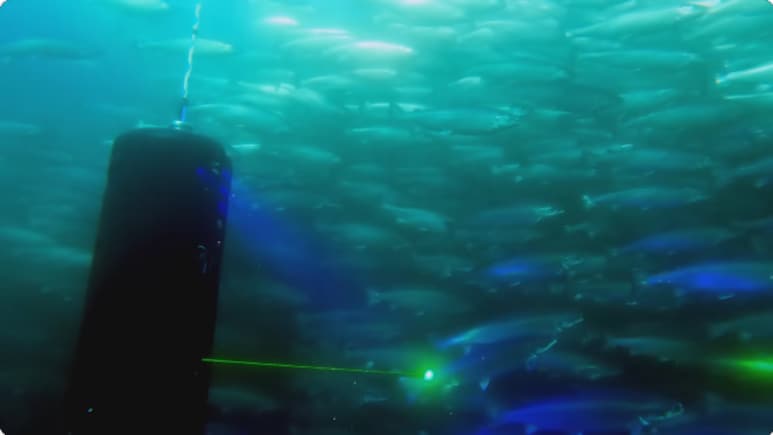
Stingray's submarine units use cameras and AI to spot sea lice on swimming salmon and hit them with a laser, a method described as "optical delousing". Company images show integrated LED lamps that use blue light to sharpen the contrast between fish and parasites, from the surface down to 25 metres.
Also Read | Layoffs Are Rising In Tech, But These Skills Are Helping People Unlock Better Pay
The system runs around the clock while the fish go about their routine. It targets only lice and also collects data on fish health, according to a LinkedIn post by salmon producer Nordlaks, which featured the technology.
Scale Of The Rollout
Stingray employs about 250 people. Its systems protect an estimated 20-25% of farmed salmon in Norway, the report said.
Why Sea Lice Are A Problem
Sea lice are parasitic crustaceans and a central challenge for fish farmers. The traditional fix is the chemical bath, which can treat many fish at once. But chemicals can harm the environment and stress the fish, and lice can develop resistance.
Putting toxins into food production is also unappealing. The laser approach avoids these problems. Fewer lice in a farming area can also benefit wild fish populations nearby.
ALSO READ | Matsya-6000 And The Deep Frontier: Why India Is Racing To The Ocean's Darkest Depths
What The Data Shows
Stingray's report points to improved salmon growth and welfare, with cleaner fish showing reduced mortality. Cleaner fish are species stocked in pens to eat lice.
The report's data show sites without Stingray stocked about 1.2 lakh cleaner fish in each of 2023, 2024 and 2025 (124,800, 119,100 and 122,300). Sites with Stingray used roughly 44,000 to 50,000 (43,900, 49,600 and 43,400).
Limitations
The technology has drawbacks. Up-front deployment costs make some farmers hesitant. It is also likely to work best as a preventative tool that keeps lice populations low. Because the units operate inside pens, lice can gather in darker, murkier corners and outside the pen area, beyond the system's reach.
ALSO READ | Parents Have No Health Insurance At 60: Is Your Corporate One Enough?
Essential Business Intelligence, Sharp Market Insights, Practical Personal Finance Advice, Daily Fuel, Gold and Silver Prices and Latest Stories — On NDTV Profit.