India has explored space, sent missions to the Moon and Mars, and built technologies to study distant corners of the universe. Now, it is turning its attention to a frontier much closer to home but far less understood: the ocean's depths.
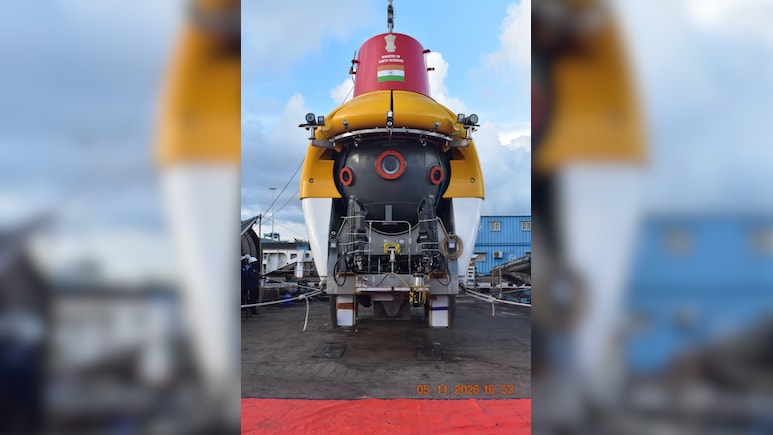
At the centre of this effort is MATSYA-6000, a specially designed submersible that will eventually carry three people to a depth of 6,000 metres below the ocean surface. The vehicle is part of the government's Samudrayaan mission, which aims to strengthen India's deep-sea exploration capabilities.
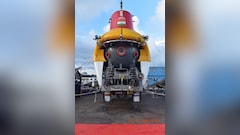
The submersible recently completed its unmanned trials at Kattupalli in Tamil Nadu, marking another step towards India's first human deep-sea mission, targeted for 2028.
Also Read | Layoffs Are Rising In Tech, But These Skills Are Helping People Unlock Better Pay
ALSO READ: Taking AI To Orbit: Space Tech Startup Satlyt Raises $8M To Build Computing Cloud Across Satellites
If successful, India will join a select group of countries capable of sending humans into one of the planet's most extreme environments.
At 6,000 metres, sunlight disappears, temperatures approach freezing, and water pressure rises to nearly 600 times that at sea level. Yet, life continues to exist in these conditions.
Scientists have discovered organisms that produce their own light, microbes that survive around hydrothermal vents and ecosystems that depend on chemical energy rather than sunlight.
These environments offer researchers an opportunity to understand how life adapts to extreme conditions. They could also provide clues about the possibility of life in the subsurface oceans of icy moons such as Europa.
Developed by the National Institute of Ocean Technology (NIOT), Chennai, under the Ministry of Earth Sciences, MATSYA-6000 is designed to accommodate three aquanauts.
Its most critical component is a spherical passenger cabin measuring around 2.1 metres in diameter, built using a specially engineered titanium alloy. The structure is designed to withstand pressures of up to 600 bar.
The vehicle will carry life-support systems, navigation and communication equipment, batteries and emergency provisions. It is designed for around 12 hours of operation, with emergency life-support capacity of up to 96 hours.
Beyond scientific research, the mission has an economic dimension. The ocean floor contains polymetallic nodules, potato-shaped deposits rich in manganese, nickel, cobalt and copper.
These minerals are important for batteries, electronics, steel manufacturing and clean-energy technologies. India has been exploring deposits in the Central Indian Ocean Basin and has also tested systems designed to collect and process seabed minerals.
Researchers are also interested in hydrothermal sulphide deposits, which form when mineral-rich fluids emerge through cracks in the seabed.
India is not entering this frontier alone. The US, China, France, Russia and Japan have already developed human-occupied deep-sea exploration capabilities. China's Fendouzhe has descended beyond 10,000 metres, while France operates the 6,000-metre-capable Nautile.
ALSO READ: Indian Navy Chief Invites Skyroot To Build Space Capabilities For Armed Forces
In August 2025, Indian scientists also gained operational experience by participating in dives aboard Nautile in the Atlantic Ocean, reaching depths of up to 5,000 metres.
For India, MATSYA-6000 is therefore about more than reaching the ocean floor. It is an attempt to build scientific expertise, develop deep-sea technology and understand the resources and ecosystems hidden beneath the waves.
Essential Business Intelligence, Sharp Market Insights, Practical Personal Finance Advice, Daily Fuel, Gold and Silver Prices and Latest Stories — On NDTV Profit.