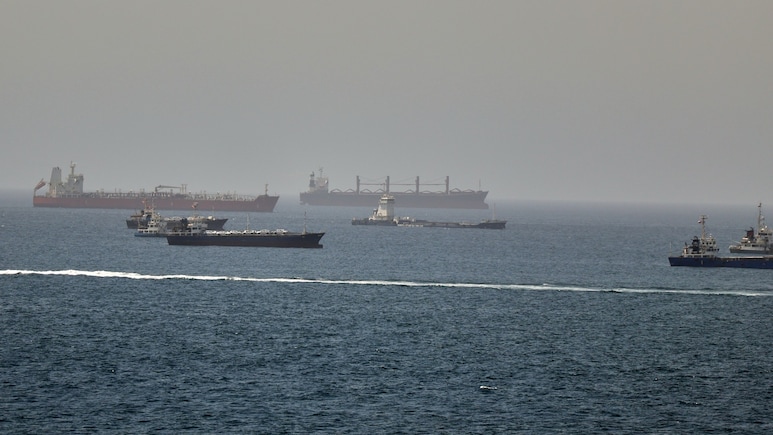
Shipping traffic through the Strait of Hormuz has slowed to a near standstill after the US carried out strikes inside Iran for a second straight day, disrupting movement through one of the world's most critical energy chokepoints.
Commercial traffic is now largely restricted to a northern route approved by Iran, while the southern navigation corridor backed by Oman and the US has witnessed little activity, Al-Jazeera reported.
The report said that only a US-sanctioned supertanker exiting the Gulf and an Iranian-flagged container vessel were seen transiting the strait, highlighting the sharp slowdown in maritime movement.
Also Read | Layoffs Are Rising In Tech, But These Skills Are Helping People Unlock Better Pay
ALSO READ: Iran Claims It Hit Patriot System In Kuwait, Fuel Tanks In Bahrain, Radar Site In Qatar
The decline marks a stark reversal from recent weeks. According to Kpler data cited by Bloomberg, commodity vessel transits averaged 34 a day in the three weeks after the US-Iran interim agreement to reopen the Strait of Hormuz, peaking at 59 vessels on June 24. During periods of active conflict, however, daily crossings were below 20 on most days.
According to report, the disruption has also left thousands of seafarers stranded.
"These reckless attacks have again placed innocent seafarers in grave danger. No seafarer should have to risk their life simply for doing their job," International Maritime Organization Secretary-General Arsenio Dominguez said.
"Behind the figures are seafarers, and in some cases their families, who continue to bear the human cost of this conflict," he added.
According to NBC News, around 6,000 sailors remain trapped in and around the Strait of Hormuz as fighting between the US and Iran continues.
The escalation follows fresh US military strikes on 90 targets inside Iran, which Washington said were aimed at degrading Tehran's ability to threaten shipping through the Strait of Hormuz. The strikes reportedly hit bridges, docks and airports, killing one person in Iranshahr and three others in Ahvaz. Shrapnel also struck a hospital in Chabahar, according to the reports.
ALSO READ: Goldman Says Hormuz Flare-Up May Delay Recovery In Oil Supplies
Al-Jazeera reported that Iran's Islamic Revolutionary Guard Corps (IRGC) responded by targeting US military facilities at Camp Arifjan and Ali Al Salem in Kuwait, as well as the Juffair and Sheikh Isa bases in Bahrain.
US President Donald Trump said Washington would respond to Iranian attacks at a "20 to one" ratio and claimed Tehran wanted to "make a deal so badly."
Meanwhile, Iran's Parliament Speaker Mohammad Bagher Ghalibaf warned that Tehran would retaliate, saying "bullying and breaking promises are no longer without cost."
Essential Business Intelligence, Sharp Market Insights, Practical Personal Finance Advice, Daily Fuel, Gold and Silver Prices and Latest Stories — On NDTV Profit.