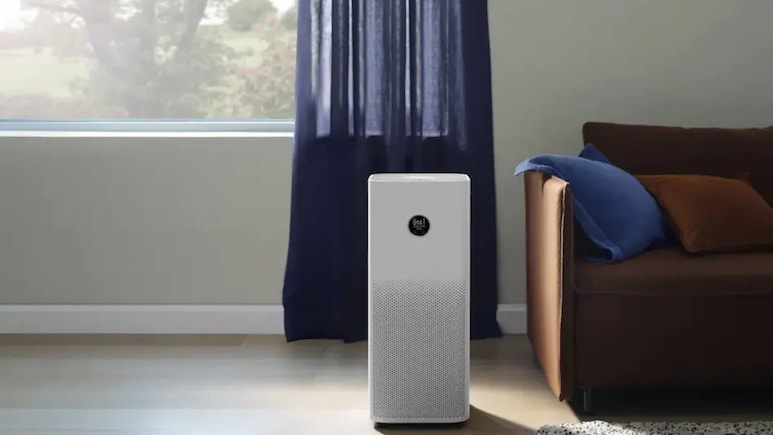
With air pollution worsening across parts of India ahead of Diwali, air purifiers are increasingly becoming a necessary requirement for homes, offices and bedrooms. However, buying an air purifier involves more than choosing a model with a HEPA filter. Factors such as Clear Air Delivery Rate (CADR), room size, filter efficiency, air changes per hour, noise levels and maintenance costs determine how effectively a device can improve indoor air quality.
Air pollution is not just limited to outdoor spaces. Indoor air can also contain particulate matter, smoke, dust, pollen, mould spores, pet dander and certain gases released by household products. According to the US Environmental Protection Agency (EPA), concentration of some pollutants indoors can be two to five times higher than outdoors, although this varies by pollutant, building and activity.

-
 Indian Markets Turning Corner After Two Tough Years, Says Sandeep Tandon
-
 NDTV Profit Ignite 2026: Experts See Opportunity In Equities, Stay Bullish For Long-Term
-
 Buy Right, Sit Tight Does Not Work for Individual Stocks, Says Dinshaw Irani
-
 'Worst Is Behind': Quant MF Sees Market Bottom, Flags 'Extreme Euphoria' In Midcaps
-
 India's Mutual Fund Industry Could Become A $1 Trillion Opportunity, Say Fund Managers
-
 'Foreign Investors Are Baraatis': Raamdeo Agrawal's Take On LTCG Tax
-
 Stay Invested Through Market Cycles: Raamdeo Agrawal at NDTV Profit Ignite
-
 Ramesh Damani Remains Bullish On India For Next 20-30 Years, Sees Bargains Amid Market Weakness
-
 CAS Came After A Long Consultation Process: SEBI Chairman Tuhin Kanta Pandey AT NDTV PROFIT IGNITE
-
 Aim To Cut FPI Onboarding Time From Mth To Five Days: SEBI Chairman Tuhin Kanta Pandey AT NDTV PROFI
The EPA states that air purifiers can help reduce indoor pollution, however, they do not eliminate every pollutant or replace measures to control pollution at its source. It advises consumers to consider the type of filtration, the device's capacity and regular maintenance before making a purchase.
Also Read | Layoffs Are Rising In Tech, But These Skills Are Helping People Unlock Better Pay
ALSO READ: Delhi Air Pollution: Capital Inches Towards 'Severe' AQI Ahead Of Diwali
HEPA Filter
High-Efficiency Particulate Air, or HEPA, filters are among the most important components of air purifiers designed to tackle particulate pollution.
The US EPA describes HEPA filters as capable of theoretically removing at least 99.97% of airborne particles measuring 0.3 microns in diameter under specified test conditions. Such filters are designed to capture particles including dust, pollen, mould spores and fine particulate matter. However, HEPA filtration primarily addresses particles and does not automatically remove gases or chemical vapours.
Consumers may also encounter H13 and H14 filters, which follow the European EN 1822 classification. H13 filters have a minimum efficiency of 99.95% at the most penetrating particle size, while H14 filters have a minimum efficiency of 99.995%.
Buyers should check whether a product specifies a recognised filter grade and whether its filtration claims have been independently tested. Labels such as "HEPA-type" or "HEPA-like" should not automatically be considered equivalent to a certified HEPA specification.
CADR
CADR is one of the most useful figures for comparing air purifiers. It measures the volume of filtered air a device delivers, taking into account both airflow and filtration efficiency.
The higher the CADR, the more quickly a purifier can clean the air in a room, assuming other conditions are comparable. The Association of Home Appliance Manufacturers (AHAM) provides a standardised CADR testing and certification programme. Its ratings commonly include three categories: Smoke, Dust and Pollen.
The US EPA notes that CADR is generally measured at the purifier's highest fan speed. For fine pollution such as PM2.5, the smoke CADR is particularly useful because it represents the smallest of the three particle categories in the AHAM rating system.
Buyers should not rely only on a manufacturer's maximum room coverage claim. CADR offers a more meaningful way to compare the cleaning capacity of different models. A higher CADR can be useful when pollution levels are high, the room is large or the purifier needs to clean the air more quickly.
Room Size And Air Changes Per Hour
Room size is another important consideration when buying an air purifier. A device designed for a small bedroom may not have sufficient capacity to clean the air in a large living room. The US EPA recommends calculating the room's area by multiplying its length by its width and comparing the result with the purifier's recommended coverage.
The US Centers for Disease Control and Prevention (CDC) also advises selecting an appropriately sized HEPA air cleaner based on the airflow required for the space. Its ventilation guidance notes that a room with a higher ceiling requires a purifier with greater capacity.
Air Changes Per Hour (ACH) is another useful parameter. It refers to the equivalent number of times the air volume in a room is filtered in an hour. A higher ACH generally means more frequent air filtration. Consumers should check the purifier's CADR and its recommended room coverage rather than relying solely on the maximum area mentioned in advertisements.
Activated Carbon And Pre-Filters
While HEPA filters capture particles, activated carbon filters are designed to help remove certain gases and odours. The US EPA says activated carbon filters can be effective against gases when they contain a sufficiently large quantity of carbon. Such filters may help reduce certain volatile organic compounds (VOCs), cooking odours and smoke-related smells.
However, the performance of carbon filters varies depending on their design and the quantity of carbon used. There is no widely used performance rating system for gas removal comparable to CADR for particles.
Many air purifiers also feature a pre-filter that captures larger particles such as hair, lint and dust. This can help prevent the main filter from becoming clogged too quickly. Some pre-filters are washable, but consumers should follow the manufacturer's instructions and avoid washing HEPA filters unless specifically permitted.
Air Quality Sensors, Noise And Smart Features
Several air purifiers feature sensors that monitor particulate pollution and automatically adjust fan speed. Some models also provide PM2.5 readings, colour-coded air quality indicators and smartphone connectivity. These features can improve convenience, but they do not necessarily improve the device's filtration capacity.
A PM2.5 sensor, for instance, does not measure every pollutant present indoors. The EPA notes that different filters are designed to address different categories of pollutants.
Noise levels are also important, particularly for consumers planning to use a purifier in a bedroom. Manufacturers may publish decibel ratings for different fan speeds. Buyers should check whether the device can deliver adequate filtration without becoming too noisy.
Smart features such as Wi-Fi connectivity, app control and scheduling may be useful, but CADR, filtration quality and room coverage should remain the primary considerations.
Filter Replacement And Electricity Costs
The cost of an air purifier does not end with the initial purchase. Electricity consumption, replacement filters and maintenance can add to the overall expense. The US EPA says all filters require regular replacement and that a dirty or overloaded filter may not work effectively.
Consumers should check the availability and price of genuine replacement filters, along with the manufacturer's recommended replacement schedule. Filter life can vary depending on usage and pollution levels.
Electricity consumption also depends on the purifier's wattage and operating duration. For example, a 50-watt purifier running continuously for 24 hours would consume 1.2 kWh of electricity a day.
Ozone Generation: A Safety Consideration
Consumers should also be cautious about air purifiers that intentionally generate ozone. The US EPA warns that ozone is a lung irritant and advises against using air cleaners that intentionally produce it. Some devices using ionisation, electrostatic precipitation, plasma technology or certain UV systems may also have the potential to emit ozone.
For households seeking to reduce particulate pollution, a properly sized mechanical HEPA air purifier is a practical option to consider.
How To Use An Air Purifier During High AQI
An air purifier can help reduce indoor airborne particles, but it cannot eliminate outdoor pollution or replace other exposure-reduction measures. The US EPA recommends combining air cleaning with pollution source control and appropriate ventilation.
- Consumers can consider the following steps during periods of poor air quality:
- Operate the purifier in the room where occupants spend the most time.
- Keep airflow pathways around the device unobstructed.
- Reduce indoor sources of pollution, including smoking, incense and candles.
- Run the purifier at a higher speed or for longer periods when greater filtration is needed.
- Replace filters according to the manufacturer's instructions.
- Check indoor air quality rather than assuming it is identical to outdoor AQI.
Ultimately, the most suitable air purifier is one that matches the room's size, delivers adequate clean air, uses appropriate filtration and can be maintained regularly. A higher-priced device or one with more smart features is not necessarily the most effective choice for every household.
ALSO READ: Delhi vs Mumbai AQI: Why The Capital Is Choking While Mumbai's Pollution Problem Is Growing
Essential Business Intelligence, Sharp Market Insights, Practical Personal Finance Advice, Daily Fuel, Gold and Silver Prices and Latest Stories — On NDTV Profit.