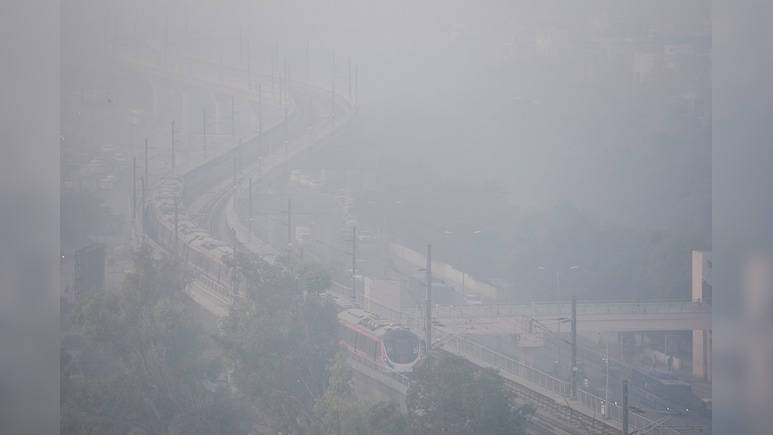
Delhi woke up to hazardous air on Thursday, while Mumbai stayed in the "unhealthy" band, a gap that shows how differently India's two biggest cities are being hit by air pollution.
Delhi In The Hazardous Zone
Delhi's live AQI stood at 580 on Thursday morning, according to AQI.in, placing it in the "hazardous" category. PM2.5 was 366 µg/m³ and PM10 was 419 µg/m³.

-
 Indian Markets Turning Corner After Two Tough Years, Says Sandeep Tandon
-
 NDTV Profit Ignite 2026: Experts See Opportunity In Equities, Stay Bullish For Long-Term
-
 Buy Right, Sit Tight Does Not Work for Individual Stocks, Says Dinshaw Irani
-
 'Worst Is Behind': Quant MF Sees Market Bottom, Flags 'Extreme Euphoria' In Midcaps
-
 India's Mutual Fund Industry Could Become A $1 Trillion Opportunity, Say Fund Managers
-
 'Foreign Investors Are Baraatis': Raamdeo Agrawal's Take On LTCG Tax
-
 Stay Invested Through Market Cycles: Raamdeo Agrawal at NDTV Profit Ignite
-
 Ramesh Damani Remains Bullish On India For Next 20-30 Years, Sees Bargains Amid Market Weakness
-
 CAS Came After A Long Consultation Process: SEBI Chairman Tuhin Kanta Pandey AT NDTV PROFIT IGNITE
-
 Aim To Cut FPI Onboarding Time From Mth To Five Days: SEBI Chairman Tuhin Kanta Pandey AT NDTV PROFI
The platform ranked the capital 22nd among the world's most polluted cities. Smoke hung over the city at 23°C, and visuals from the ITO area showed vehicles crawling through thick smog.
Also Read | Layoffs Are Rising In Tech, But These Skills Are Helping People Unlock Better Pay
VIDEO | Delhi continues to grapple with air pollution as a layer of smog engulfs the city. Morning visuals from ITO area. #DelhiPollution #AQI #WeatherUpdate (Full video available on PTI Videos - https://t.co/d8jp61yd2p) https://t.co/S7rkOdR9Y2
— Press Trust of India (@PTI_News) November 5, 2026
The past 24 hours were no better. The AQI peaked at 595 at 10:31a.m. on Wednesday and fell to only 245 at 5:01p.m., before climbing again through the night. On Wednesday, the overall AQI touched 605 at 7:41a.m., with GRAP-II restrictions in force.
Mumbai Steady But Unhealthy
Mumbai's AQI was 163, with PM2.5 at 75 µg/m³ and PM10 at 109 µg/m³. It ranked 139th globally. The reading stayed in a narrow band of 153 to 177 across the day, with no relief at any hour.
ALSO READ | 'AQI Above 600 In Delhi, Firecrackers Will Make Situation Worse,' Warns Social Media User
CPCB data put the city at 175 on Wednesday, also in the "unhealthy" category. The weather was sunny at 28°C.
Why The Two Cities Differ
Geography is a big factor. Randeep Guleria, chairman of the Institute of Internal Medicine, Respiratory and Sleep Medicine at Medanta Gurugram, said the Indo-Gangetic Plain is landlocked and in winter "cold air causes pollution to settle at ground level with low wind velocity, preventing it from moving away, unlike what might happen in coastal areas."
He also pointed to emissions from "stubble burning, increased use of diesel, more vehicles on the road, and crackers".
Paddy stubble burning incidents fell 26.63% to 3,316 across seven states between 15 September and 1 November, with Punjab accounting for nearly half the cases. Even with that fall, the capital's air has worsened.
ALSO READ | India's 10 Most Polluted Cities Today: Rewari Tops List With AQI Of 622, Karnal Follows At 607
Health Warning
Guleria said the AQI has reached "the severe or very severe range", and that every year hospitals see more patients with breathing difficulties and coughs at such levels.
"Even normal people start experiencing chest tightness, breathlessness, watering of their eyes, and coughing," he said. People with COPD, asthma or heart disease are most at risk, he added.
He advised people to take regular medication, stay indoors, keep windows closed, use air purifiers and avoid outdoor exercise. Anyone who must go out should wear an N95 mask. "Air pollution is a silent killer," he said.
The immediate concern is Delhi, but Mumbai's flat, persistent readings suggest it is not clear of risk either.
Essential Business Intelligence, Sharp Market Insights, Practical Personal Finance Advice, Daily Fuel, Gold and Silver Prices and Latest Stories — On NDTV Profit.