On April 8, 2026, the search for Bitcoin's creator, Satoshi Nakamoto, took its most high-profile turn in years. A year-long investigation by the New York Times, led by Pulitzer Prize-winning reporter John Carreyrou, pointed the finger at British cryptographer Adam Back. Using forensic linguistics and a database of over 130,000 cypherpunk mailing list posts, the report claimed Back was the only candidate whose writing quirks-specifically a unique pattern of 325 hyphenation errors-matched Satoshi's almost perfectly.
Back, the CEO of Blockstream, was quick to issue a denial. "I'm not Satoshi," he posted on X, dismissing the findings as "confirmation bias." He argued that shared interests and a common background in 1990s cryptography naturally led to similar writing styles.
i'm not satoshi, but I was early in laser focus on the positive societal implications of cryptography, online privacy and electronic cash, hence my ~1992 onwards active interest in applied research on ecash, privacy tech on cypherpunks list which led to hashcash and other ideas.
Also Read | Layoffs Are Rising In Tech, But These Skills Are Helping People Unlock Better Pay
— Adam Back (@adam3us) April 8, 2026
With the latest “unmasking” meeting skepticism, attention has once again shifted to a small group of long-standing candidates believed to have the technical and ideological grounding to create Bitcoin.
Hal Finney
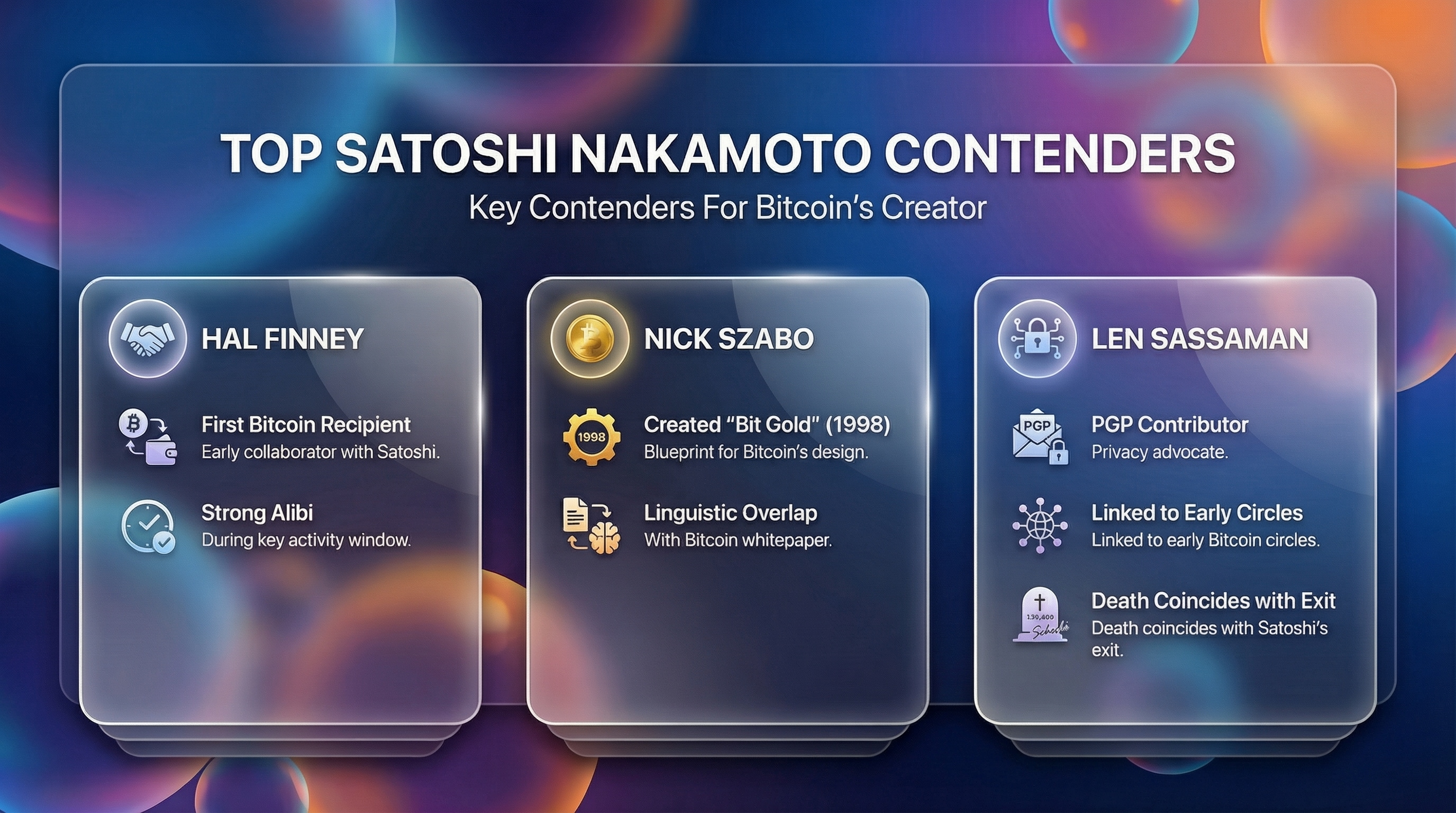
If Satoshi is the god of Bitcoin, Hal Finney is its first prophet. A world-class developer, Finney was the recipient of the first-ever Bitcoin transaction and the first person besides Satoshi to run the software. Many believe Finney was Satoshi, or at least a primary collaborator.
The case against him is largely physical: records show Finney was participating in a 10-mile race in California at the exact time Satoshi was responding to emails. Finney passed away in 2014, and his death aligns closely with Satoshi's final departure from the public eye.
Nick Szabo
Long before Bitcoin, there was Bit Gold. Designed in 1998 by Nick Szabo, the proposal contained almost every structural element of Bitcoin, including proof-of-work and decentralized timestamps. Szabo has repeatedly denied being Satoshi, yet linguistic studies consistently rank his prose as the closest match to the Bitcoin Whitepaper. His deep understanding of "smart contracts"—a term he coined—places him at the center of the intellectual foundation of the entire industry.
Len Sassaman
Len Sassaman was a brilliant privacy advocate and maintainer of the PGP (Pretty Good Privacy) software. His suicide in July 2011 occurred just months after Satoshi's final message: "I've moved on to other things." Sassaman lived in Belgium (explaining Satoshi's European sleep patterns) and worked closely with Finney. While his widow, Meredith Patterson, has denied the connection, Sassaman remains the sentimental "favorite" for those who believe Satoshi was a dedicated cypherpunk who took the secret to the grave.
As of April 2026, Satoshi's untouched wallets hold an estimated 1.096 million BTC (around $73 billion), as per data from Arkham. For candidates like Adam Back, whose company is reportedly pursuing a public listing via a SPAC merger, a confirmed identity as Satoshi would trigger massive U.S. securities law disclosure requirements.
Essential Business Intelligence, Sharp Market Insights, Practical Personal Finance Advice, Daily Fuel, Gold and Silver Prices and Latest Stories — On NDTV Profit.