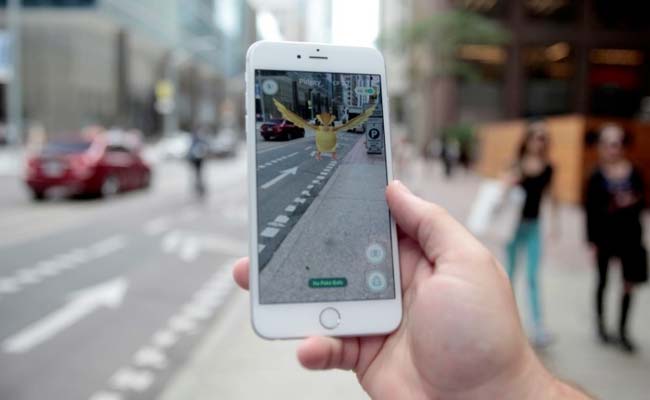
US video game developer Niantic has revealed that its Pokemon Go players have helped create a huge dataset of more than 30 billion real-world images. Photos and scans collected through the game by the players are now being used to train robots for navigating city streets.
The dataset is the largest ever for robotics perception and is being hailed as a clever move by Niantic. Pokemon Go, released in 2016 by Niantic, was the world's first augmented-reality game. The AR twist on the Pokemon franchise quickly made it a global phenomenon, with players around the world trying to catch their favourite creature.
Also Read | Seven In 10 Indians Warm Up To AI-Driven Shopping But Data Safety A Top Concern
Also Read | Layoffs Are Rising In Tech, But These Skills Are Helping People Unlock Better Pay
Since the revelation, the internet is astonished at how the game, which was meant for fun, ended up creating the largest robotics perception dataset in history, without its players ever noticing.
“This is wild. 143 million people thought they were catching Pokemon. They were actually building one of the largest real-world visual datasets in AI history,” entrepreneur and software developer Mark Gadala Maria posted on X on Sunday.
This is wild.
— Mark Gadala-Maria (@markgadala) March 15, 2026
143 million people thought they were catching Pokémon. They were actually building one of the largest real-world visual datasets in AI history.
Niantic just disclosed that photos and AR scans collected through Pokémon Go have produced a dataset of over 30 billion… https://t.co/2bq79w6tUR
According to the MIT Technology Review website, Niantic Spatial, an AI company that Niantic spun out in May last year, is now using this massive crowdsourced dataset to create a “world model.”
“Players didn't just walk around with their phones. They scanned landmarks, storefronts, parks, and sidewalks from every angle, at every time of day, in lighting and weather conditions that staged photography would never capture. They documented the physical world at a scale no mapping company with a fleet of vehicles could have replicated on the same timeline or budget,” Maria's post further read.
Also Read | Wikipedia's Founder Believes India's Young Coders And 25 Languages Could Define AI's Future
The MIT report noted that Niantic's latest model can pinpoint locations within a few centimetres using just a few snapshots of buildings or landmarks. The border goal of this movie is aimed at helping robots navigate precisely in areas where GPS is unreliable.
In its first major test of the technology, Niantic Spatial has partnered with Coco Robotics, a firm which runs last-mile delivery robots. To compete with human couriers, Coco's robots need to be highly reliable. As GPS can be unreliable in dense cities with high-rises or underpasses, precise navigation is a critical factor for its success, CEO Zach Rash was quoted as saying by MIT Tech review.
Using Pokemon Go, Niantic has gathered thousands of images for each of its million locations, captured from different angles, times and weather. These images come with precise metadata on phone position and movement, which is being used to train the model to predict the location accurately.
===============
Essential Business Intelligence, Sharp Market Insights, Practical Personal Finance Advice, Daily Fuel, Gold and Silver Prices and Latest Stories — On NDTV Profit.