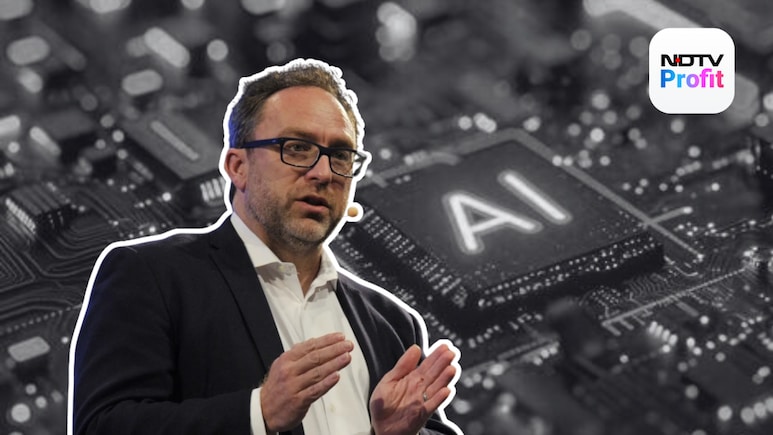
India's vast pool of young, tech-savvy users and software talent positions it as a rising global force in artificial intelligence, Wikipedia founder Jimmy Wales said, while cautioning that human oversight must remain central as AI adoption accelerates. Wales described India as uniquely placed to shape the future of AI, citing its scale, talent and grassroots contribution to global knowledge platforms.
“We see a very tech-savvy young community in India with a lot of energy,” he said, noting that India is among the largest contributors to Wikipedia and active across 25 Indic languages.
This linguistic diversity, he argued, makes India particularly important as AI systems evolve beyond English. “AI's language capabilities are improving, and that's especially relevant for a country like India,” Wales said, pointing to the potential for AI to expand access to knowledge across regions and communities.
Also Read | Layoffs Are Rising In Tech, But These Skills Are Helping People Unlock Better Pay
Human Oversight Remains ‘Non-Negotiable'
Despite AI's ability to generate content at unprecedented scale, Wales stressed that human judgement remains essential in determining accuracy and truth.
“AIs can produce a lot of text, but is it valid or invalid? You need a human to really tell you that,” he said, reinforcing the idea that AI should assist—not replace—human decision-making.
This principle continues to guide Wikipedia itself, where AI tools remain limited due to concerns around hallucinations and factual errors. Wales said communities that prioritise “truth, neutrality and discourse” will be best equipped to integrate AI responsibly.
His warning comes as AI-generated misinformation becomes an increasing concern globally, particularly on social media platforms where speed often outpaces verification. “Just because something comes across your social media, that doesn't mean it's true,” Wales said, urging users to rely on credible journalism and verified sources rather than unfiltered online content.
Open-Source AI Could Level the Playing Field
Wales also highlighted the transformative potential of open-source AI, arguing it could reshape global technology competition by lowering barriers to entry.
“You don't have to be the richest companies in the world,” he said. “You can be a smaller startup in India doing something amazing with AI.” This shift, he noted, could allow Indian startups to innovate and compete globally without the massive capital investments traditionally required for proprietary AI development.
At the same time, he cautioned that effective AI regulation will require collaboration between governments and industry. “Public-private partnership is the only possibility,” Wales said, arguing that governments alone are often too slow, while companies need policy guidance to ensure responsible innovation.
Wales struck an optimistic yet measured tone on India's AI trajectory, calling it “a very exciting time” for the country.
With its combination of linguistic diversity, entrepreneurial energy and technological capability, India has the ingredients to shape how AI expands access to knowledge worldwide.
Essential Business Intelligence, Sharp Market Insights, Practical Personal Finance Advice, Daily Fuel, Gold and Silver Prices and Latest Stories — On NDTV Profit.