- Narayana Health integrates AI to assist doctors in real-time clinical decision-making
- AI aids interpretation of complex reports and flags risks in critical care units
- Predictive AI algorithms forecast cardiac arrest risk 24 hours in advance in ICUs
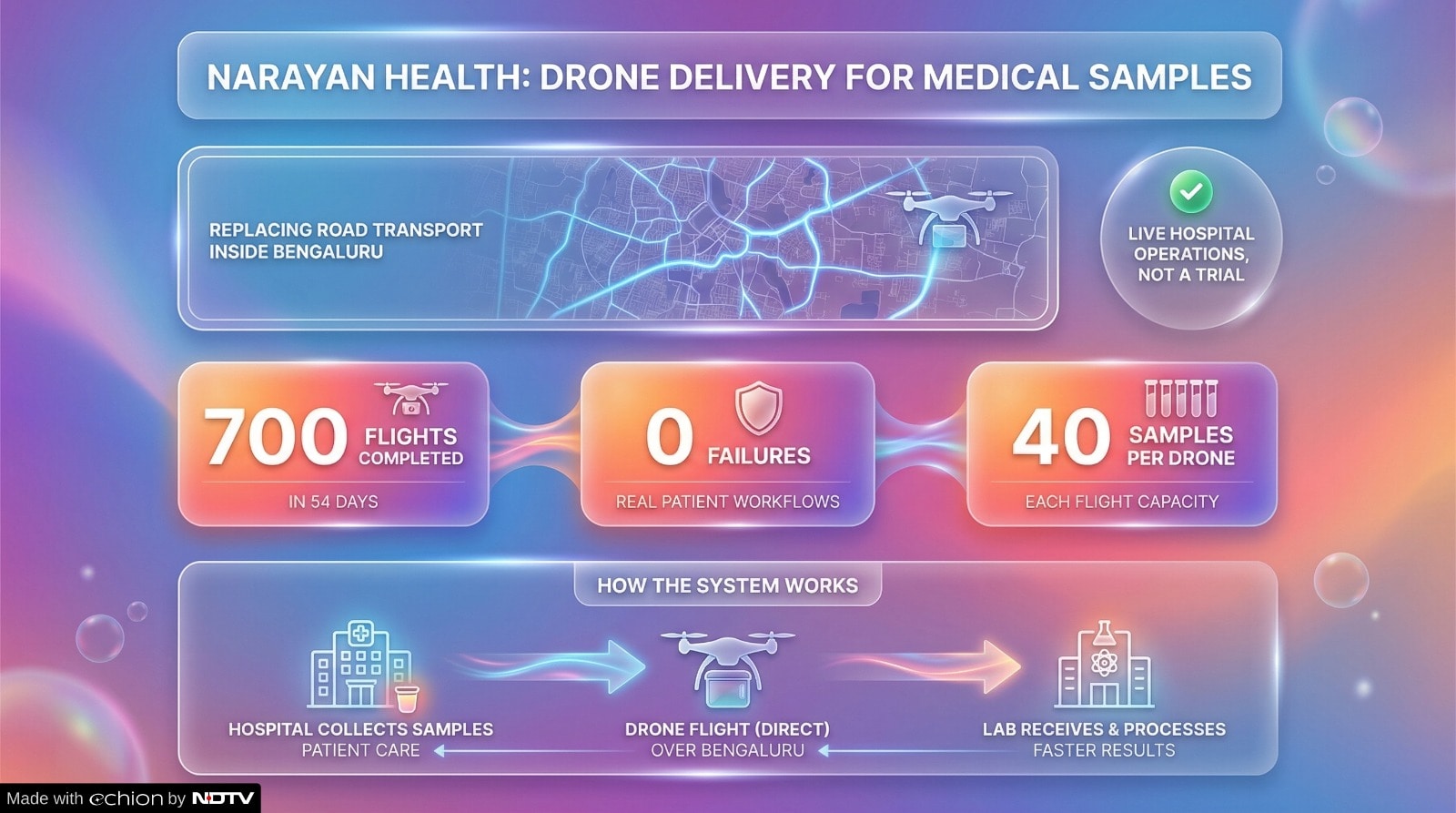
While drones grabbing headlines for delivering medical samples is impressive, the bigger story unfolding at Narayana Health is the rapid integration of artificial intelligence into everyday clinical decision-making. According to founder Dr. Devi Prasad Shetty, AI is already reshaping how hospitals function, improving both efficiency and patient outcomes. At the core of this shift is AI's ability to assist doctors and nurses in real time.
In critical care units, for instance, routine but complex reports like blood gas analyses are now accompanied by AI-generated interpretations. These tools act as decision aids—flagging risks, suggesting interventions, and enabling faster response times. While doctors remain the final authority, AI is increasingly becoming an ever-present second opinion.
Dr Shetty says AI-driven systems can reduce diagnostic errors, streamline workflows, and lower the overall cost of care. Combined with innovations in logistics, this could make quality healthcare more affordable and scalable.
Also Read | Layoffs Are Rising In Tech, But These Skills Are Helping People Unlock Better Pay
From Assistance to Anticipation
Beyond interpretation, AI is moving into predictive care—arguably its most powerful application. Narayana Health has developed algorithms capable of forecasting cardiac arrest risk in ICU patients up to 24 hours in advance. This allows clinicians to intervene early, potentially saving lives that may otherwise have been lost to sudden deterioration.
ALSO READ: Persistent Systems To Rollout AI For Drug Research With Nvidia Gear
Dr. Shetty describes these systems as akin to “an extremely experienced doctor sitting behind every bedside,” continuously monitoring and guiding care. With a dedicated team of over 50 engineers working on AI for nearly a decade, the hospital network has embedded intelligence deeply into its clinical workflows—well before AI became mainstream.
Redefining Hospital Infrastructure
AI is also enabling a fundamental redesign of hospital infrastructure. The upcoming Narayana Health facility in Banashankari, Bengaluru, will operate without an in-house lab or blood bank. Instead, diagnostics and blood services will be centralized at a larger hub hospital and delivered via drones.
This hub-and-spoke model, powered by AI and automation, significantly reduces capital expenditure. By stripping away heavy infrastructure from smaller hospitals, healthcare providers can expand faster and at lower cost—potentially improving access across urban and semi-urban areas.
Dr. Shetty believes this shift will also accelerate insurance adoption, with new models—such as daily micro-payments—making coverage accessible to a larger population. As more people enter the insured pool, demand for organized healthcare could rise sharply.
Essential Business Intelligence, Sharp Market Insights, Practical Personal Finance Advice, Daily Fuel, Gold and Silver Prices and Latest Stories — On NDTV Profit.