The fourth T20I between India and South Africa was called off on Wednesday owing to poor visibility after a dense layer of smog engulfed the Ekana Stadium raising serious questions about BCCI's scheduling of matches in northern part of India during peak winter month.
The venues allotted for the full series against the Proteas included New Chandigarh, Dharamsala, Lucknow, Ranchi, Raipur, Visakhapatnam, Cuttack, Ahmedabad, Guwahati and Kolkata during November and December.
It is also a period when pollution levels in the host cities like Lucknow, New Chandigarh and Dharamsala are usually at its worst.
The fourth T20I was officially abandoned without a ball being bowled due to 'excessive fog', the reality was that a thick blanket of smog enveloped the Ekana Stadium, severely hampering visibility.
The Air Quality Index (AQI) remained in the hazardous range, above 400 in Lucknow on Wednesday, raising serious questions about the BCCI's commitment to players' welfare.
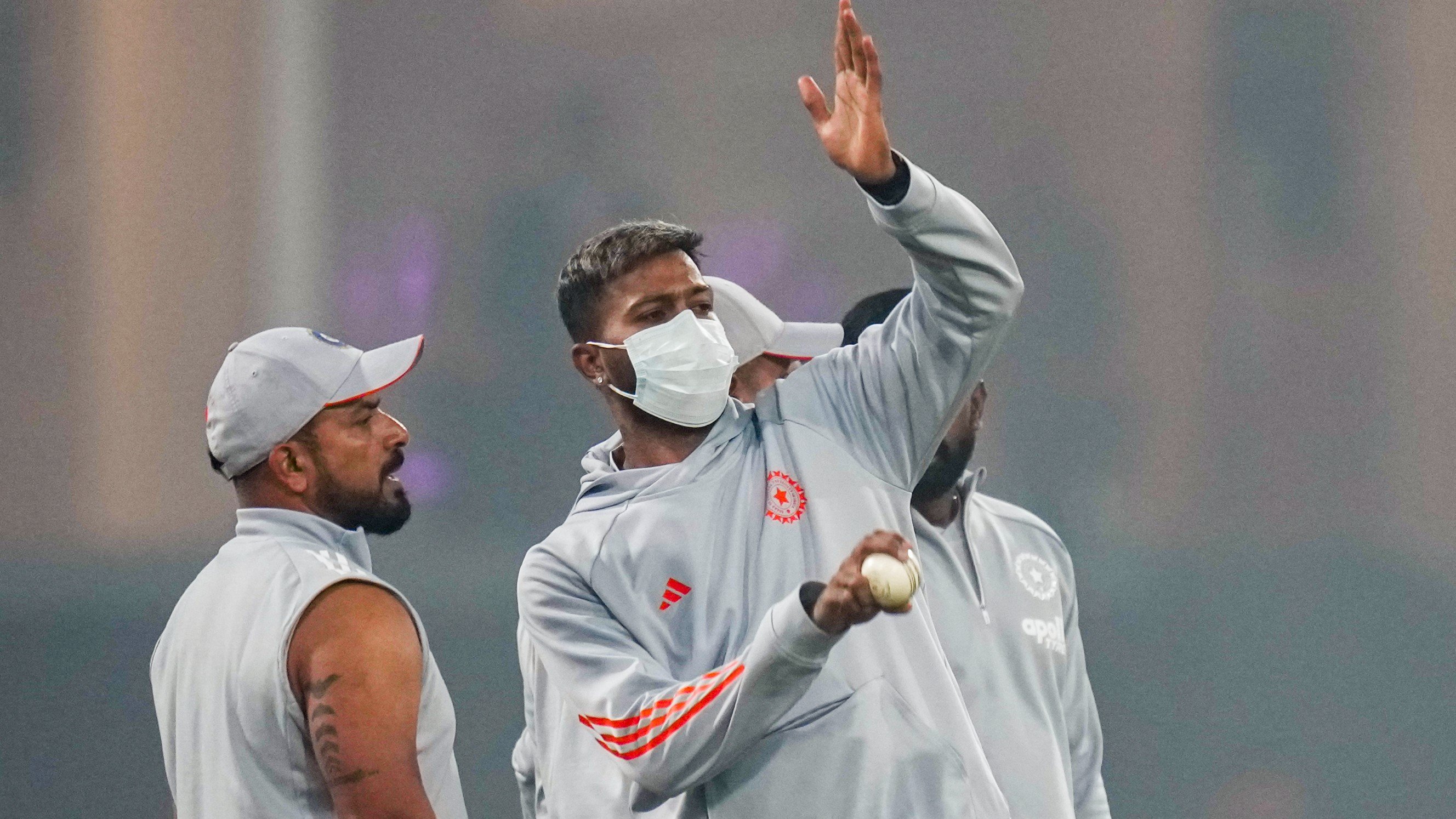
Star all-rounder Hardik Pandya was seen wearing a surgical mask to counter the pollution while the Indian team warmed up ahead of the game.
Match officials inspect the conditions. (Photo: PTI)
The match, scheduled to start at 7 p.m., was eventually called off at 9:30 p.m. after the sixth inspection although it was more of a formality with everyone present well aware that visibility was only going to get worse as the night progressed.
The players had abandoned their warm-up session by 7:30 p.m. and returned to the confines of their dressing rooms. By 9 p.m., the sizeable crowd that had braved the cold conditions had also begun to thin out.
BCCI vice-president and lifelong Uttar Pradesh Cricket Association's spiritual boss Rajeev Shukla walked out to the middle during one of the inspections but his body language after speaking to match officials indicated disappointment.
With no reserve day in place, both teams will now fly to Ahmedabad for the final T20I on Friday, with India leading the series 2–1.
While the BCCI follows a rotational policy when allotting venues, the board could have considered swapping venues with the white-ball series against New Zealand, scheduled to begin Jan. 11, 2026.
The 'Men in Blue' are set to face New Zealand for a white-ball series at venues across western and southern India - Vadodara, Rajkot, Indore, Nagpur, Raipur, Visakhapatnam and Thiruvananthapuram with just one match scheduled in the northeastern city of Guwahati.
Matches held at most north zone venues have historically been affected by weather conditions during the winter months.
Last week, the third T20I was played in sub-10-degree temperatures in Dharamsala, set in the lap of the snow-clad Dhauladhar range.
Post the game, India's mystery spinner Varun Chakravarthy, who hails from Tamil Nadu, admitted that the conditions were particularly challenging for him.
"I've never played at a ground this cold, so I did find it quite challenging," he had said.
The AQI on match day in Dharmsala was in the 'poor' category and in the 'severe' zone during the 2nd T20I in New Chandigarh.
The planning of BCCI's operations team seemed questionable if they hadn't collected the historical weather data of north-Indian cities or even didn't have a plan B to start the matches from afternoon which could have at least ensured a game for the ticket-paying public.
IPL 2026 Auction: From Cameron Green To Venkatesh Iyer — Check Full List Of Players SoldEssential Business Intelligence, Continuous LIVE TV, Sharp Market Insights, Practical Personal Finance Advice and Latest Stories — On NDTV Profit.