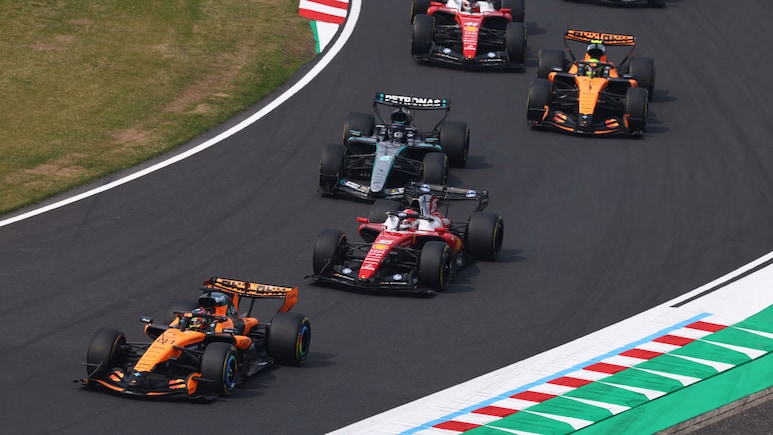
Formula 1's radical 2026 reset is already under review. After just three races, the FIA and F1 are locked in urgent talks to recalibrate the sport's new power unit regulations, with “energy management” emerging as the central fault line.
The shift to a 50/50 split between internal combustion engines and electrical power, headlined by a near threefold increase in MGU-K output to 350kW, has created unintended consequences on the track. Chief among them is “clipping,” where drivers run out of battery energy mid-straight, leading to sudden and significant power loss.
The effect is not just tactical, it is potentially dangerous, an issue that has been flagged by multiple drivers. Cars at full throttle are abruptly slowing while rivals are still moving at top speeds, creating unpredictable speed differences on straights.
Also Read | Layoffs Are Rising In Tech, But These Skills Are Helping People Unlock Better Pay
ALSO READ | Real Madrid's Shock Move: Didier Deschamps Emerges As Next 'Galactico Fixer' Amid Summer Manager Hunt
The FIA's immediate response has been to target how energy is harvested and deployed within the regulations. A short-term fix was already implemented at Suzuka, where the maximum energy recharge allowed in qualifying was reduced from 9MJ to 8MJ.
This was done with the aim to limit excessive lift-and-coast phases and restore qualifying laps as pure performance runs rather than energy-saving exercises.
But deeper structural changes are now on the table.
Drivers across the grid have been unusually aligned in their criticism. Max Verstappen has flagged the “yo-yoing” effect on straights, calling out the artificial nature of cars abruptly losing power. The four-time champion has gone as far as labelling the new regulations as "Formula E on steroids."
Lando Norris went further, warning that the extreme speed differentials between cars using boost modes and those “clipping” could trigger a “big accident,” particularly in slipstream-heavy zones.
Lewis Hamilton, who has been positive about the lighter and more agile 2026 cars, noted that reduced downforce has made energy deployment even more critical for stability.
The FIA has now set a tight timeline to respond.
ALSO READ | Max Verstappen's Race Engineer Gianpiero Lambiase Set To Leave Red Bull To Join McLaren: Report
A meeting between the sport's governing body and technical experts from teams and power unit manufacturers was held on Thursday, April 9 to hold preliminary talks about the proposed changes.
The next meeting is scheduled for April 15 which will address specific sporting regulation changes, followed by technical discussions a day later. A high-level meeting involving team principals and F1 leadership is scheduled for April 20, where a consensus solution is expected to be finalised.
Any agreed changes will still require approval from the FIA's World Motor Sport Council, though that step is typically procedural once alignment is reached.
Essential Business Intelligence, Sharp Market Insights, Practical Personal Finance Advice, Daily Fuel, Gold and Silver Prices and Latest Stories — On NDTV Profit.