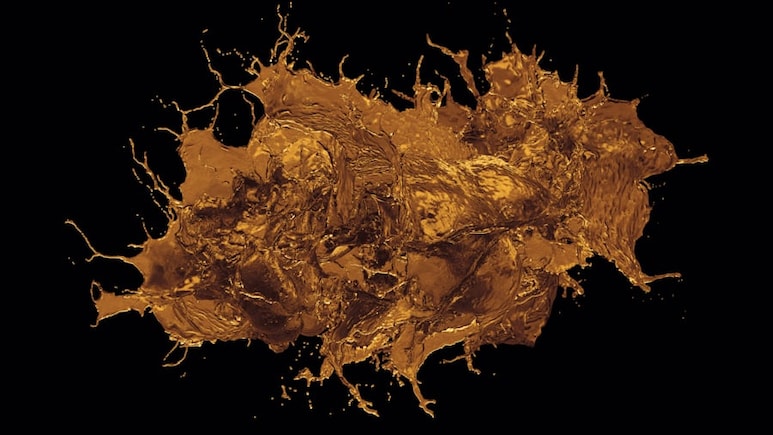
Japanese scientists have discovered gold nanoparticles that can behave in a fluid-like and highly dynamic manner, almost resembling living material under certain conditions, as reported in the Journal of the American Chemical Society .
Researchers at Tohoku University found that gold nanoparticles placed at the interface of air and water can change their structure in response to temperature and pressure. Instead of remaining fixed, the particles can reorganize themselves, forming different patterns such as isolated clusters, chains, and network-like structures.

-
 Indian Markets Turning Corner After Two Tough Years, Says Sandeep Tandon
-
 NDTV Profit Ignite 2026: Experts See Opportunity In Equities, Stay Bullish For Long-Term
-
 Buy Right, Sit Tight Does Not Work for Individual Stocks, Says Dinshaw Irani
-
 'Worst Is Behind': Quant MF Sees Market Bottom, Flags 'Extreme Euphoria' In Midcaps
-
 India's Mutual Fund Industry Could Become A $1 Trillion Opportunity, Say Fund Managers
-
 'Foreign Investors Are Baraatis': Raamdeo Agrawal's Take On LTCG Tax
-
 Stay Invested Through Market Cycles: Raamdeo Agrawal at NDTV Profit Ignite
-
 Ramesh Damani Remains Bullish On India For Next 20-30 Years, Sees Bargains Amid Market Weakness
-
 CAS Came After A Long Consultation Process: SEBI Chairman Tuhin Kanta Pandey AT NDTV PROFIT IGNITE
-
 Aim To Cut FPI Onboarding Time From Mth To Five Days: SEBI Chairman Tuhin Kanta Pandey AT NDTV PROFI
ALSO READ | ChatGPT's 'Younger Self' Photo Trend: 10 Prompts To Turn Your Memories Into Viral Images
Also Read | Layoffs Are Rising In Tech, But These Skills Are Helping People Unlock Better Pay
The study shows that these nanoparticles are coated with specially designed organic molecules, including temperature-responsive materials. These coatings allow the particles to shift their arrangement when external conditions change.
Why the Interface Matters
This liquid-like flexibility is unique to the air–water interface. In contrast, when these same nanoparticles are kept in dry environments, the attached organic molecules lose their mobility. In those dry conditions, you cannot get the same structural changes unless you apply intense heat, typically requiring temperatures above 212°F (100°C).
At around 40°C, the nanoparticles begin to transform from separate “island-like” formations into connected networks. When pressure is applied, they can switch back again, showing reversible and flexible behavior similar to soft or liquid materials.
Scientists say this kind of behavior is rare in inorganic materials like gold and opens up possibilities for designing “smart materials” that can adapt to their surroundings.
ALSO READ | Hantavirus, Ebola Show Risk Preparedness Lagging Despite Improved Crisis Response: Pandemic Expert
The findings suggest potential future uses in biomedical engineering, drug delivery systems, flexible electronics, and microfluidic devices.
Researchers believe such adaptive materials could eventually help create systems that respond intelligently to environmental changes, similar to how living systems behave.
Essential Business Intelligence, Sharp Market Insights, Practical Personal Finance Advice, Daily Fuel, Gold and Silver Prices and Latest Stories — On NDTV Profit.