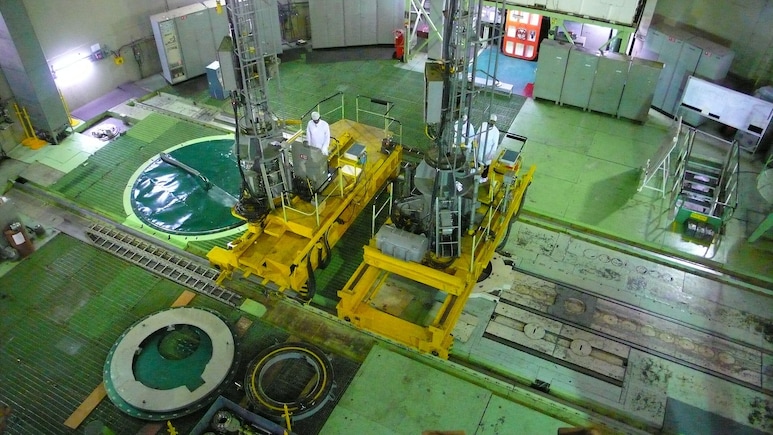
India on Monday moved closer to realising its nuclear energy goals after the Prototype Fast Breeder Reactor (PFBR) at Kalpakkam, Tamil Nadu, reached criticality. It is an important phase that sets the stage for eventual full operation.
Prime Minister Narendra Modi hailed the development on X.
“Today, India takes a defining step in its civil nuclear journey, advancing the second stage of its nuclear programme. The indigenously designed and built Prototype Fast Breeder Reactor at Kalpakkam has attained criticality,” he said.
“This advanced reactor, capable of producing more fuel than it consumes, reflects the depth of our scientific capability and the strength of our engineering enterprise. It is a decisive step towards harnessing our vast thorium reserves in the third stage of the programme. A proud moment for India. Congratulations to our scientists and engineers,” Modi added.
Today, India takes a defining step in its civil nuclear journey, advancing the second stage of its nuclear programme.
— Narendra Modi (@narendramodi) April 6, 2026
The indigenously designed and built Prototype Fast Breeder Reactor at Kalpakkam has attained criticality.
This advanced reactor, capable of producing more fuel…
ALSO READ: Iran's Bushehr Nuclear Power Plant Not Damaged In Military Strikes, Confirms IAEA
In nuclear science, the term ‘criticality' refers to the stage at which a reactor can sustain its own fission chain reaction, generating enough neutrons to keep the process running without outside assistance
More than 20 years in development, the 500-megawatt electric sodium-cooled PFBR stands among the most technically demanding projects undertaken by India's atomic energy sector. The facility has been developed and is operated by Bharatiya Nabhikiya Vidyut Nigam Ltd. (BHAVINI), functioning under the Department of Atomic Energy at the Indira Gandhi Centre for Atomic Research campus in Kalpakkam.
Describing the development as a landmark moment for India's civilian nuclear ambitions, Ajit Kumar Mohanty, Chairman of the Atomic Energy Commission and Secretary at the Department of Atomic Energy, said the Prototype Fast Breeder Reactor at Kalpakkam has reached first criticality, ushering the country into the second phase of the three-stage nuclear programme conceived by Homi Jehangir Bhabha.
"Today, India achieved yet another historic milestone in the country's peaceful usage of atomic energy by entering the second stage of the three-stage nuclear power programme envisioned by Dr. Homi Jehangir Bhabha, the architect of our country's nuclear power programme,” he said, according to an NDTV report.
"The spent fuel generated in the Prototype Fast Breeder Reactor will, in turn, be processed and recycled back into the reactor, thereby enabling closure of the second stage fuel cycle. This will pave the way for utilisation of the abundant thorium reserves in the third stage of the nuclear power programme, comprising of thorium-based reactors,” he added.
In contrast to traditional reactors that primarily consume uranium, fast breeder reactors operate on plutonium and are designed to create additional fuel in the process, transforming uranium-238 into plutonium-239. Owing to this self-replenishing feature, the PFBR is often described as an “Akshay Patra” of energy.
ALSO READ: Indian Oil And BPCL Delay Maintenance To Stabilise Fuel Supplies
Essential Business Intelligence, Sharp Market Insights, Practical Personal Finance Advice, Daily Fuel, Gold and Silver Prices and Latest Stories — On NDTV Profit.