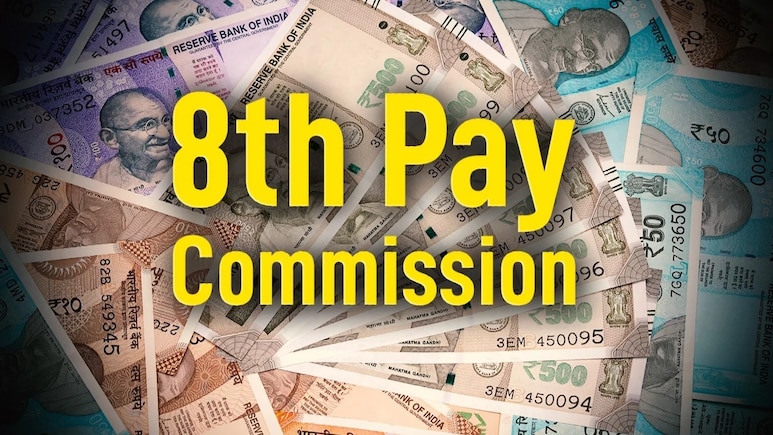
Nearly one crore central government employees and pensioners are awaiting the 8th Pay Commission's recommendations, which will revise salaries, pensions, dearness allowance and other benefits. While the panel is yet to recommend a fitment factor, estimates currently range from 1.83 to 3.83.
If the commission opts for the lower end of that range, a fitment factor of 1.83 would be the most conservative outcome. Even then, it would result in a significant increase in basic pay across pay matrix levels.
What Is The Fitment Factor?
Also Read | Layoffs Are Rising In Tech, But These Skills Are Helping People Unlock Better Pay
The fitment factor is the multiplier used to convert an employee's existing basic pay, or a pensioner's basic pension, into the revised pay structure.
Formula: Current basic pay × Fitment factor = Revised basic pay.
ALSO READ: 8th Pay Commission: What Retiring In Pay Commission Year Means For A Govt Employee — Explained
Under the 7th Pay Commission, a fitment factor of 2.57 increased the minimum basic pay from Rs 7,000 under the 6th Pay Commission to Rs 18,000.
What Are The Expectations?
Employee unions have sought a fitment factor of around 3.83, while industry estimates place the likely range between 1.83 and 2.57. The Centre will take the final call after the commission submits its recommendations.
Salary Impact At A 1.83 Fitment Factor
If a fitment factor of 1.83 is adopted, the estimated revised basic pay would be:
- Level 1: Rs 18,000 → Rs 32,940
- Level 2: Rs 19,900 → Rs 36,417
- Level 3: Rs 21,700 → Rs 39,711
- Level 4: Rs 25,500 → Rs 46,665
- Level 5: Rs 29,200 → Rs 53,436
- Level 6: Rs 35,400 → Rs 64,782
- Level 7: Rs 44,900 → Rs 82,167
- Level 10: Rs 56,100 → Rs 1,02,663
- Level 13: Rs 1,23,100 → Rs 2,25,273
- Level 18: Rs 2,50,000 → Rs 4,57,500
Latest On The 8th Pay Commission
The commission, chaired by former Supreme Court judge Ranjana Prakash Desai, will hold stakeholder consultations in Bhubaneswar on July 6-7 and Kolkata on July 9-10. It has already conducted consultations in several states as part of its outreach exercise.
The panel has also invited applications for 20 consultant posts on a contractual basis. The memorandum submission process closed on June 15 after two extensions, while the online data submission window ended on June 30.
The commission is expected to submit its report within 18 months, with recommendations likely by February or mid-2027. Based on previous pay commission cycles, implementation could take another two to three years, pushing the rollout of revised salaries to 2029 or 2030.
Essential Business Intelligence, Sharp Market Insights, Practical Personal Finance Advice, Daily Fuel, Gold and Silver Prices and Latest Stories — On NDTV Profit.