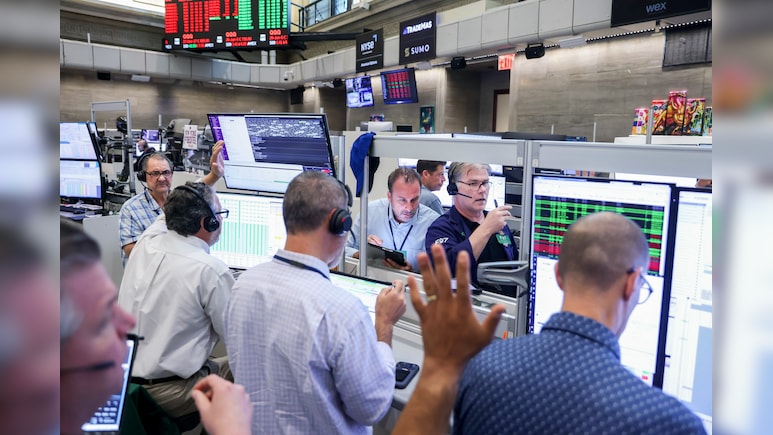
Stocks dropped on Monday as investors assessed a tense situation in the Middle East, with President Donald Trump reinstating the US blockade of Iranian ships transiting the Strait of Hormuz.
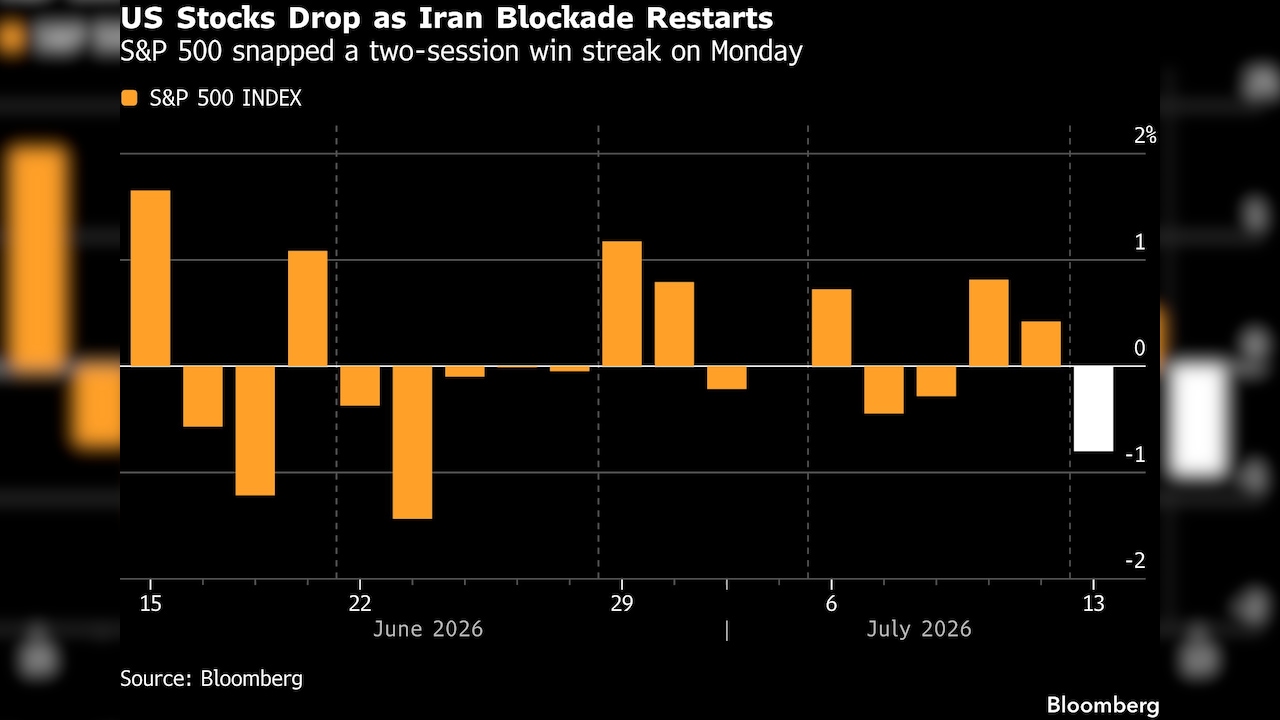
The S&P 500 Index snapped two straight days of gains, closing 0.8% lower in New York. The technology-heavy Nasdaq 100 Index fell 1.9% and Brent crude traded at around $84.
“The apparent decision to pile on the pressure on Iran by reinstating the blockade has lifted oil prices, though the reaction remains calm relative to the potential for supply disruption,” said Chris Beauchamp, chief market analyst at IG.
Also Read | Layoffs Are Rising In Tech, But These Skills Are Helping People Unlock Better Pay
In a social media post, Trump said the US will be reimbursed 20% of all cargo shipped through the Strait of Hormuz. Reinstatement of the blockade follows tit-for-tat attacks between the US and Iran, as well as conflicting information about the Strait of Hormuz's status.
US Central Command had said that American forces carried out a new round of attacks aimed at degrading Iran's ability to threaten shipping in the Strait of Hormuz, with dozens of targets being hit. Tehran retaliated Monday with attacks on US allies in the Persian Gulf and beyond, targeting US bases in Kuwait, Bahrain, Jordan and Oman, according to Iranian state media outlets.
Fresh hostilities have further dampened hopes for peace in a conflict that has rattled global markets since February. The resulting climb in energy prices has again raised concerns over inflation and its negative impact on economic growth.
Still, the conflict has done little to derail the year's broader equity rally. Stocks have remained resilient due to the artificial-intelligence boom, as well as the performance of sectors such as energy and industrials.
Technology stocks are underperforming as geopolitical uncertainties and concerns around inflation persist. The information technology sector is currently the biggest laggard on the S&P 500.
“Valuations for some tech and artificial-intelligence-related companies are returning to the spotlight as investors question the sustainability of tech-related spending amid rising global interest rates,” said Paul Christopher, head of global investment strategy at Wells Fargo Investment Institute. “We see the market separating AI beneficiaries from AI spenders.”
The performance of the US stock market faces a major test this week, with a fresh slate of economic data ahead, including the consumer price index on Tuesday, then the producer price index and consumer sentiment. Also, earnings season kicks into full gear, with big banks such as JPMorgan Chase & Co. and Goldman Sachs Group Inc. reporting.
“Markets have become overly dependent on optimistic narratives rather than observable economic data,” said Mark Malek, chief investment officer at Muriel Siebert & Co. “But the reality suggests otherwise.”
In terms of single-stock moves, the American depositary receipts of SK Hynix Inc. plunged 9.3% after South Korea's AI-fueled rally came under renewed pressure on Monday. TriCo Bancshares jumped 12% after First Hawaiian Inc. agreed to buy the parent company of Tri Counties Bank.
Sectors in Focus
- An AI-fueled stock rout in South Korea is also dragged memory stock peers like Micron lower, underscoring growing investor concerns that the boom is overextended.
- Bernstein is trimming its price targets on a number of telecom companies, citing increasing competitive risk from SpaceX's Starlink service.
- Pipeline stocks rose as Wells Fargo gave the firms overweight ratings on growth upside.
ALSO READ: US To Get Reimbursed At 20% Of All Cargo Shipped After Hormuz Takeover, Trump Says
(This story has not been edited by NDTV staff and is auto-generated from a syndicated feed.)
Essential Business Intelligence, Sharp Market Insights, Practical Personal Finance Advice, Daily Fuel, Gold and Silver Prices and Latest Stories — On NDTV Profit.