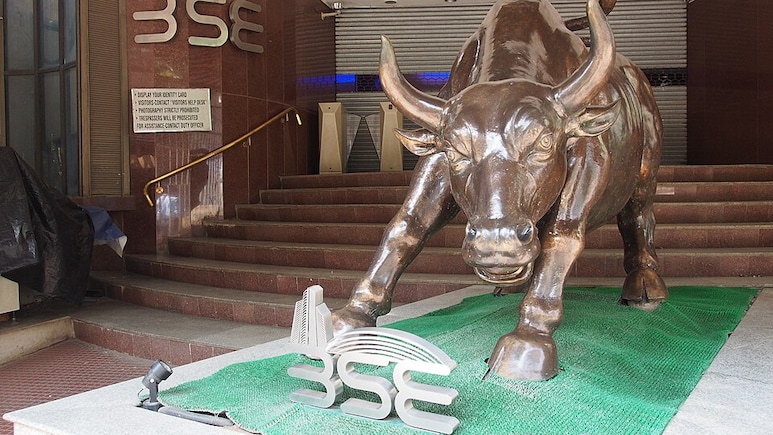
- BSE issued an advisory urging investors to understand the Closing Auction Session (CAS) framework
- CAS determines the official closing price used for benchmark indices and derivatives settlements
- The session runs from 3:20 p.m. to a random time between 3:28 and 3:30 p.m. with order restrictions
The BSE has issued an advisory asking investors and trading members to familiarise themselves with the Closing Auction Session (CAS), highlighting its growing importance in determining closing prices of stocks, benchmark indices and derivatives settlements.
The exchange said the advisory follows the Securities and Exchange Board of India (SEBI) circular dated Jan. 16, 2026, and the BSE circular dated Jan. 19, 2026, introducing the revised CAS framework.
Advisory on Closing Auction Session (CAS) in the Equity Segment. pic.twitter.com/X7snKh74Sz
— BSE India (@BSEIndia) August 5, 2026
According to BSE, the Closing Auction Session is a market-driven price discovery mechanism conducted after the regular trading session for stocks with derivative contracts. It determines a single equilibrium price at which the maximum quantity of shares can be traded, with that price becoming the stock's official closing price.
The closing price is used to calculate the closing values of benchmark indices, including the BSE Sensex and other indices that comprise F&O stocks.
The CAS begins at 3:20 p.m. and concludes at a random time between 3:28 p.m. and 3:30 p.m. During the first five minutes, investors can place both market and limit orders. After 3:25 p.m., only limit orders are accepted.
ALSO READ: Don't Blame CAS: Nithin Kamath Flags High STT, Limited Shorting For Recent Closing Swings
Throughout the auction, BSE disseminates indicative equilibrium prices for securities and indicative closing values for indices, allowing market participants to monitor evolving demand and supply before the final closing price is determined.
The exchange said the mechanism is open to all categories of investors, including retail participants, institutional investors, proprietary traders, market makers and intermediaries, adding that broader participation would strengthen the efficiency and transparency of the closing price discovery process.
BSE also highlighted that closing prices are a critical input for the derivatives market. They are used for daily mark-to-market settlements and determine final settlement obligations on expiry day. For options traders, the closing price also decides whether contracts expire in-the-money, at-the-money or out-of-the-money.
ALSO READ: BSE Gets SEBI Approval To Launch Derivates Contracts On 'Focused Midcap Index'
As part of the advisory, BSE urged trading members to promote wider participation in the Closing Auction Session, prominently display indicative equilibrium prices and index values on trading platforms, enable smart order routing across exchanges, and educate clients about the functioning of the framework.
The exchange also asked brokers to disseminate the advisory among clients and associated persons to encourage informed participation in the auction process.
Essential Business Intelligence, Sharp Market Insights, Practical Personal Finance Advice, Daily Fuel, Gold and Silver Prices and Latest Stories — On NDTV Profit.