Scan to Download
Hello and welcome to NDTV Profit's live market coverage!
Indian equities had their worst week since June 2022 as escalating conflict in the Middle East and higher energy prices soured investor sentiments. The Nifty and Sensex ended over 5% lower for the week.
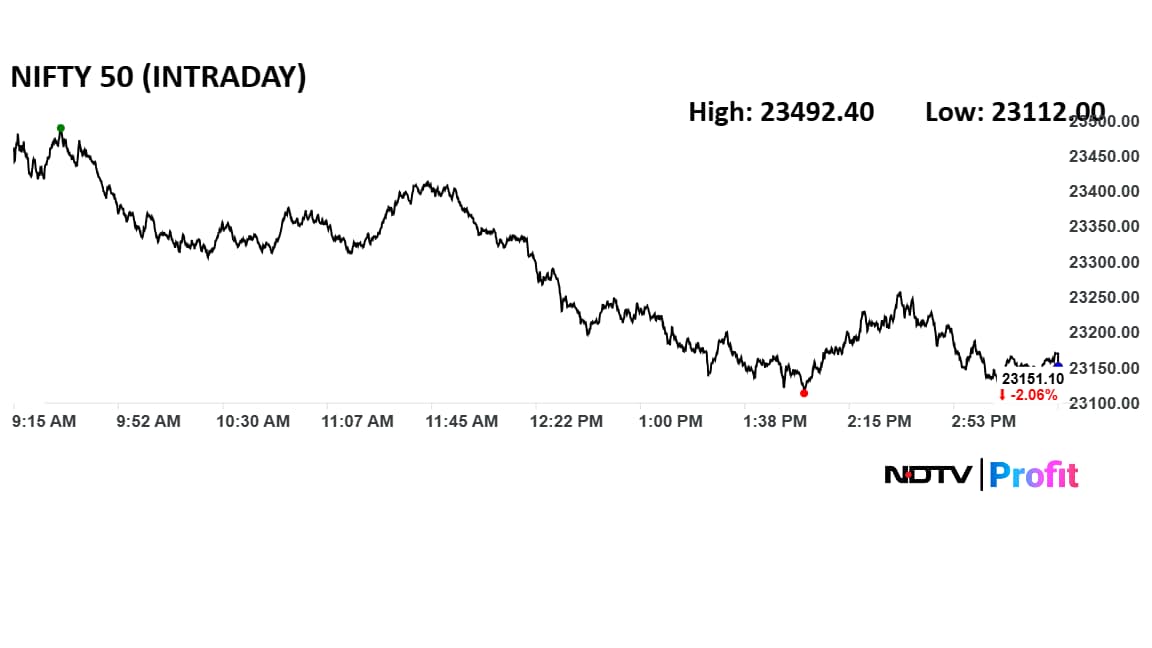
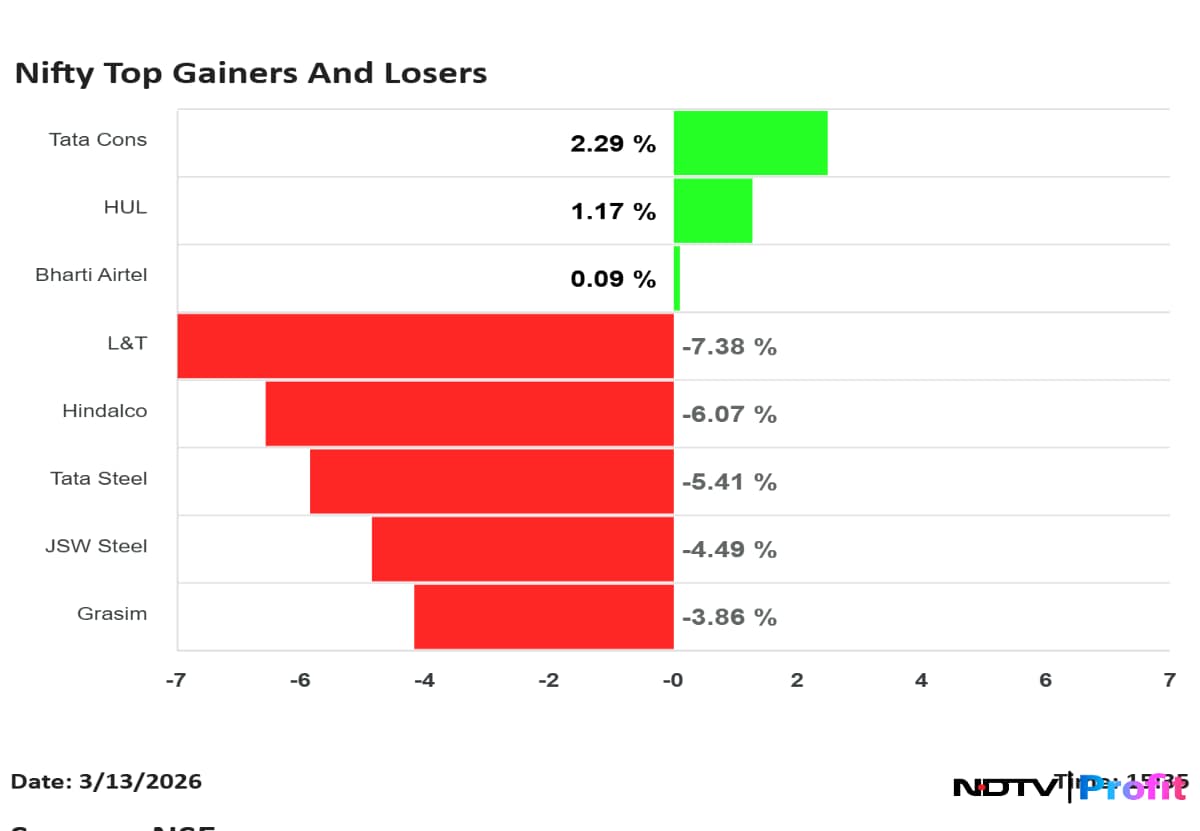
The Nifty 50 closed 488 points or 2.06% lower at 23,151.10. The BSE Sensex shed 1,470 points or 1.93% to settle at 74,563.92. Larsen and Toubro, Hindalco Industries and Tata Steel were the top losers on the benchmark indices
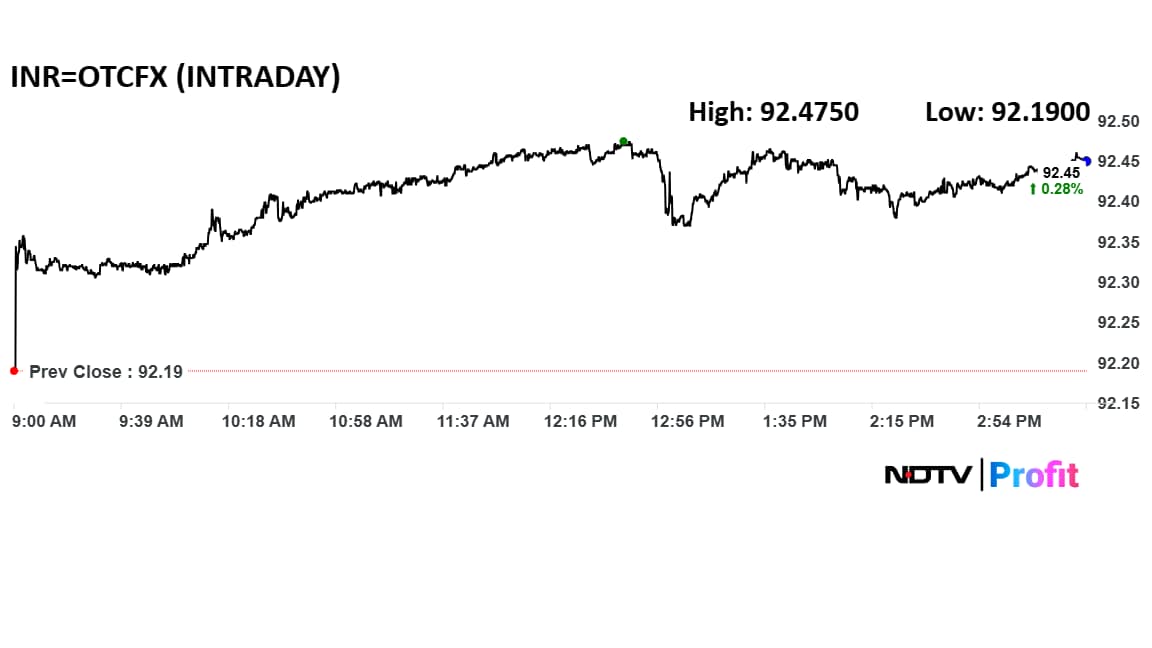
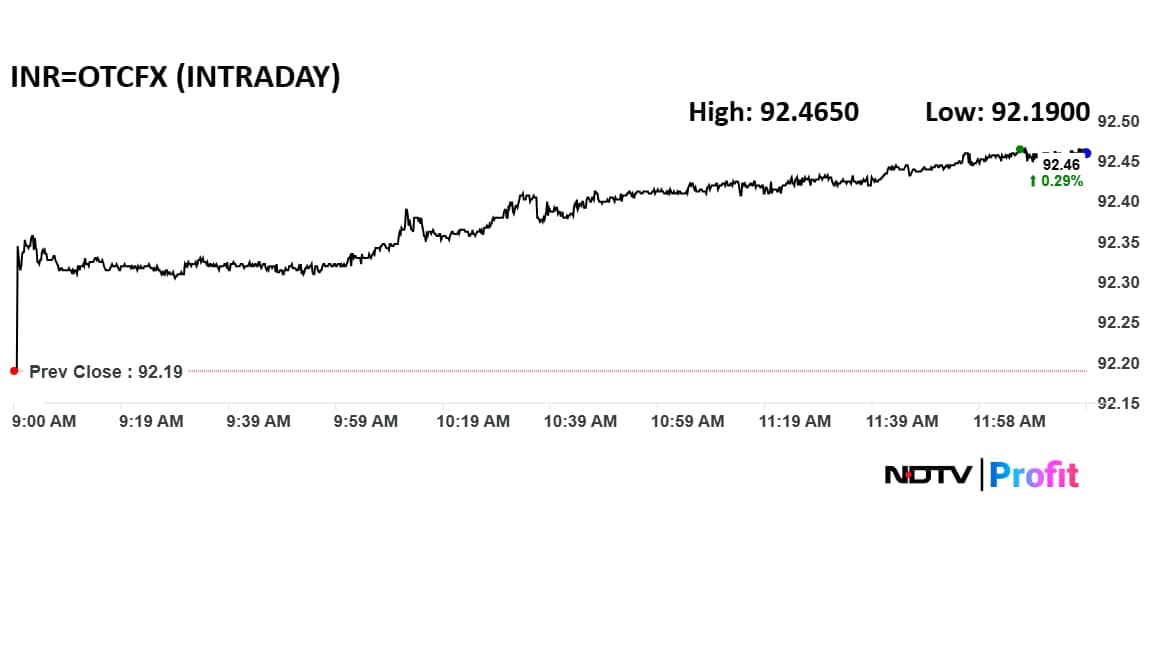
The rupee closed at a record low of 92.46 to the dollar, weakening 26 paise or 0.3%, even as reports said the RBI stepped in to curb volatility.
Elsewhere, European stocks fell, with both the STOXX 50 and the STOXX 600 down about 1%. All Asian benchmarks closed lower, with the MSCI Asia Pacific index dropping 1.43% and recording a second week of decline. US equity futures traded higher.
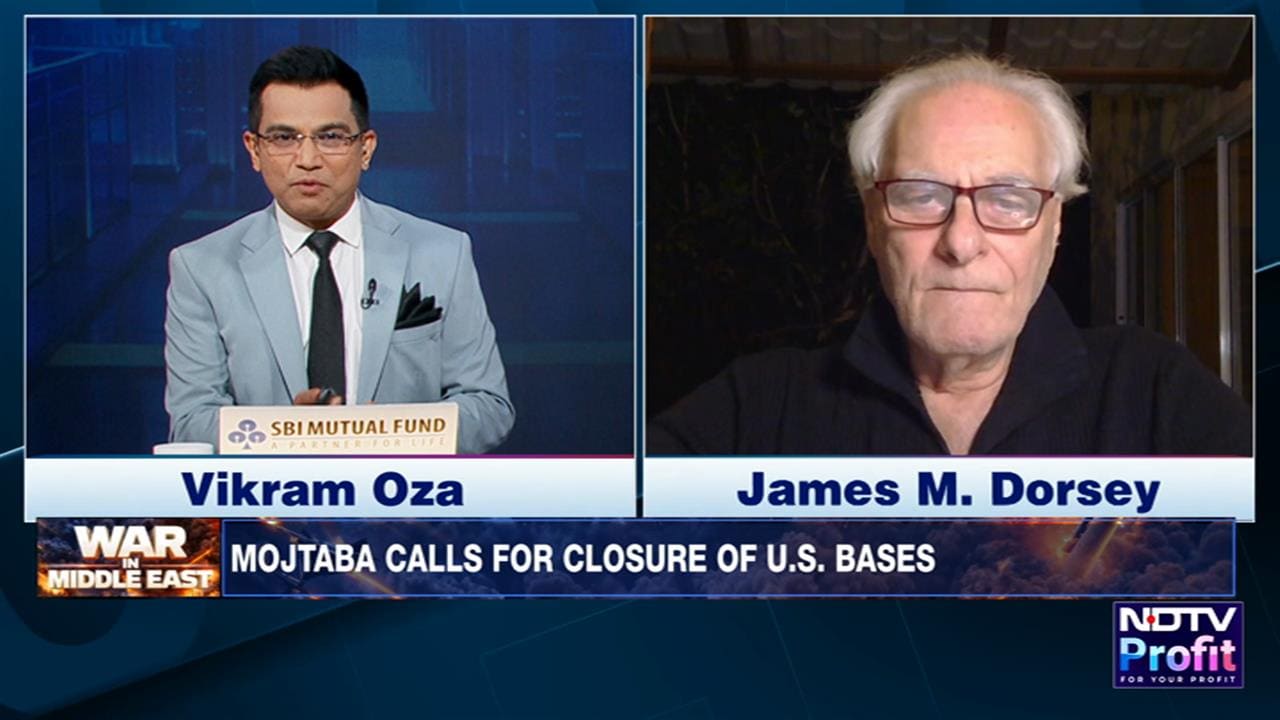
Brent oil traded over $100 and the WTI at $97 a barrel following one of the most volatile trading weeks ever, with investors bracing for more upheaval as Iran pledged to keep the Strait of Hormuz effectively shut.
Read reasons for market decline.
ALSO READ: Nifty Falls 3,000 Points From Peak As Rs 24 Lakh Crore Wiped Out In M-Cap
This live blog has ended.
"Going ahead, the immediate support for Nifty is placed in the 23,000-22,950 zone. Any sustainable move below this zone could result in Nifty extending its weakness towards 22,750, followed by 22,500 in the short term. On the upside, the zone of 23,450–23,500 zone is likely to act as a strong resistance," said Sudeep Shah, head - Technical and Derivatives Research at SBI Securities.
US index futures traded higher ahead of key inflation data.
The Nifty 50 index shed Rs 3.6 lakh crore in market capitalisation today. The index logged its third consecutive session of decline.
The rupee closed at a record low of 92.46 to the dollar, weakening 26 paise or 0.3%. The local currency lost 0.74% in value in the last five sessions, the worst in two weeks.
A stronger greenback, heavy FII outflows and sustained selling in the domestic equity markets further weighed on the rupee, according to forex traders. The dollar index, which gauges the greenback's strength against a basket of six currencies, was flat.
Indian equities had their worst week since June 2022 as escalating conflict in the Middle East and higher energy prices soured investor sentiments. The Nifty and Sensex ended over 5% lower for the week.
The Nifty 50 closed 488 points or 2.06% lower at 23,151.10. The BSE Sensex shed 1,470 points or 1.93% to settle at 74,563.92.
Larsen and Toubro, Hindalco Industries and Tata Steel were the top losers on the benchmark indices.
The broader market underperformed the benchmark. All 15 sectoral indices on the NSE ended lower, led by metals, PSU Banks and defence.
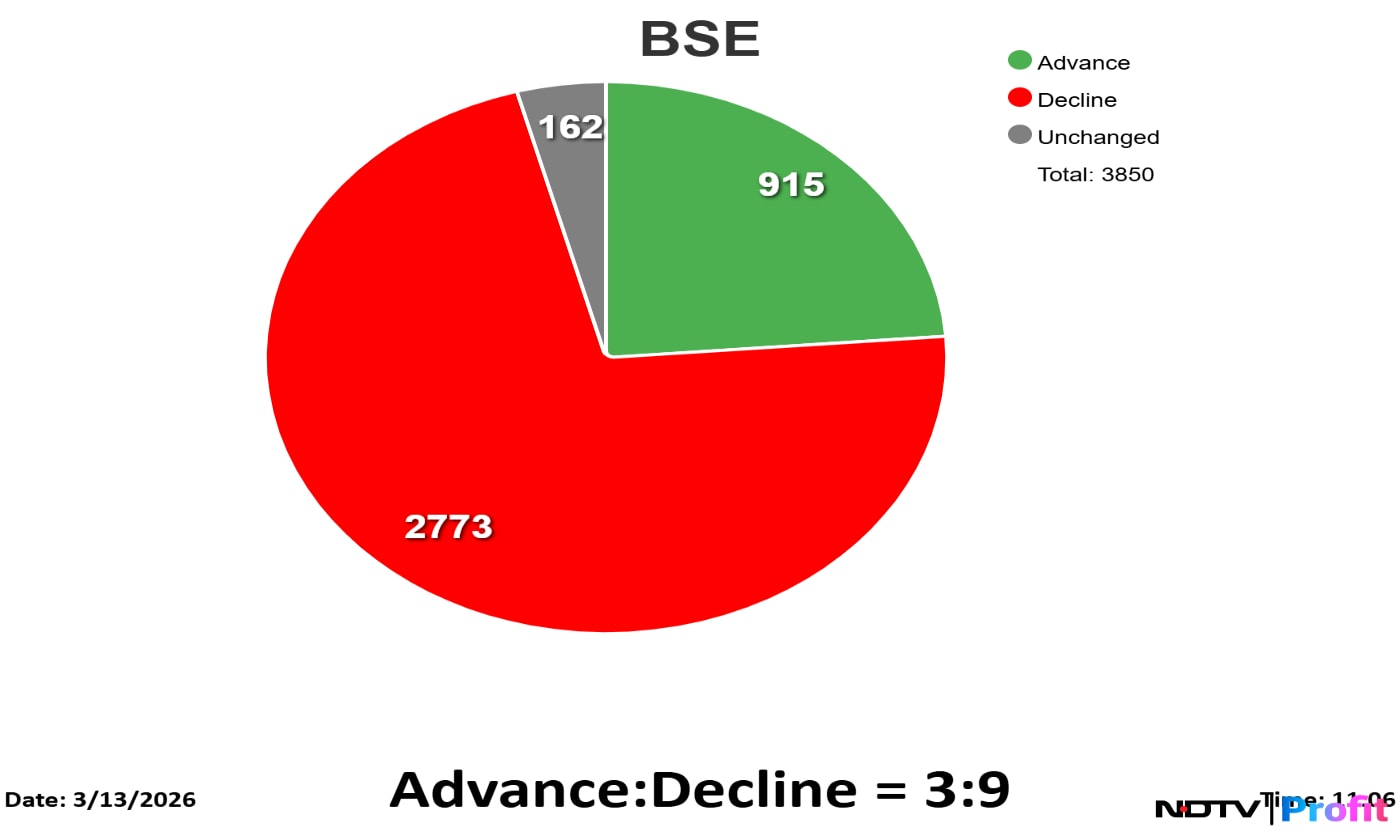
The market breadth deteriorated as the advance-decline ratio was skewed heavily in the favor of bears at day’s close. A total of 458 stocks out of the Nifty 500 universe ended in the red.
_13_March_26.png)
_13_March_26.png)
_13_March_26.png)
Goldman Sachs, the New York based multinational investment bank, has lowered the FY26 India GDP growth forecast to 6.5% from 7%.
Analysts also raised inflation estimate to 4.2% from 3.9%.
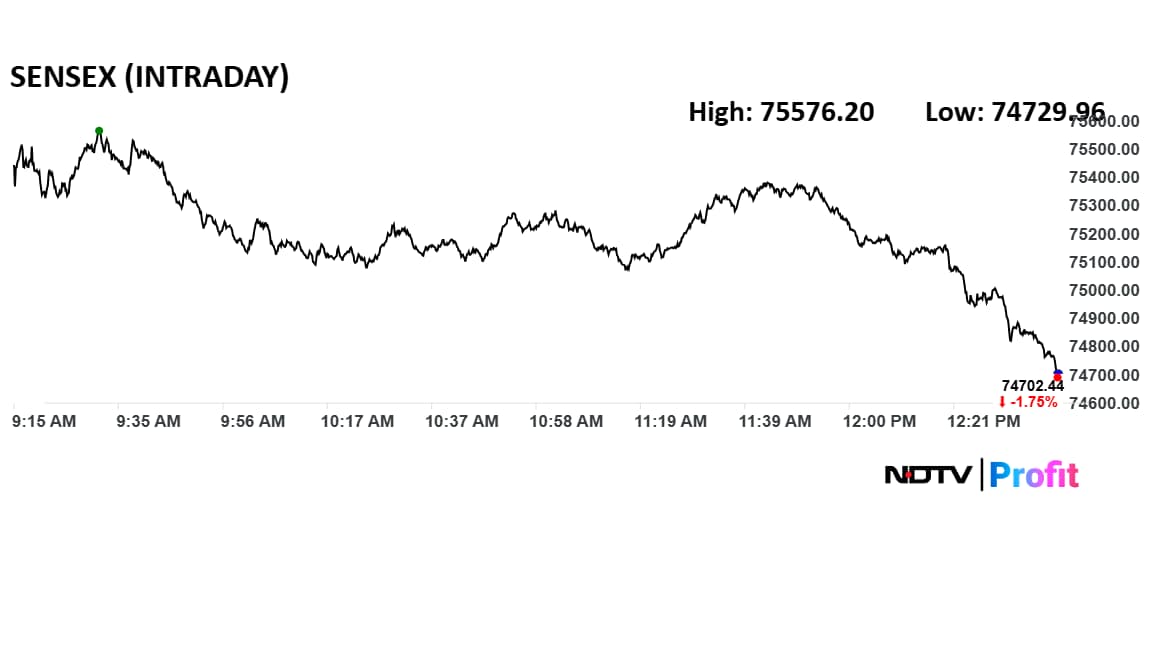
The Nifty and Sensex have tanked to session lows in the final hour of trade.
Central Mine Planning and Design Institute Limited, a wholly owned subsidiary of Coal India, has filed Red Herring Prospectus for an IPO. The RHP filing pertains to the proposed initial public offering (“IPO”) of CMPDIL comprising an offer for sale of up to 107,100,000 equity shares by Coal India Limited, which remains subject to receipt of applicable approvals, market conditions, and other relevant considerations.
European stocks fell on Friday, with both the STOXX 50 and the STOXX 600 down about 1%, leaving the benchmarks on track to end the week little changed as oil prices continued to climb and there were still no signs of de-escalation in the Middle East conflict.
Brent crude futures rose about 1% to approach $101 a barrel on Friday, extending weekly gains to roughly 8%, though prices eased from the sharp surges seen in previous sessions.
The Nifty is set to close 5% lower for the week, the worst since June 2022.
IDFC First Bank clarified that there is no additional financial liability in its Chandigarh branch, according to an exchange filing.
The bank said it has completed reconciliation of the relevant accounts at the Chandigarh branch, addressing the matter raised earlier.
JSW Group Chairman Sajjan Jindal is evaluating a potential investment in Vodafone Idea Ltd as the government looks to bring in a strong investor to support the financially stressed telecom operator, according to people familiar with the matter.
The discussions are currently exploratory, and any potential investment could be in the range of Rs 45,000 crore to Rs 60,000 crore, the people said.
Source: Media Reports
Market breadth turned sharply negative on the Nifty, with 48 out of the 50 index constituents trading in the red. This marks the weakest breadth on the index since Jan. 20, 2026.
Indian markets are seeing some pressure again in Friday's trade after a brief period of recovery earlier this week, amid renewed geopolitical tensions in the Middle East. As of 1:15 pm, Nifty is trading around 1.91% lower at 23,191 and Sensex is trading 1.78% lower at 74,680.
Here are three reasons why markets are falling in trade today.
All Asian benchmark closed lower on Friday, with the MSCI Asia Pacific index dropping 1.43% and recording a second week of decline. High oil prices and continued disruption in energy supplies from the Middle East kept investors unnerved.
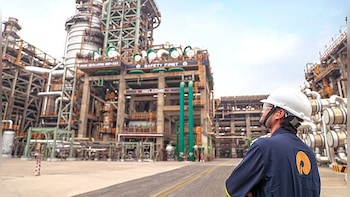
Reliance Industries may emerge relatively insulated from the ongoing volatility in global energy markets as supply disruptions in the Middle East push refining and petrochemical margins higher, according to a research note by Jefferies. The brokerage said the company's oil-to-chemicals (O2C) segment is likely to benefit from the sharp rise in refining and petrochemical spreads triggered by disruptions in crude and refined product flows following the Strait of Hormuz crisis.
Shares of Reliance Industries currently trade below their long-term valuation averages, suggesting limited downside risk, Jefferies noted, while maintaining a "buy" rating on the stock with a cut in the price target of Rs 1,740 from the earlier Rs 1,820.
Should you add shares of Indian Oil Corp.? Should you hold shares of Bharat Coking Coal Ltd. at the current market price? Have you lost the chance to buy Shriram Finance Ltd. stock at an attractive price?
Avinash Gorakshakar, founder of Avinashmentor.com, and Chandan Taparia, head of technical & derivatives research at Motilal Oswal Financial Services, provided insights on these investor queries and more on NDTV Profit's Ask Profit show.
The blue-chip Nifty 50 index is down 3,000 points from its all-time high of 26,328.55 on Jan 2, marking one of the worst starts to a year for Indian stock markets. As per an NDTV Profit calculation, this has led to an erosion of over Rs 24 lakh crore in market capitalisation. During the same phase, the 30-stock BSE Sensex is down nearly 10,700 points from the high of 85,762 hit on the same day.
The rupee hit a new low of 92.465 to the dollar at noon, declining 0.3% against the greenback.
The RBI was likely selling dollars, three traders told Reuters, as the rupee remains under strain due to worries over how elevated oil prices may impact the growth-inflation dynamics for the economy.
Tata Motors has won cumulative orders of more than 5,000 buses and bus chassis from multiple State Transport Undertakings (STUs) across the country. Each tender was awarded through a competitive e-bidding process under the Government’s procurement system, with deployments scheduled in phases, as agreed with the respective STUs.
Source: Exchange filing
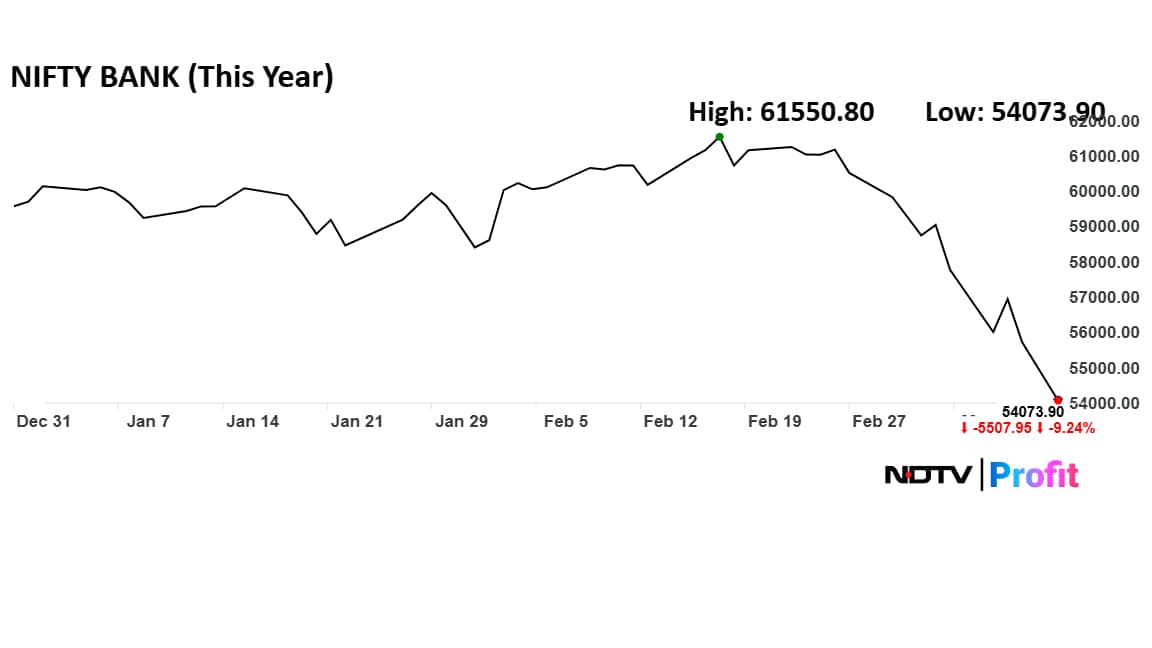
Aniruddha Sarkar of Equinova Investment told NDTV Profit that valuations in the banking sector are becoming increasingly attractive after recent corrections. He noted that banks have seen damage over the past month largely due to foreign institutional investor outflows, but the sector is likely to witness a strong rebound.
Sarkar said export opportunities in the auto ancillary space remain significant, particularly as global supply chains diversify. He added that the firm is also positive on the two-wheeler segment, with a strong focus on domestic consumption trends in India.
According to him, most sharp market declines tend to be triggered by specific events rather than fundamental weakness. Investors should therefore focus on sectors and pockets offering strong earnings growth.
He highlighted that earnings growth remains the strongest in mid- and small-cap companies, and Equinova continues to maintain a constructive stance on these segments.
Sonal Varma of Nomura told NDTV Profit that the outlook of the Federal Reserve could turn more hawkish than expected as central banks remain alert to rising inflation risks amid the ongoing war.
She said the US remains relatively insulated from the energy shock as it is a net energy exporter, but higher crude prices pose a significant challenge for India. Crude around $100 per barrel is a major shock for the Indian economy and lowers the chances of repo rate easing in the near term.
Varma noted that the duration of the war will be a key factor in determining GDP growth estimates, and forecasts may be revised depending on its impact. High-frequency indicators are likely to be driven by supply-side disruptions, while gas rationing could weigh on industrial production.
She added that consumers may face pressure on disposable income and inflation risks could intensify if the conflict persists.
Zydus Lifesciences has received final approval from the United States Food and Drug Administration (USFDA) for Cevimeline Hydrochloride Capsules 30 mg indicated for the symptomatic treatment of dry mouth (xerostomia) associated with Sjögren’s syndrome. It will be produced at the Group’s manufacturing facility at Ahmedabad. Cevimeline Hydrochloride Capsules 30mg had annual sales of $26.9 million.
Aurionpro Solutions Ltd. announced its largest-ever order win in the fast-growing data centre segment, secured from one of the leading hyperscale data centre operators. The multi-year mandate entails the development of a large, AI-ready green data centre in India, designed to support next-generation, high-density computing workloads. Valued at close to Rs 350 crore, the engagement covers comprehensive design, detailed engineering, and end-to-end execution of MEP works, leveraging Aurionpro’s in-house team of highly skilled specialists with expertise in missioncritical infrastructure design
Source: Exchange filing.
The blue-chip Nifty 50 is down 3,000 points from its all-time high of 26,328.55 on Jan 2. The BSE Sensex is down 10,652 points from Jan 2 high of 85,762.
HDFC Bank, RIL, Infosys, TCS and Bharti Airtel contributed nearly half of the fall.
In terms of percentage, IndiGo, Mahindra, JFS were the top losers in this period.
_13_March_26.png)
_13_March_26.png)
_13_March_26.png)
Midcap and smallcap indices fell more than the benchmark Nifty and Sensex.
_13_March_26.png)
_13_March_26.png)
_13_March_26.png)
_13_March_26.png)
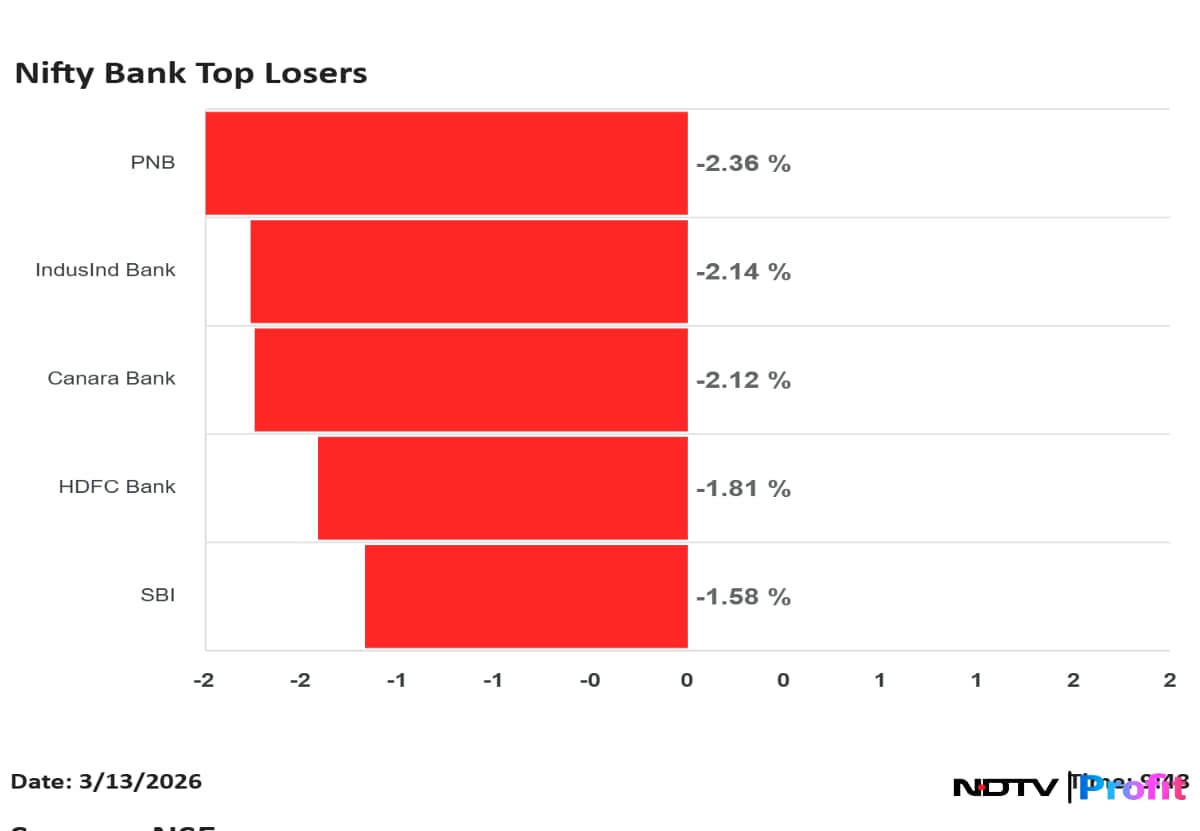
All bank stocks part of the Nifty Bank Index are down. Punjab National Bank and IndusInd Bank were the top losers.
On the Nifty 50, HDFC Bank and ICICI Bank were the top drags in terms of points.
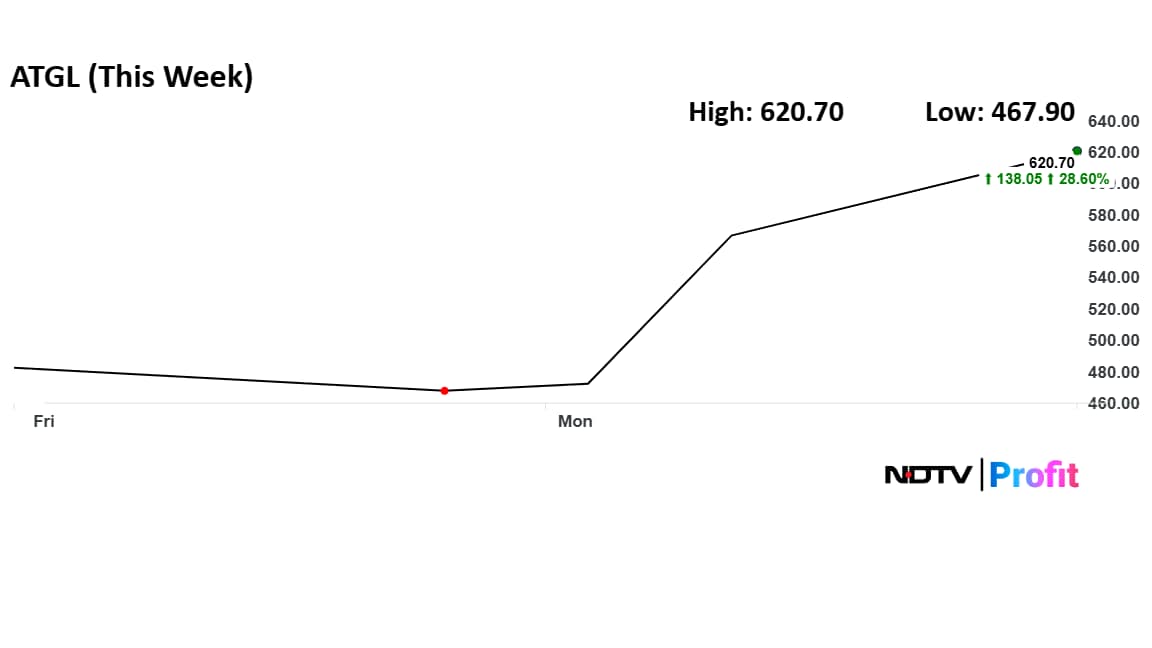
Shares of Adani Total Gas surged for a fourth straight session, taking it weekly gain to nearly 29%.
The Nifty 50 slipped below the immediate support level of 23,500.
"Going ahead, 23,550–23,500 will act as a key support zone for the index. A sustained move below 23,500 could trigger further downside towards the 23,350 level," according to Sudeep Shah, head of technical and derivatives research at SBI Securities.
On the upside, 23,800–23,850 remains an immediate resistance zone, while a decisive breakout above 23,850 may lead to pullback rally towards the 23,970–24,000 zone.
The markets have been in a nosedive and amidst this turmoil Jefferies has come out with a report on 23 stocks they are bullish on. Their India Strategy report for March 2026 curates bottom-up ideas when the Nifty has fallen 8% in one month, courtesy the ongoing conflict in the Middle East.
Jefferies' latest portfolio restructuring features 23 top 'buy' recommendations and eight "underperform" calls, with the brokerage firm injecting fresh momentum into its buy category by adding seven new companies.
State Bank of India (SBI), Star Health, Groww, Bharat Forge, JSW Steel, Eternal, and Max Healthcare.
India's benchmark equity indices fell at the opening bell, tracking weaker global cues. HDFC Bank and ICICI Bank were the top drags on the Nifty.
_13_March_26.png)
_13_March_26.png)
_13_March_26.png)
_13_March_26.png)
_13_March_26.png)
The United States on Friday initiated a fresh probe into 60 trading partners including India for alleged use of "forced labour" for production of goods, as the Trump administration intensify steps to create trade barriers after legal setback on tariffs.
The US Trade Representative has invoked Section 301(b) of the Trade Act of 1974, to determine whether acts, policies, and practices of each of these economies related to the failure to impose and effectively enforce a ban on the importation of goods produced with forced labor are unreasonable or discriminatory and burden or restrict US commerce, according to statement. Section 301 is designed to address unfair foreign practices affecting US commerce.
The rupee opened lower against the dollar, hovering near the record low level hit in the previous session. The local currency was just above 92.30.
The dollar index, which measures its strength against a basket of major currencies, was flat.
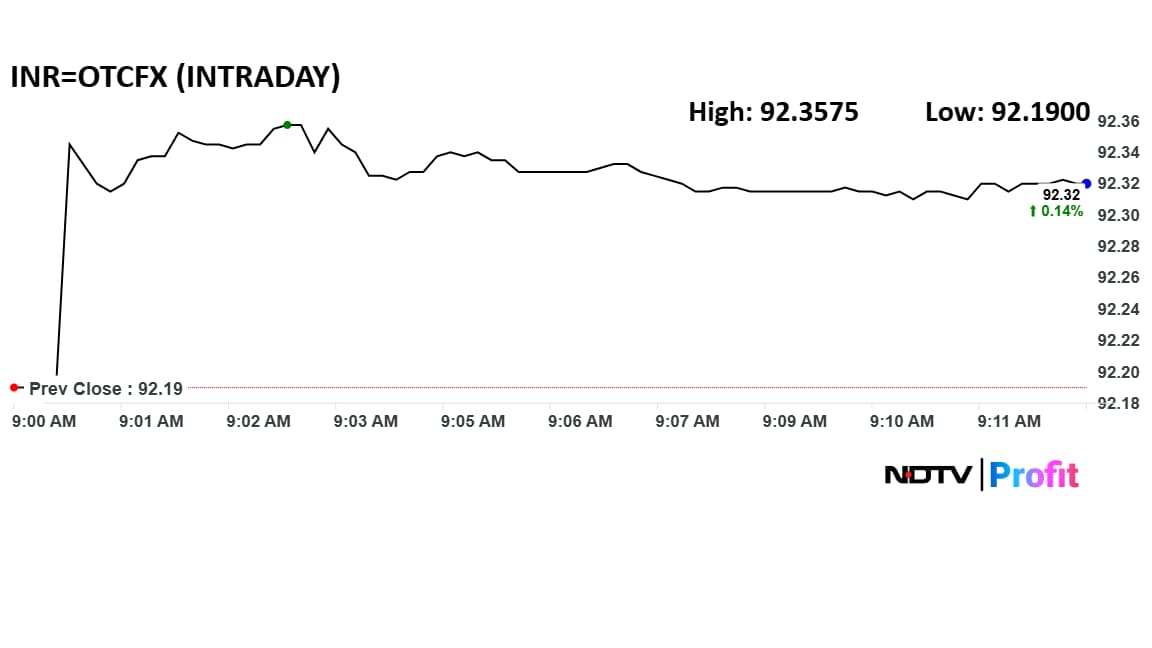
The Nifty and Sensex fell nearly 1% in the pre-open session.
CLSA Price Action – Laurence Balanco
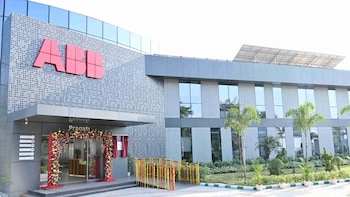
UBS has upgraded ABB India from 'neutral' to 'buy' while hiking the target price from Rs 5,310 to Rs 8,030. The new target implies a 25% upside from current levels. Moreover, UBS has also added ABB India to the APAC Key Call list.
Overall, the brokerage firm sees favourable risk-reward in ABB India, with both structural and cyclical growth levers aligning together, potentially paving the way for growth going forward.
HSBC on Coal India
Jefferies on Reliance Industries
Global oil markets remain on edge after one of the most turbulent trading weeks in years, with Brent crude hovering near the $100-per-barrel mark as tensions around the Strait of Hormuz intensify. The international benchmark eased slightly after surging more than 9% in the previous session, while US crude benchmark West Texas Intermediate traded close to $96. The sharp moves reflect growing concerns about supply disruptions as geopolitical tensions escalate in the Middle East.
Asia-Pacific markets opened lower Friday as oil prices soared on renewed fears that a prolonged conflict in the Middle East could further crimp energy supplies, stoking fears of a global economic downturn. A gauge of Asian shares dropped 0.5% in early trading. Japan's Nikkei 225 dropped 2% while the broad-based Topix fell 1.4%. South Korea's blue chip Kospi slumped almost 3%. Hong Kong's Hang Seng index fell 0.7%.
The GIFT Nifty, a futures contract based on the Nifty 50, was up 0.3% at 23,555, indicating a higher open for the benchmark index. US and European index futures ticked higher.
India's benchmark equity indices closed lower for a second consecutive session on Thursday, tracking bearish sentiments across the world. The Nifty 50 ended 227 points or 0.95% lower at 23,639.15. The BSE Sensex shed 1.08% to close at 76,034.42 on weekly expiry day. Intraday, both benchmarks dropped 1.3%. Auto and FMCG were the top sectoral losers on the NSE.
The broader market outperformed the blue-chip indices, with the Nifty Midcap 150 and Nifty Smallcap 250 falling 0.2% and 0.4%, respectively.
Essential Business Intelligence, Continuous LIVE TV, Sharp Market Insights, Practical Personal Finance Advice and Latest Stories — On NDTV Profit.










.jpeg?im=FeatureCrop,algorithm=dnn,width=350,height=197)