EURO STOXX 50 Slides 3.1%, on track for correction from February high

Scan to Download


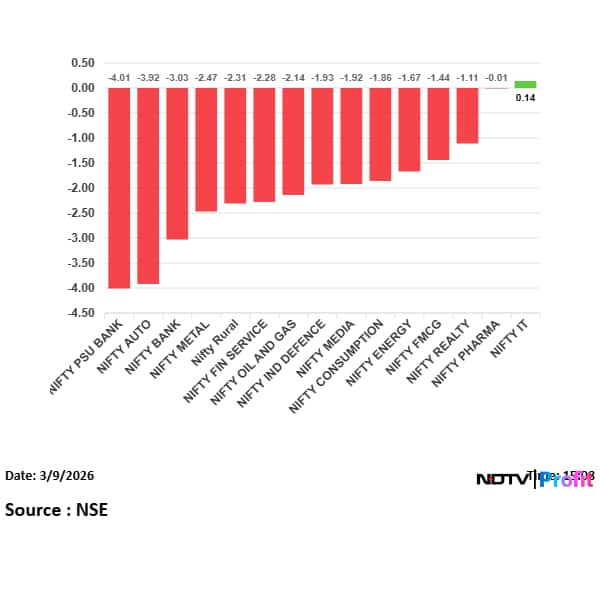
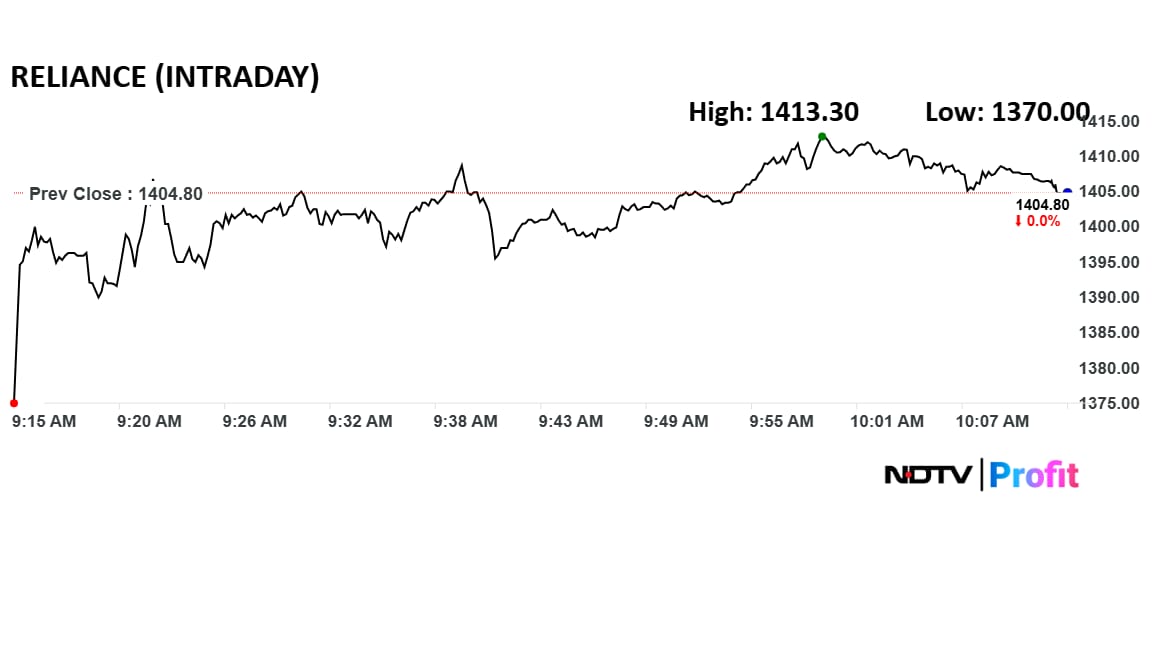
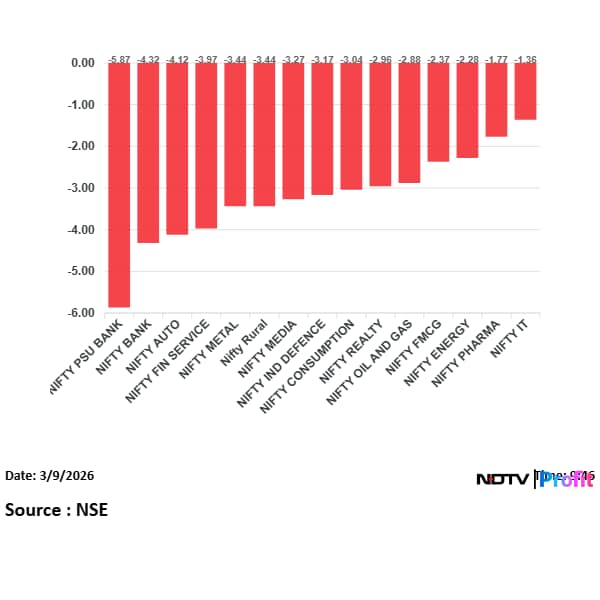
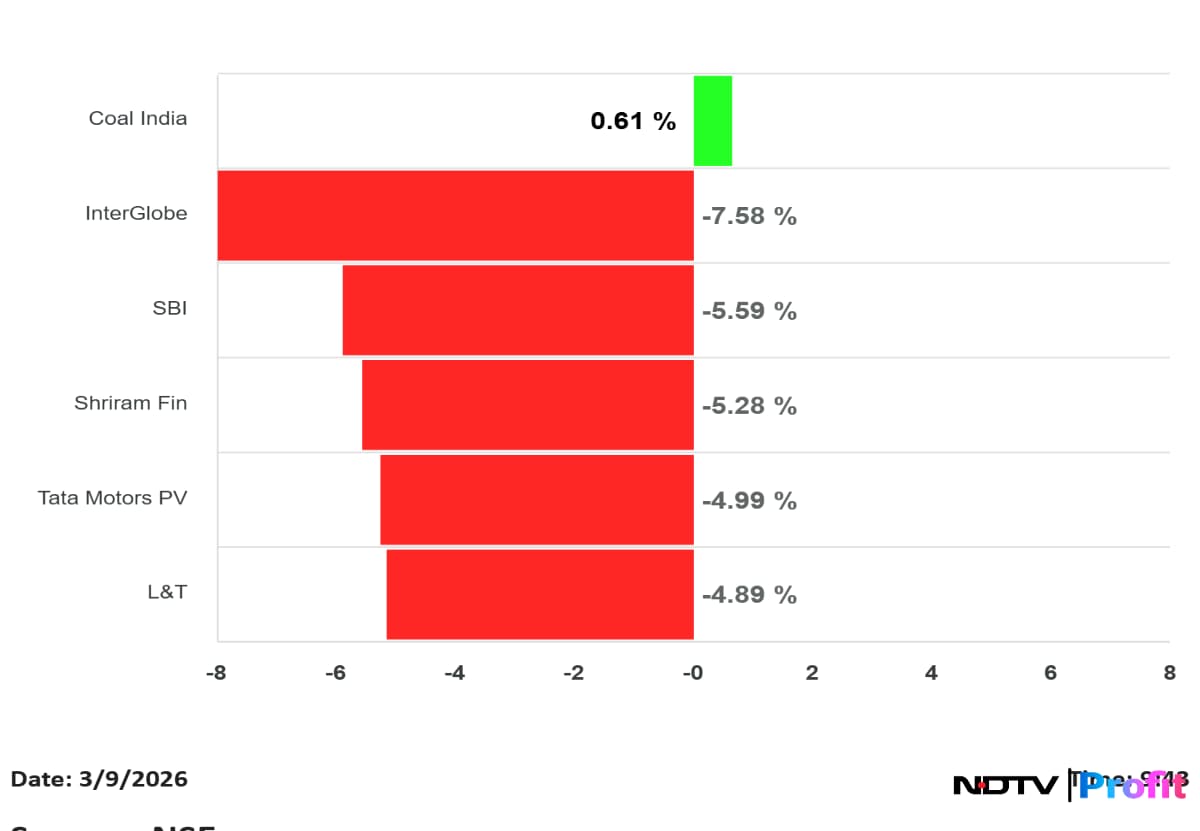
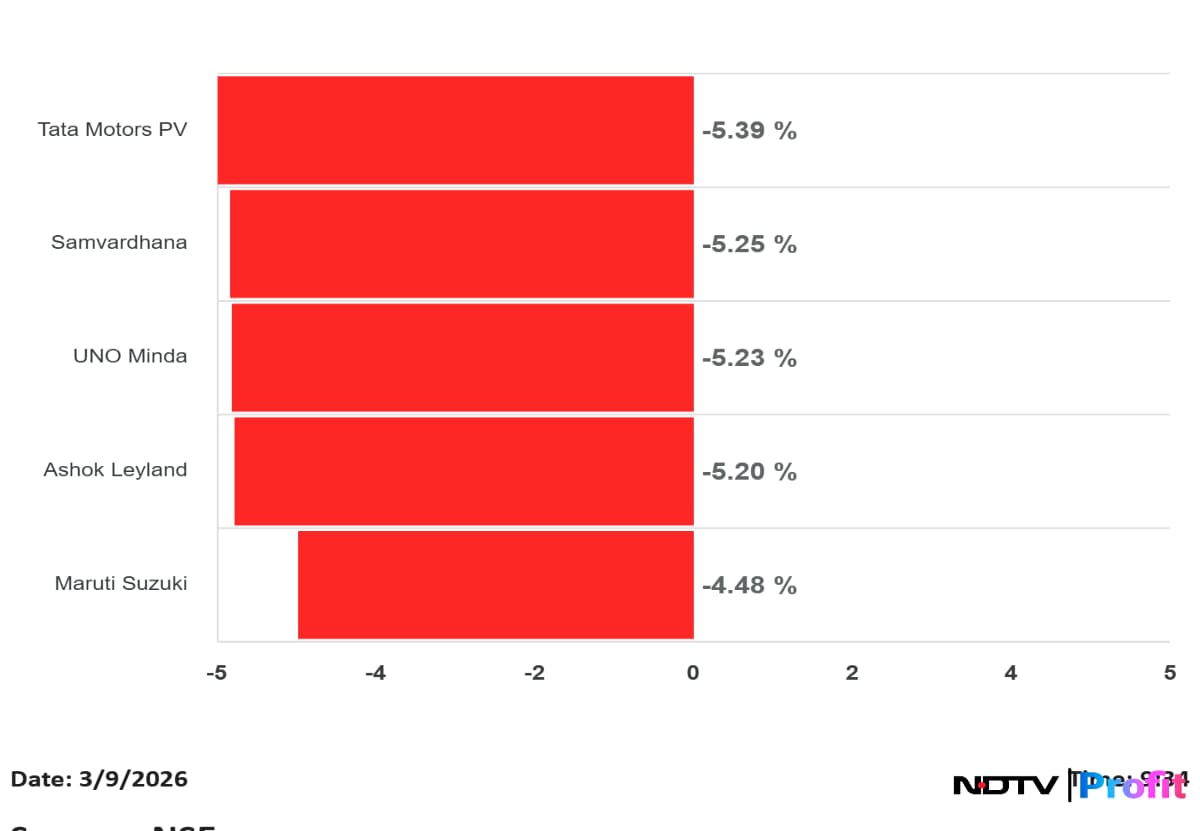
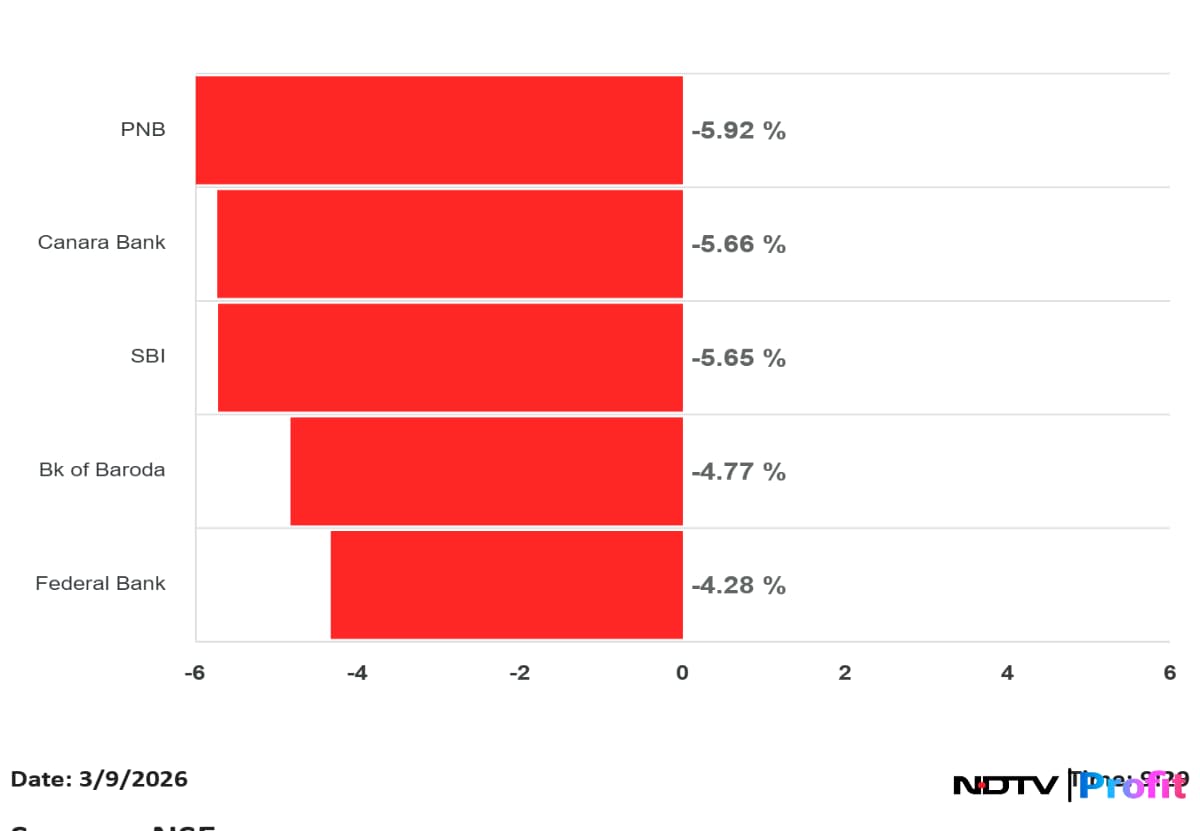
Indian equity benchmarks ended Monday's session off their intraday lows after crude oil prices retreated sharply from earlier highs, easing some pressure on global markets. The Nifty 50 closed 1.74% lower near the 24,000 mark, while the Sensex ended nearly 1,400 points lower around 77,500 after a volatile trading session.
Both indices had fallen much more sharply earlier in the day as the surge in oil prices and global market weakness triggered risk aversion among investors. The Sensex had dropped as much as 2,994 points, or 3.2%, to an intraday low of 76,424.55, while the Nifty declined as much as 3.1% to 23,597 before recovering part of the losses. The selloff had pushed both benchmark indices into correction territory earlier in the session, with the Nifty falling more than 10% from its record high and the Sensex declining about 11% from its peak.
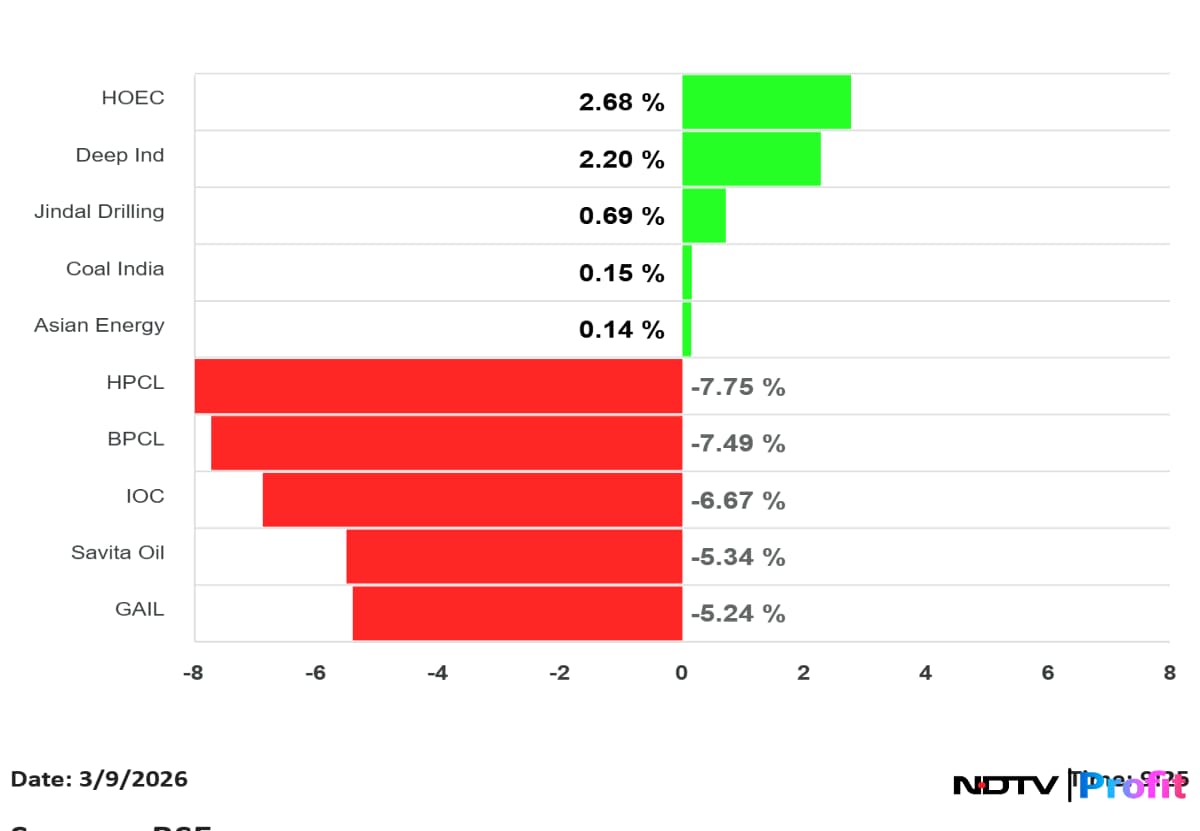
Oil prices pulled back sharply after a historic intraday surge earlier in the day. Brent crude traded at $103.22 per barrel, up $10.53 or 11.36%, while US benchmark crude slipped below the $100 mark to $99.97, gaining $9.07 or 9.98%. Prices had earlier surged in what marked the largest intraday jump on record. Brent had climbed as much as 29.92% to $119.50 per barrel, while US crude rose as much as 31.44% to $119.48 before reversing.
Global market sentiment remained cautious as US stock futures also traded lower. Dow futures were down 768 points, or 1.62%, after being down more than 1,000 points earlier in the session. S&P 500 futures slipped 1.52%, while Nasdaq 100 futures declined 1.55%. The volatility across global markets comes as the conflict involving Iran, the United States and Israel entered its 10th day, increasing uncertainty across energy and financial markets.
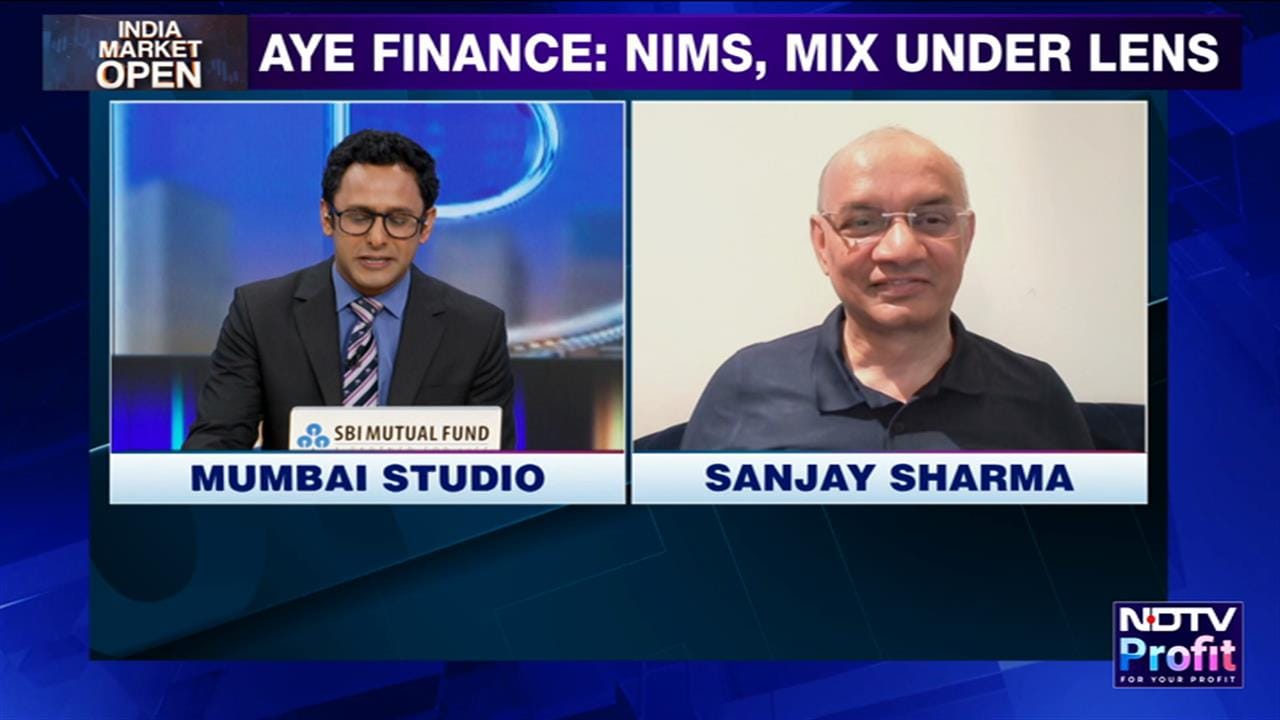
Manish Chokhani said the market is being supported by domestic flows and said he sees the current phase as a “buy on dips” setup, while adding he expects the market to find a bottom in the coming weeks.
On valuations, Chokhani said valuations have corrected and an earnings recovery is awaited; he said he prefers defence, metals and infrastructure and flagged a capex recovery setup. Jayakumar said IT is no longer a safe haven and said he prefers pharma.
On flows and other assets, Chokhani said FIIs may not return quickly even as the long-term case remains intact, while Jayakumar said FIIs can come back but India is not dependent on them. Chokhani said gold and silver have made a “euphoric” high and said he expects them to move higher, while Jayakumar said telecom and data centres are at good valuations.
EURO STOXX 50 Slides 3.1%, on track for correction from February high
Nifty 50 is about 10% off its record high and the Sensex is around 11% below its peak, putting both in correction territory after Monday’s selloff. The move comes amid an escalation in the Iran-United States-Israel conflict and a sharp rise in oil prices, with Brent up to $119.50 and WTI up to $119.48 during the session.
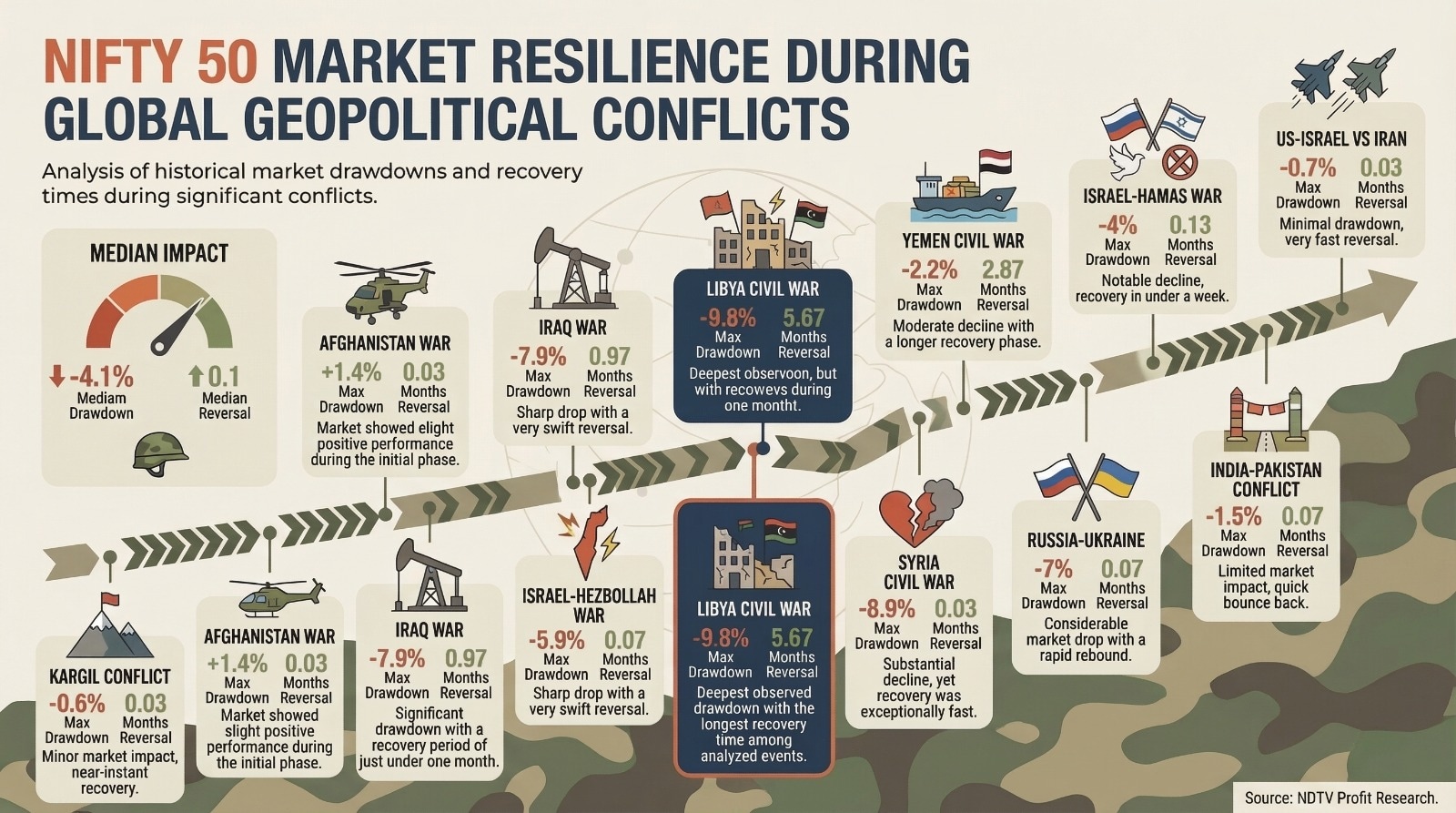
The analysis cited in the update says the Nifty 50’s median drawdown during geopolitical events is about 4.1%, with a typical reversal within 0.1 months. It lists drawdowns of about 0.6% during the Kargil conflict and 0.7% during Israel-Iran tensions, while larger moves included 7.9% during the Iraq war and about 7% during the Russia-Ukraine war, followed by rebounds. It also cites deeper declines such as about 9.8% during the Libyan civil war, around 8.9% during the Syrian civil war and about 5.9% during the Israel-Hezbollah conflict before markets recovered.
The rupee weakened by 46 paise against the US dollar to 92.20
- Harshal Dasani, Business Head, INVAsset PMS
Essential Business Intelligence, Continuous LIVE TV, Sharp Market Insights, Practical Personal Finance Advice and Latest Stories — On NDTV Profit.