- Geopolitical conflicts have historically caused sharp surges in global oil prices
- Brent crude rose over 25% to $114 amid US, Israel-Iran war and Strait of Hormuz fears
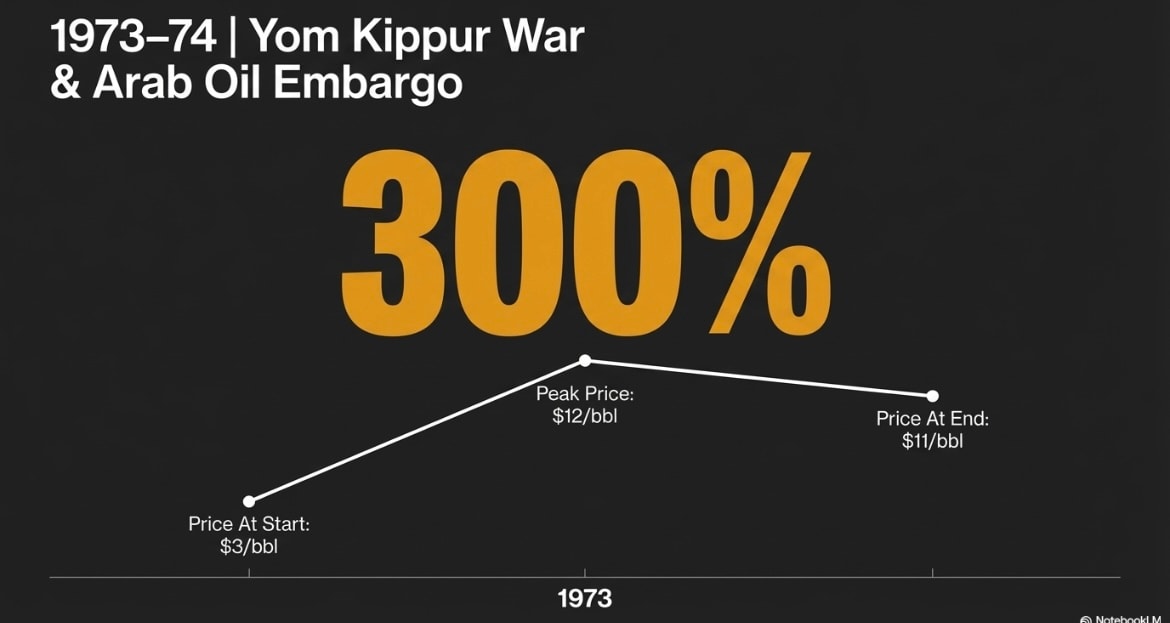
- 1973 Arab oil embargo caused a 300% price surge, triggering a global energy crisis
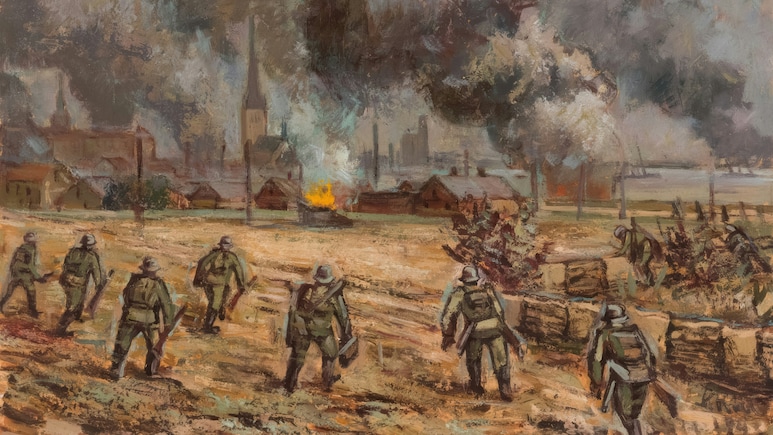
Geopolitical conflicts have historically triggered some of the sharpest movements in global oil prices, often reshaping energy markets and sending shockwaves through the global economy. From the Arab oil embargo of the 1970s to Russia's invasion of Ukraine, and now the US, Israel-Iran war, crude prices have reacted sharply to each conflict.
Brent crude prices surged more than 25% on Monday to around $114 a barrel, extending a rally that has seen prices climb nearly 50% over the past two weeks.
This spike has been fuelled by the escalating conflict involving Iran and fears that the war could disrupt shipments through the Strait of Hormuz, a critical chokepoint for global oil supplies. The situation has also been aggravated by production cuts from key Gulf producers, tightening supply at a time of heightened geopolitical uncertainty.
Also Read | Layoffs Are Rising In Tech, But These Skills Are Helping People Unlock Better Pay
Read the latest US, Israel-Iran war here.
Oil Price Shocks
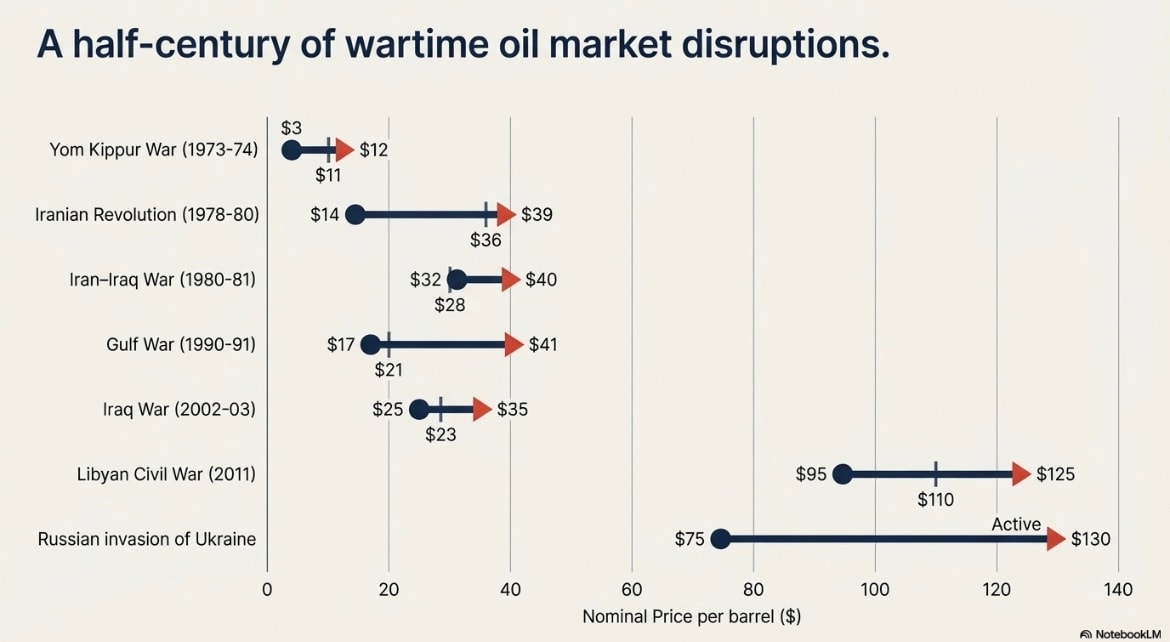
One of the most dramatic oil market reactions followed the 1973 Yom Kippur War and the Arab oil embargo. Oil prices surged from around $3 per barrel to a peak of $12, marking an extraordinary 300% increase.
The embargo imposed by Arab oil producers on countries perceived to be supporting Israel triggered a global energy crisis, leading to fuel shortages and forcing many economies to rethink their energy strategies.
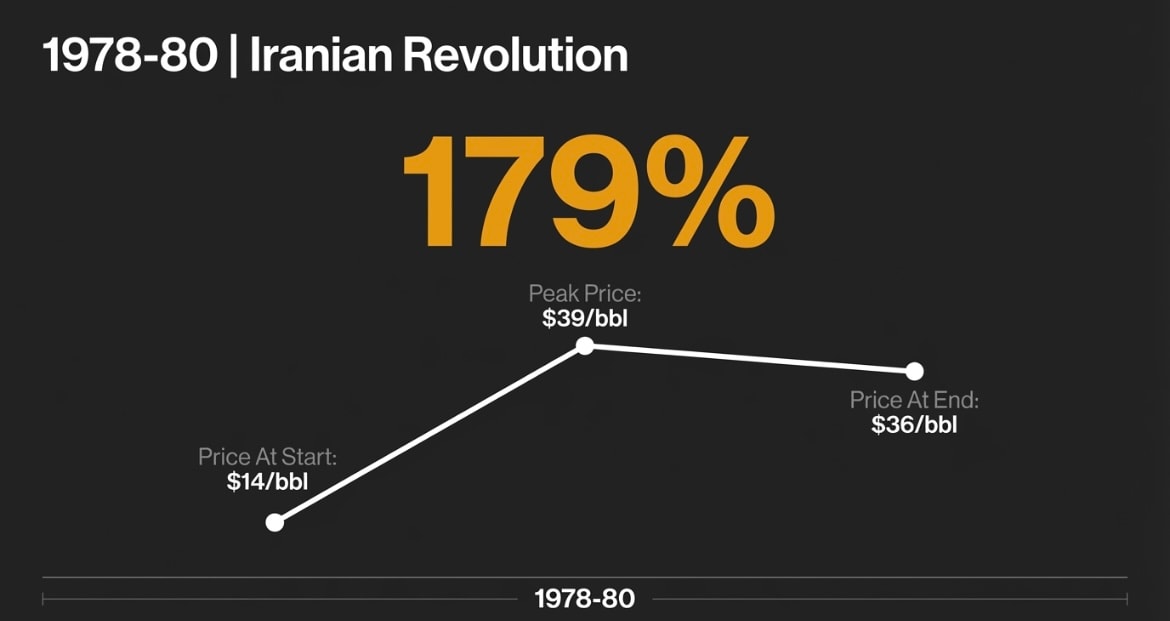
Another major price shock came during the Iranian Revolution of 1978-80, which disrupted oil production in one of the world's key exporting nations.
Crude prices jumped from roughly $14 per barrel to $39, a 179% surge, reflecting fears of prolonged supply disruptions and political instability in the region.
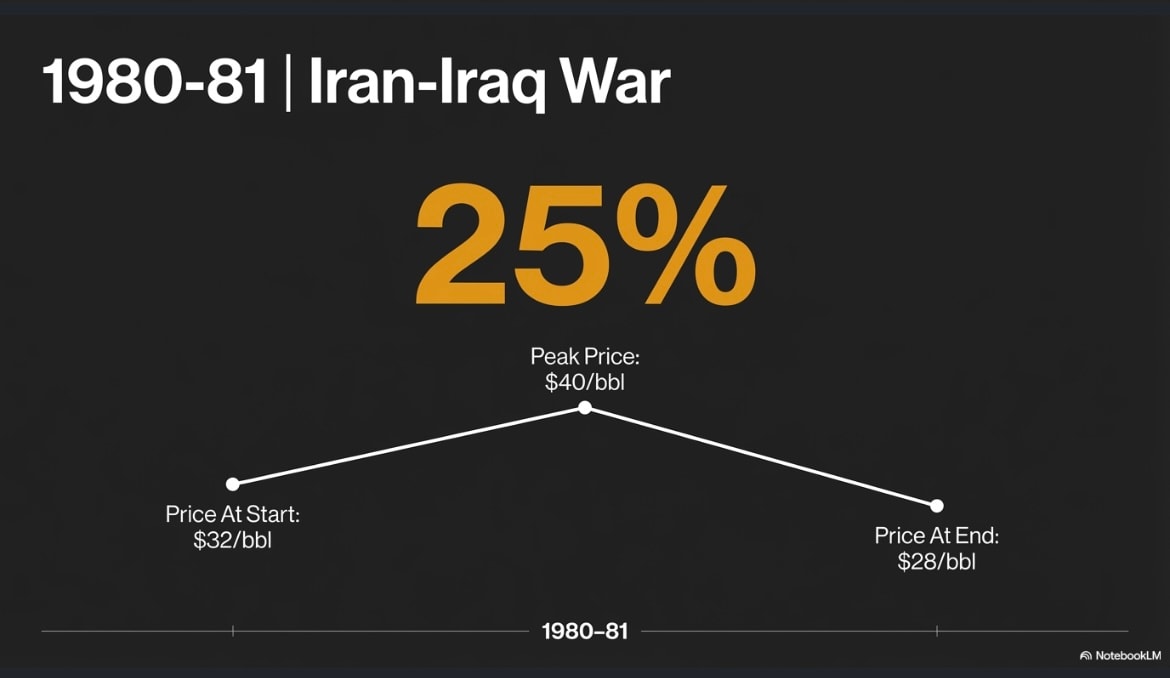
During the Iran-Iraq War in 1980-81, oil prices rose from $32 to $40 per barrel, an increase of about 25%, as fighting between two major producers threatened regional output.
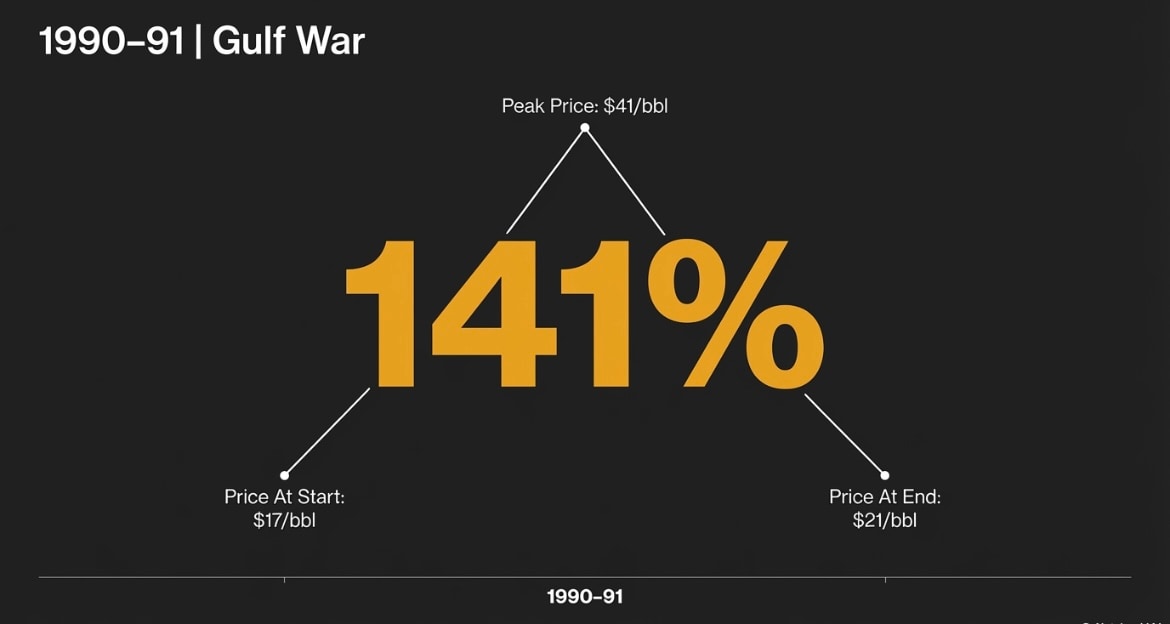
A decade later, the 1990-91 Gulf War pushed crude prices sharply higher once again. Prices climbed from $17 to $41 per barrel, representing a 141% surge, after Iraq's invasion of Kuwait raised concerns about supply disruptions across the Middle East.
Recent Conflicts
More recent conflicts have also triggered notable price moves, though in some cases the spikes were less extreme.
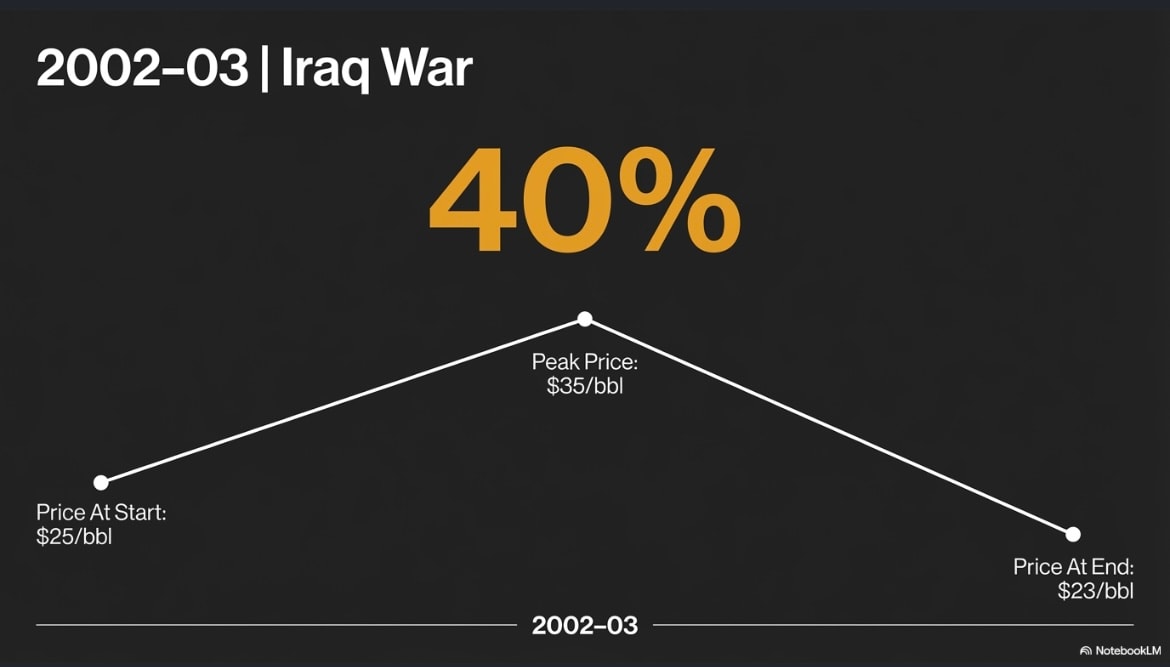
During the 2002-03 Iraq War, oil prices rose from $25 to $35 per barrel, marking a 40% increase as markets reacted to uncertainty around production and supply routes.
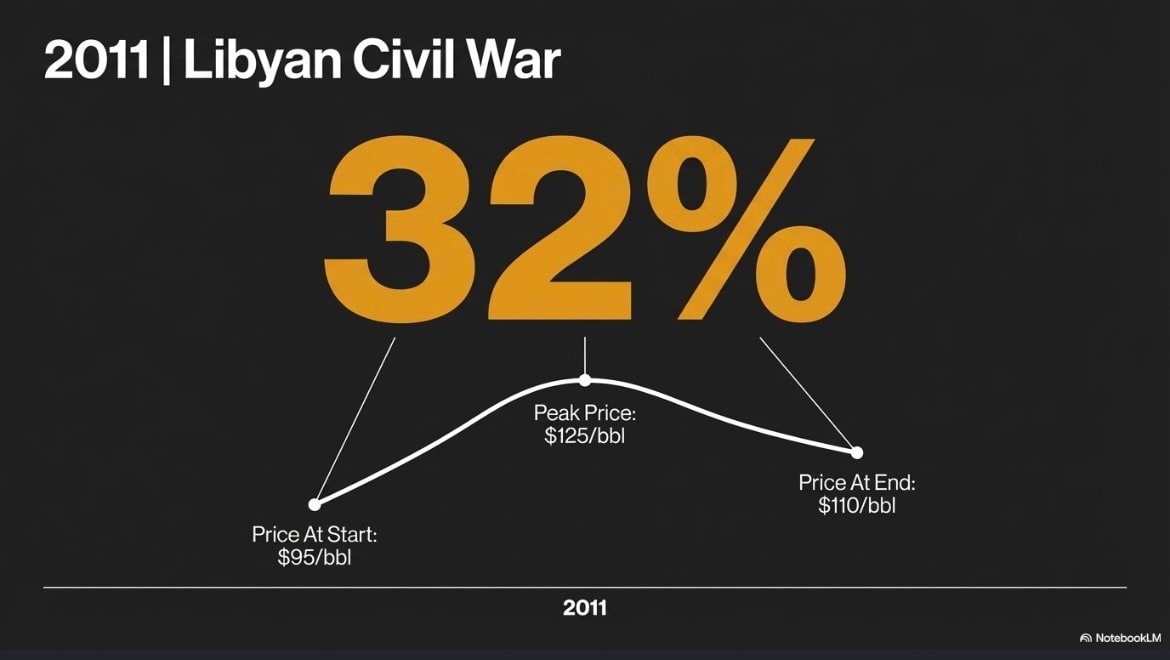
Similarly, the Libyan civil war in 2011 drove prices from $95 to $125 per barrel, a rise of 32%, after unrest in one of North Africa's largest oil producers disrupted exports.
Another recent example came with Russia's invasion of Ukraine, which sent oil prices from around $75 to roughly $130 per barrel, representing a 73% surge at its peak.
Because Russia is one of the world's largest energy exporters, sanctions and supply concerns rapidly tightened global markets, pushing prices to multi-year highs.
The historical pattern highlights how geopolitical tensions-particularly in energy-producing regions-can quickly translate into higher oil prices.
ALSO READ: US-Iran War: Brent, WTI Crude Oil Prices Surge Above $114 As Iran War Escalates
Essential Business Intelligence, Sharp Market Insights, Practical Personal Finance Advice, Daily Fuel, Gold and Silver Prices and Latest Stories — On NDTV Profit.