- SpaceX filed for Nasdaq IPO under ticker SPCX, targeting a $2 trillion valuation
- Company shows $41.3 billion deficit due to heavy spending and AI project losses
- Plans include 30-minute global rocket flights and orbital manufacturing hubs
Elon Musk's space empire SpaceX just submitted its S-1 filing — the mandatory disclosure document companies must submit to US regulators before they can sell shares to the public — with the US Securities and Exchange Commission. It is preparing to go public on the Nasdaq under the ticker SPCX. Wall Street is bracing for a historic launch next month, with the company targeting a staggering $2 trillion valuation. To put that number into perspective, that is larger than the entire Indian stock market.
But when you take a look at the prospectus, you see exactly what it takes to try and build a multi-planetary civilisation. The filings reveal a $41.3 billion accumulated deficit, driven largely by heavy spending and significant losses tied to the company's artificial intelligence projects, including its xAI operations. The entire pitch boils down to one foundational advantage: SpaceX has figured out how to launch massive amounts of weight into orbit at scale. By driving down the cost of getting to space, they expect to trigger a gold rush of new industries.
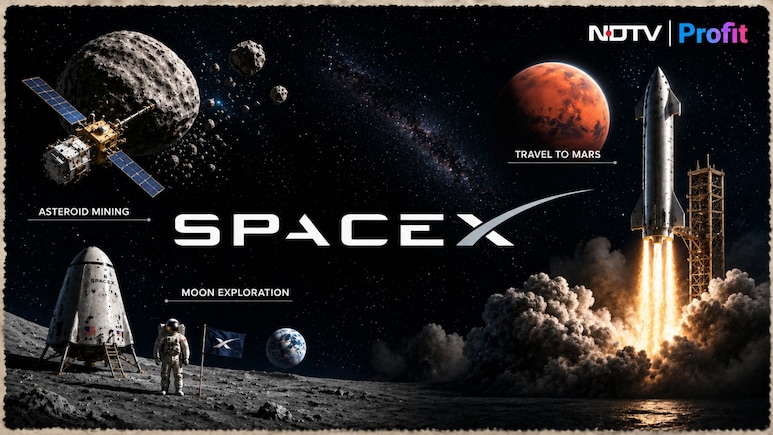
Here is the breakdown of the five future markets Musk is pitching to investors:
Also Read | Layoffs Are Rising In Tech, But These Skills Are Helping People Unlock Better Pay
- Earth-to-Earth in 30 Minutes
SpaceX wants to use its massive Starship rockets to revolutionise the commercial airline industry. The plan is to launch passengers and cargo point-to-point across the globe, cutting transit times from global hubs down to a fraction of what they are today, reducing the most grueling international long-haul flights to under 30 minutes.
- The Zero-Gravity Factory Floor
SpaceX intends to set up orbital manufacturing hubs to take advantage of microgravity. Without the Earth pulling things down, pharmaceutical companies can produce highly pure drugs with better solubility and stability.
Meanwhile, tech firms can grow perfect crystals to create advanced semiconductors that are fundamentally impossible to manufacture on the ground. Additionally, an orbiting factory gets to harness uninterrupted solar power without nightfalls or clouds getting in the way.
- The Lunar and Martian Economy
SpaceX expects to run the logistics—hauling the people, equipment, and supplies needed to establish permanent human settlements on the Moon and Mars.
They also plan to build the underlying grid. The prospectus outlines plans for large-scale solar energy farms, utilising the thin atmosphere and constant sun to power extraterrestrial habitats. Instead of relying on a fragile supply chain stretching back to Earth, they plan to use local dirt and resources to manufacture fuel and construction materials right there on the surface.
- Mining the Asteroid Belt
SpaceX also wants to tap into near-Earth and main-belt asteroids. These space rocks are loaded with platinum-group metals, rare earth elements, nickel, cobalt, and water — sometimes in concentrations far richer than terrestrial mines.
By using autonomous robotics and in-situ processing, the company wants to extract these raw materials directly in space. If they can pull this off, they have an abundant supply chain for space-based industries without ever having to launch those heavy metals out of Earth's gravity well.
- Space Tourism
Historically, spaceflight has been restricted to government astronauts and a handful of billionaires. In 2025, fewer than 30 people out of the entire global population visited Earth's orbit. As orbital flight infrastructure expands and becomes more routine, SpaceX anticipates a massive spike in commercial human space travel.
Execution and Risks
A massive chunk of that $2 trillion valuation rests on what the company calls "Future Markets." And as the risk disclosures point out, some of these industries — like space tourism and lunar cargo transport — are barely in their infancy. Others, like Martian factories, deep-space energy production, and asteroid mining, flat-out do not exist today.
The company admits that predicting the timing, scale, and commercial viability of these sectors is nearly impossible. Even the Earth-bound ideas face intense friction. To make 30-minute global rocket flights a reality, SpaceX has to figure out how to navigate strict environmental and regulatory bans on dropping supersonic sonic booms over populated landmasses, alongside proving the basic economic math of these routes.
Essential Business Intelligence, Sharp Market Insights, Practical Personal Finance Advice, Daily Fuel, Gold and Silver Prices and Latest Stories — On NDTV Profit.