- SEBI plans to reduce foreign portfolio investor onboarding to five business days
- The regulator is reviewing listing and disclosure rules for IPOs and FPOs
- SEBI aims to align REIT and InvIT listing timelines with those of equities
The Securities and Exchange Board of India (SEBI) aims to reduce the time taken to onboard foreign portfolio investors (FPIs) to as little as five business days from several months, as the markets regulator looks to simplify access to Indian capital markets and review key listing and disclosure rules.
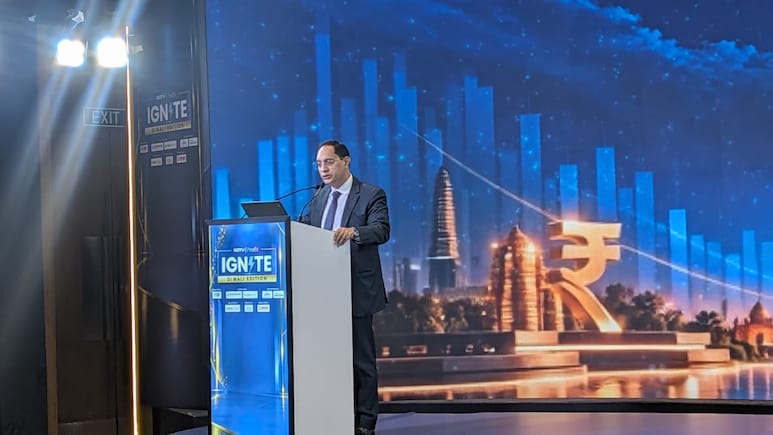
SEBI Chairman Tuhin Kanta Pandey at the NDTV Profit Ignite 2026 said the regulator has already made it easier for foreign investors to invest in India and is working towards further reducing onboarding timelines. “We aim to cut FPI onboarding from months to as little as five business days,” Pandey said.

-
 SEBI Says CAS Works Technologically, Explains Concern Over Expiry-Day Derivatives
-
 Aim To Cut FPI Onboarding Time From Mth To Five Days: SEBI Chairman Tuhin Kanta Pandey AT NDTV PROFI
-
 SEBI To Float Consultation Paper On FPI Norms To Align Indian Markets Globally
-
 Gold ETF Fund-Of-Funds Investment Curbs Are Temporary, SEBI Chair Pandey Says
-
 SEBI To Review Closing Auction Rules After One Year, Chairman Pandey Reiterates
-
SEBI Chief: Direct MF Plans Default From Nov 1; IPO Rules, SME Framework Under Review
-
 "I Am A Material Man In A Material World': Quantum Advisors' Ajit Dayal On NDTV Profit Ignite
-
 Structurally Positive On India In The Long-term:Ben Powell, On NDTV Profit Ignite
-
 'I Am My Own Intern': Tamannaah Bhatia On NDTV Profit Ignite
-
 Indian Mkt Will Return With The 'Smart Mkt' Story: NSE MD & CEO Ashishkumar Chauhan On NDTV Profit I
The proposed reduction is part of a broader effort to improve the efficiency of India's capital markets. SEBI is also reviewing listing and disclosure regulations, revisiting the framework for mainboard initial public offerings (IPOs) and follow-on public offers (FPOs), and examining net settlement for mutual fund transactions.
Also Read | Layoffs Are Rising In Tech, But These Skills Are Helping People Unlock Better Pay
The regulator is also looking to align the listing timelines for real estate investment trusts (REITs) and infrastructure investment trusts (InvITs) with those applicable to equities.
Pandey said SEBI is reviewing the regulatory framework governing public offerings and listed companies to make market processes more efficient. The review covers listing and disclosure requirements, as well as the rules governing mainboard IPOs and FPOs. The objective is to improve the functioning of the market while maintaining investor safeguards.
Companies can currently list their shares within three days of the closure of an IPO, following the introduction of a shorter listing timeline. SEBI's broader efforts are aimed at reducing procedural delays and making capital raising more efficient.
READ | India's FII Problem Goes Beyond Taxes As Rupee Fall, US Yields Hit Returns: Ajit Dayal
The regulator is also examining net settlement for mutual fund transactions, which could change how eligible transactions are settled, subject to the framework eventually adopted. Separately, aligning REIT and InvIT listing timelines with those for equities could bring greater consistency to the process for issuers and investors across market segments.
Market Access Must Come With Investor Protection
Pandey said the success of India's capital markets should not be measured only by their size or the ease with which investors can participate. Their broader role is to channel savings into productive investment and finance economic growth. “The real test of our markets is how they finance the economy,” he said.
India's overall equity market capitalisation currently stands at around Rs 479 lakh crore, highlighting the scale of the country's capital markets. However, Pandey said household savings need to grow further to support the market's contribution to the economy. He also stressed that easier access to financial products does not automatically translate into better investor understanding.
According to the figures cited by Pandey, 63% of households are aware of at least one securities product. The gap between access and understanding remains an important consideration as participation in the capital markets expands. “Investing must be a choice made with open eyes,” he said, emphasising the need for investors to understand the products and risks involved before committing their money.
Pandey said access to markets must go hand in hand with investor protection, particularly as digital platforms make participation easier.
Technology, Digital Platforms Expand Market Access
SEBI has also seen improvements in the way companies and investors access capital markets through technology. Electronic book platforms have improved the process of issuing bonds, while regulated online platforms have widened access to investment opportunities.
READ | SEBI Chief: Direct MF Plans Default From Nov 1; IPO Rules, SME Framework Under Review
Technology is also helping the regulator identify unusual market activity earlier, allowing it to strengthen surveillance as trading patterns and financial products become more complex. Pandey noted that artificial intelligence is changing financial services, underscoring the need for market institutions and regulators to adapt to technological developments.
The challenge, however, is to ensure that faster processes and wider participation are accompanied by appropriate safeguards. SEBI's proposed changes to foreign investor onboarding, listing regulations and mutual fund settlement are part of its broader effort to make India's capital markets more accessible and efficient while preserving investor confidence.
Essential Business Intelligence, Sharp Market Insights, Practical Personal Finance Advice, Daily Fuel, Gold and Silver Prices and Latest Stories — On NDTV Profit.