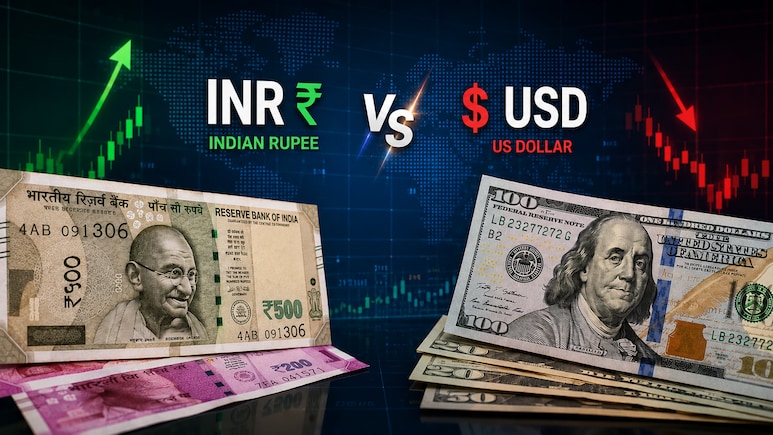
- The rupee's one-year forward rate breached 100 per US dollar for the first time recently
- The Reserve Bank of India sold dollars offshore to support the rupee amid currency volatility
- Global oil prices eased after US-Iran talks showed signs of nearing conclusion
The one-year outright forward rates for the rupee breached the 100 per US dollar-mark in the previous session after the domestic currency hit a record low in spot trade at Rs 96.96 against the greenback. However, the local unit recovered by 41 paise in early trade to pare losses on Thursday, May 21, after the Reserve Bank of India (RBI) sold US dollars in offshore markets to support the national currency amid ongoing volatility and pressure on emerging market currencies.
Global crude oil prices also eased after US President Donald Trump indicated that negotiations with Iran were entering the final stages, which supported the recovery for the domestic currency on Thursday. Bloomberg data showed the USD/INR 12-month non-deliverable forward hit a high of 100.96 on May 20 before pulling back to trade near 99.9 on Thursday. The rupee's one-year forward rate crossed 100 per dollar for the first time, a breach that currency traders and corporate treasuries are likely to notice.
ALSO READ: RBI To Conduct $5-Billion Sell, Swap Auction To Inject Liquidity Amid Forex Concerns
Also Read | Layoffs Are Rising In Tech, But These Skills Are Helping People Unlock Better Pay
The crossing of the 100 level in the one-year contract reflects sustained dollar demand and a widening of forward premiums in the offshore market.The breach matters because the offshore non-deliverable forward market is regarded as an early indicator of sentiment on the rupee. The market operates outside Indian trading hours, which means it reflects the views of global investors on the currency's direction. Notably, the forward contracts price in where traders expect a currency pair to trade on a future date, after accounting for interest-rate differentials and current market positioning.
A one-year outright forward spot rupee transaction is a specific type of foreign-exchange contract. To be clear, it is an agreement made today between two parties to exchange a specific amount of Indian Rupees (INR) for another currency (such as the US Dollar) at a fixed, predetermined exchange rate, with the actual exchange settling exactly one year in the future. The premium on the one-year outright forward spot rupee indicates the interest-rate differential and hedging demand built into the USD/INR forward rate, not just a prediction of where the spot rate will be in a year.
The rupee has depreciated nearly 7.7% on a year-to-date basis and nearly 13% year on year. According to Bloomberg, Indonesia, India, and Philippines are seen as the most vulnerable to the US-Iran conflict with their central banks coming under pressure to take policy action. The dollar index has risen over 1% in May due to safe-haven demand and markets pricing in chances of the Federal Reserve hiking interest rates by the end the year. Dealers now forecast a 50% chance of a Fed rate hike by Dec.
ALSO READ: Rupee's Regional Rout: India Unit Trails 10% Against Pakistan, Bangladesh Currencies
Rupee Vs Dollar Outlook
According to DBS Bank, India's current account deficit faces more severe pressure than Indonesia and the Philippines. President Trump's global tariffs damage Indian exports while a weaker rupee amplifies a higher war-related oil import bill and discourages investor equity inflows. Indian olicymakers will want to stabilize the undervalued INR. Against elevated global energy prices and Trump's tariffs' legal defeats, they will prioritize inflation and financial stability over export competitiveness.
''We remain vigilant for a possible resolution to the US-Iran conflict that could ease the Strait of Hormuz chokepoint and lower crude oil prices. Past experience from 2022 showed the USD/INR flattening after a significant rise driven by surging energy prices,'' said analysts at DBC Bank. Meanwhile, the dollar index, which gauges the greenback's strength against a basket of six currencies, was trading at 99.18, up 0.09% during early trade in today's session.
Essential Business Intelligence, Sharp Market Insights, Practical Personal Finance Advice, Daily Fuel, Gold and Silver Prices and Latest Stories — On NDTV Profit.