(Bloomberg) -- The Red Sea shipping crisis is sending waves through Asia's fuel markets, hoisting costs even on routes that don't use the waterway, while spurring sellers to reduce cargo premiums to offset the higher freight.
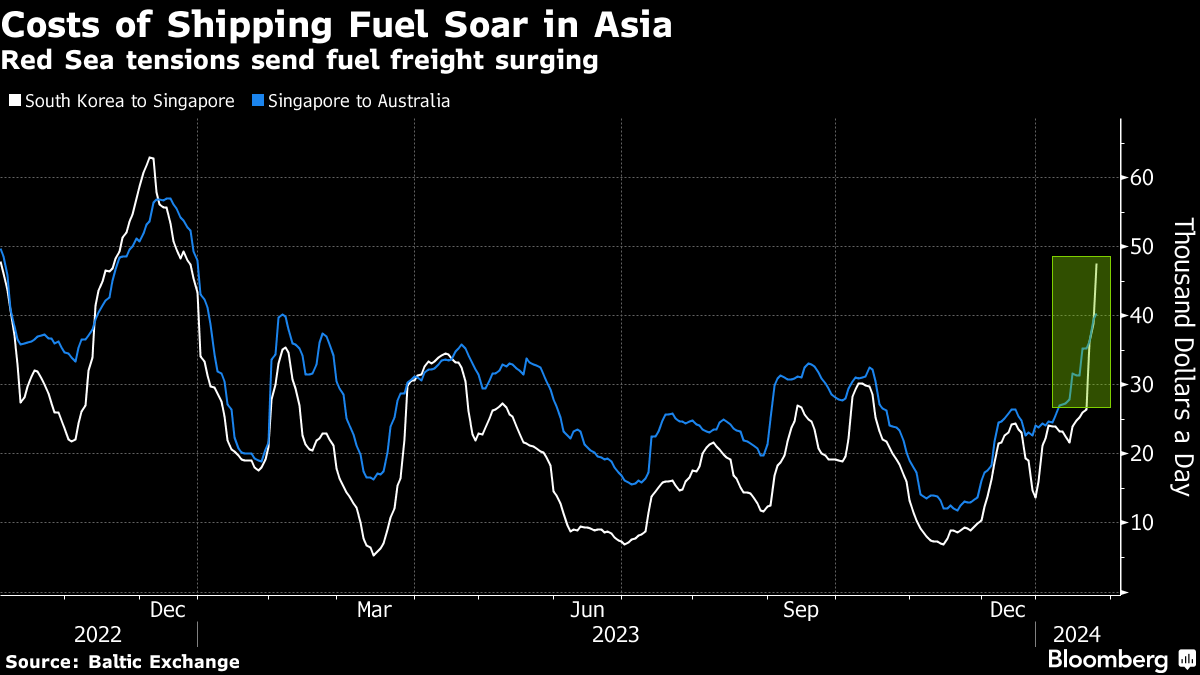
Rates for shipping products such as gasoline have jumped as some vessels sail longer distances to avoid the Red Sea after attacks by Iran-backed Houthi rebels. That's tightened the market, first boosting costs of long-distance routes via the Middle East, and now spilling into voyages within Asia.
Global commodity markets — especially for crude oil and related products — are transfixed by the standoff, which worsened in recent days after a fuel-laden tanker operated on behalf of trading giant Trafigura Group was set ablaze by a Houthi missile. The rebel group has been attacking merchant ships in support of Hamas against Israel, prompting retaliatory strikes led by the US.
“The most recent attack on a laden tanker suggests things are getting worse, and not better,” said Anoop Singh, global head of shipping research at Oil Brokerage Ltd. The diversions have added 3% to demand for clean tankers, which carry refined products, and about 1% to dirty-tanker demand, he said.
The cost of shipping 35,000 tons of fuel from South Korea to Singapore jumped almost 50% over the last week to more than $49,000 a day, the highest since 2022, according to Baltic Exchange data. Meanwhile, the cost of larger tankers connecting the Middle East to Japan has hit the highest since 2020.
Given the upsurge in freight costs, there are signs that fuel producers are having to slash cargo prices in order to keep supplies affordable for customers amid lukewarm buying interest for gasoil and jet fuel.
SK Energy Co. sold three gasoil cargoes last week for February-to-March loading at a steeper discount to regional benchmarks, traders said. The refiner also canceled an offer of a jet-fuel cargo due to low bids.
More stories like this are available on bloomberg.com
©2024 Bloomberg L.P.
Essential Business Intelligence, Sharp Market Insights, Practical Personal Finance Advice, Daily Fuel, Gold and Silver Prices and Latest Stories — On NDTV Profit.