(Bloomberg) -- The pound is coming off the first positive month of 2022, but the mood in the market is as bleak as ever.
Scorching inflation, an economy teetering on the edge of recession and a scandal-prone government are feeding into a view that the UK currency is vulnerable.
Even the language from strategists is miserable. Bank of America Corp. said investors should hedge for an “existential” sterling crisis and the currency is facing struggles usually seen in emerging markets.
“Of all the major countries, the UK faces a much more difficult economic environment, a much more difficult policy choice, and a much more difficult political environment,” said Steven Barrow, head of FX strategy at Standard Advisory London. “From a forecasting view, I think it's more likely for sterling to go down to $1.20.”
From Apocalyptic to Existential, Pound's Lexicon Turns Gloomy
The UK economic woes are adding to a bleak picture that's persisted since the Brexit vote in 2016. Traders point to a less-friendly trade environment and the tumultuous leadership of Prime Minister Boris Johnson that's done little to attract the foreign investment the UK needs after leaving the European Union.
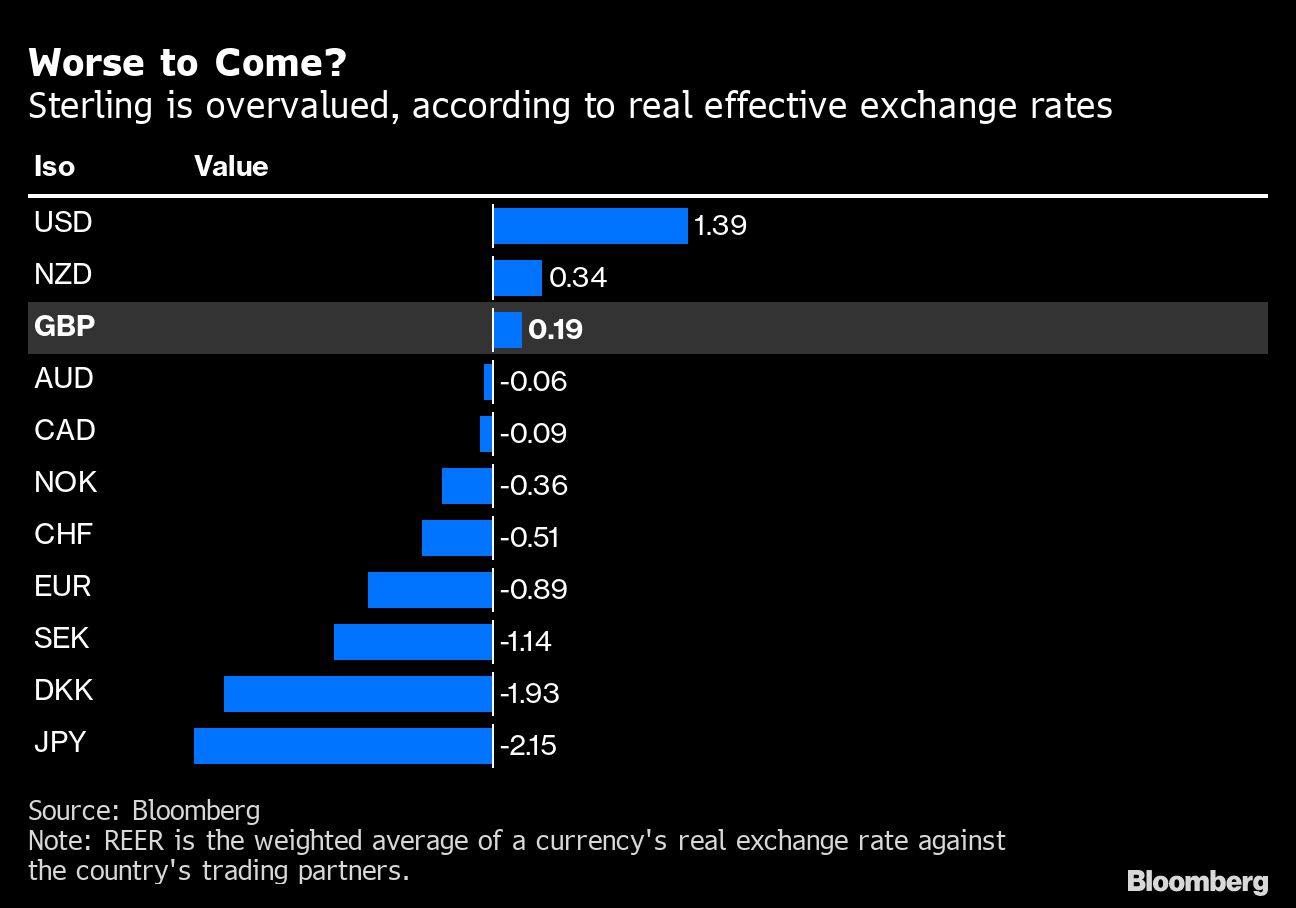
Sterling strengthened 0.2% in May, but is still the third-worst performing major currency this year. It has weakened 8% to $1.2468 in 2022.
The biggest risk facing the currency is an expectation of too many interest-rate hikes from the Bank of England, according to Roberto Mialich, foreign-exchange strategist at UniCredit. He expects only one 25-basis-point increase, probably in August, compared with 140 basis points by December that's priced by the market.
“As long as investors are forced to scale back their rate hike expectations, sterling is set to weaken,” Mialich said. That could cause cable to slip below $1.20 and euro-sterling to climb above 95 pence, he added.
The Bank of England has already warned of the risk of pushing the economy into a recession by tightening too quickly. Evidence of a slowdown is clear. The Institute of Directors has published findings showing executives are more pessimistic than at any time since October 2020, with more than a fifth of firms planning to reduce investment in the next year.
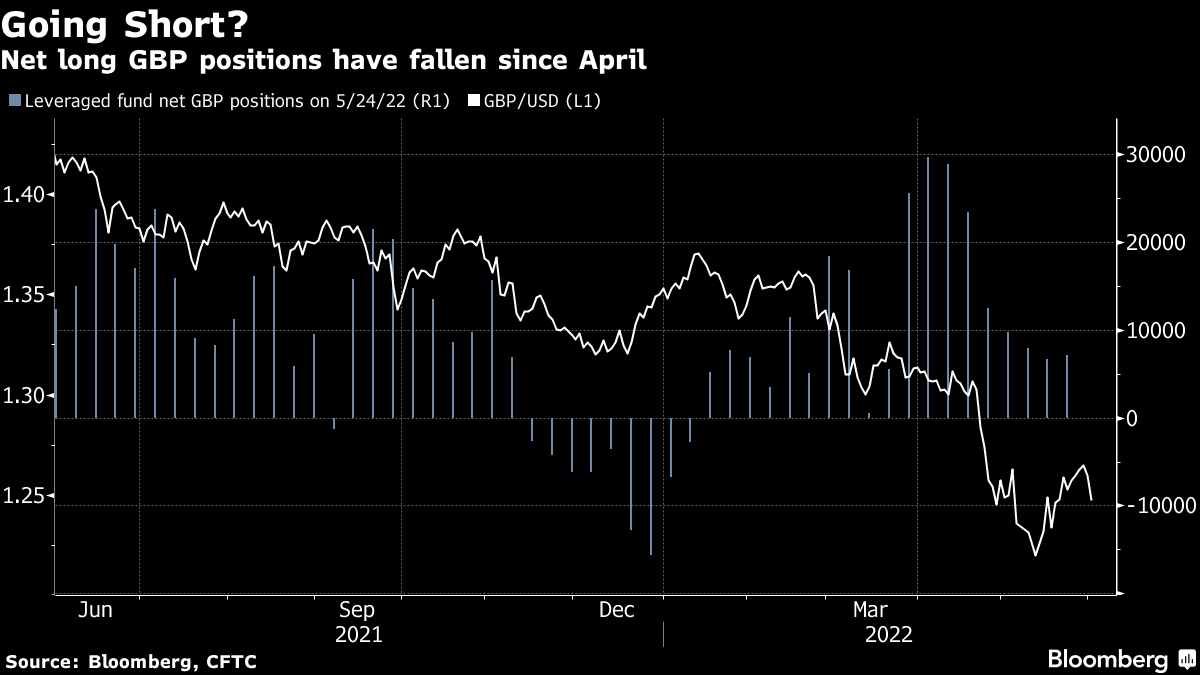
Speculators have been cutting their long positions in sterling since early April, according to positioning data from the Commodity Futures Trading Commission.
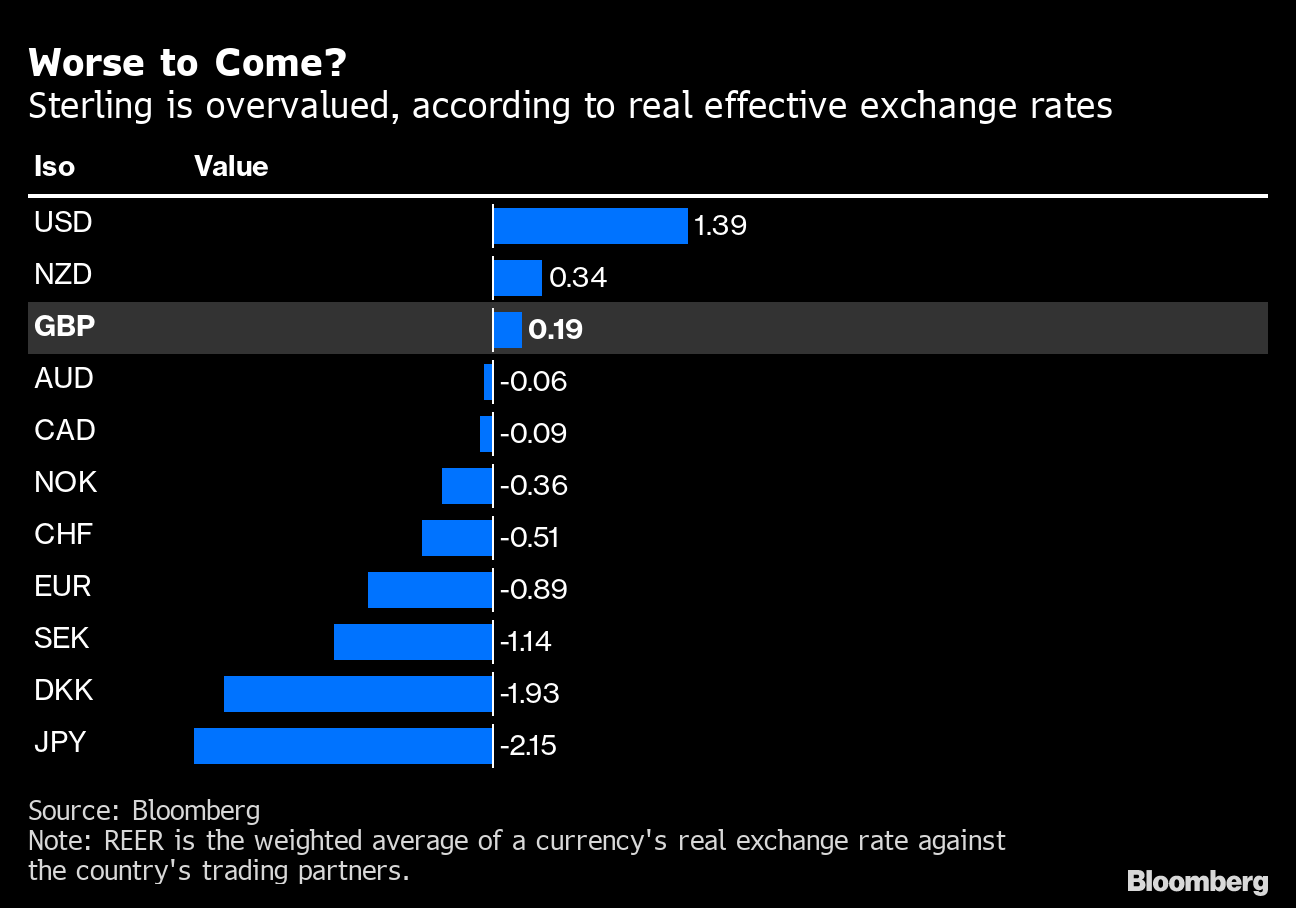
The real effective exchange rate also implies the pound is overvalued. The REER is calculated as the weighed average of the currency's exchange rates with the country's trading partners, adjusted for relative inflation. It was a concern highlighted recently by Adam Cole, chief currency strategist at RBC Capital Markets. Of the 23 currencies his team tracks, they're most bearish on sterling.
UniCredit's Mialich has also pointed to the strong correlation between the pound in trade-weighted terms and global stock markets. A deeper selloff in equity markets could pose “an additional drag on sterling,” he wrote in a report.
Strategists are also closely watching Johnson's political battles and the wrangling over the customs border between the UK and Northern Ireland. While these issues are nothing new, it's all part of the bearish narrative that's weighed on the pound in the Brexit aftermath, said Jane Foley, head of FX strategy at Rabobank.
“These issues are not necessarily going to produce a knee-jerk reaction to sterling,” she said. “But they will continue to emphasize the dark economic clouds, the poor investing environment in the UK and the poor confidence that the market has in the pound.”
More stories like this are available on bloomberg.com
©2022 Bloomberg L.P.
Essential Business Intelligence, Sharp Market Insights, Practical Personal Finance Advice, Daily Fuel, Gold and Silver Prices and Latest Stories — On NDTV Profit.