- UBS names Axis Bank and Kotak Mahindra Bank as preferred Indian banking picks
- A $10 rise in oil prices may boost bank EPS by 1-3% with stable margins
- Oil price hike of $20-$30 per barrel could cut bank EPS by 4-8% due to inflation
Global brokerage UBS has named Axis Bank and Kotak Mahindra Bank as its preferred picks among Indian banks even as it flagged potential risks to the banking sector from a possible surge in crude oil prices.
In a scenario analysis, UBS examined the potential impact of rising energy prices on India's banking sector, warning that a sharp increase in crude could push up inflation and slow consumption, which in turn may weigh on loan growth and bank profitability.
The brokerage also maintains buy ratings on ICICI Bank, HDFC Bank, Bank of Baroda, and Canara Bank.
Also Read | Layoffs Are Rising In Tech, But These Skills Are Helping People Unlock Better Pay
ALSO READ: RBI Tightens Norms For Capital Market Exposures Of Banks: Here's What It Means
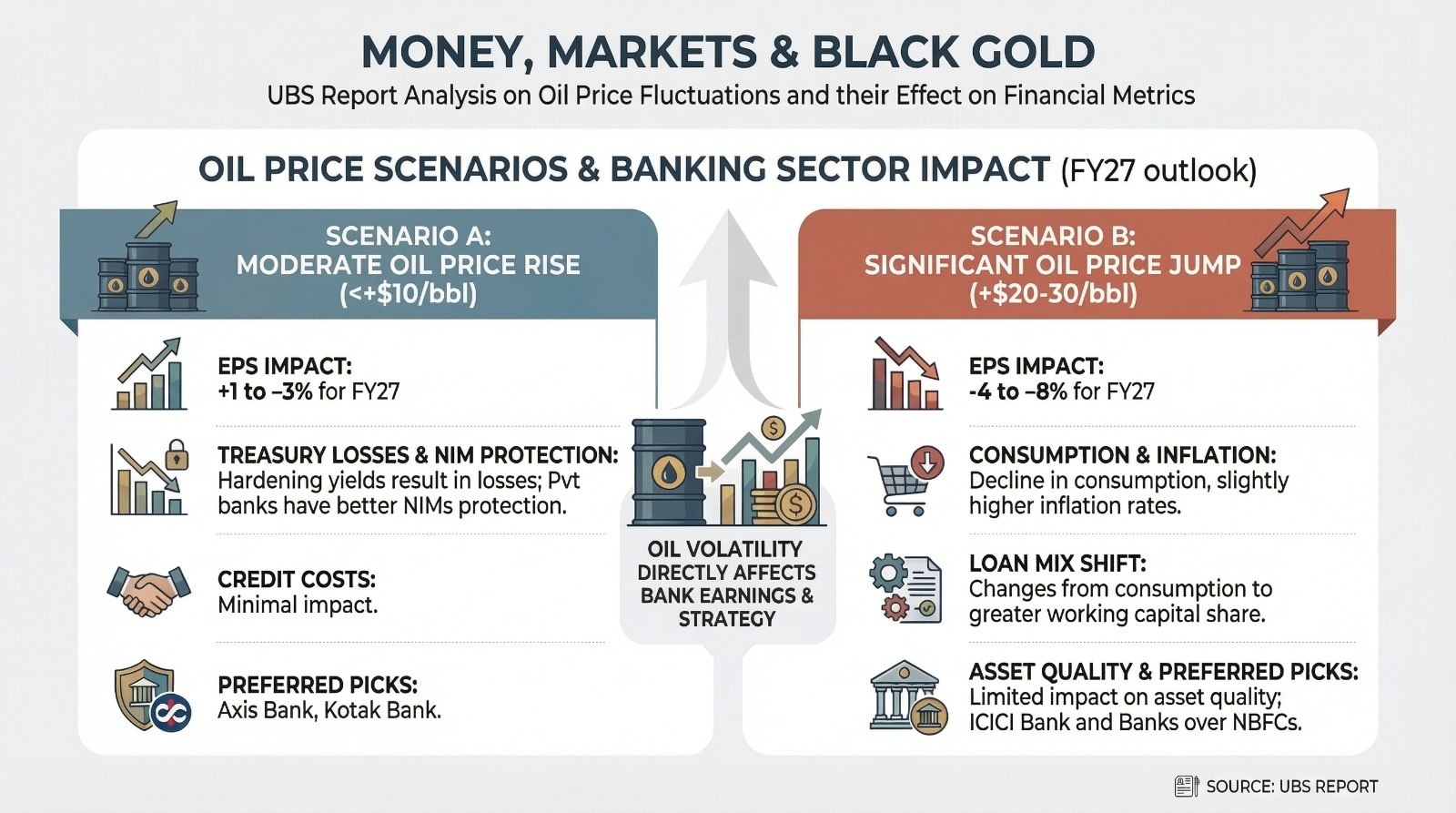
Scenario A - Oil Price Up By $10/bbl
According to UBS, a moderate increase in oil prices of around $10 per barrel would likely have a limited impact on Indian banks.
Under this scenario, earnings per share (EPS) for banks could increase by 1% to 3%, supported by stable net interest margins and continued credit demand from small and medium-sized enterprises.
The brokerage said the interest rate cycle could stabilise in this case, which would help protect bank margins. Temporary increases in remittances and related fee income may also partially support non-interest income.
Scenario B - Oil Prices Up By $20-30/bbl
However, UBS warned that a sharper increase in oil prices - between $20 and $30 per barrel - could have a more negative impact on the banking sector.
Higher energy prices could push inflation higher, reducing consumer spending and slowing retail loan growth.
In such a scenario, UBS estimates that bank EPS could decline by 4% to 8%, driven by weaker credit demand, lower fee income, and reduced treasury gains.
Mid-Sized Banks More Sensitive
The brokerage also noted that mid-sized private lenders and some state-owned banks may be more sensitive to an oil-driven slowdown in consumption.
Shifts in loan mix away from retail lending toward corporate loans could also affect profitability dynamics for banks.
Despite these risks, UBS believes large private banks remain relatively well positioned due to stronger balance sheets and diversified lending portfolios.
ALSO READ: Hormuz Disruption: Why Basmati, Oil And Fertilisers Are India's War-Risk 'Hot Zones'
Essential Business Intelligence, Sharp Market Insights, Practical Personal Finance Advice, Daily Fuel, Gold and Silver Prices and Latest Stories — On NDTV Profit.