
- India swapped a record Rs 2.7 trillion of short-term bonds for long-term securities this fiscal year
- This move aims to ease repayment pressure and reduce heavy borrowing needs later
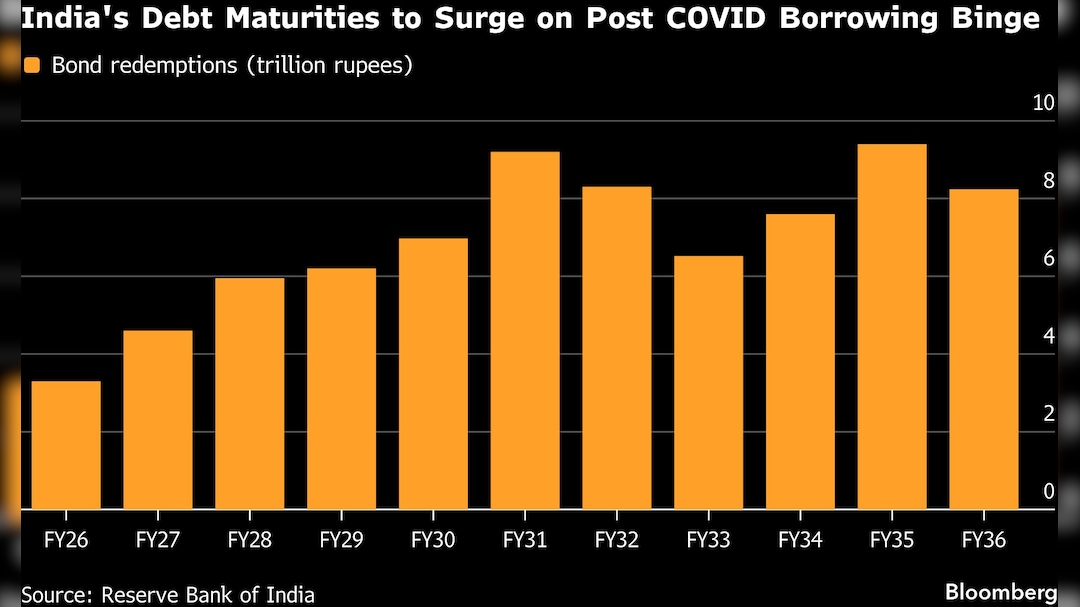
- Average annual redemptions will double to Rs 6.6 trillion by March 2031, per RBI data
India is moving to ease pressure from a heavy pipeline of debt liabilities coming due in the years ahead.
The government has switched a record 2.7 trillion rupees ($29.5 billion) of short-term bonds into long-term securities in the fiscal year ending March, pushing repayments further into the future and likely reducing the need for heavy borrowing later.
The urgency picked up after the Feb. 1 federal budget revealed a bigger-than-expected borrowing plan, driving the need to manage a looming repayment load. Bonds sold during the pandemic are now starting to mature, and average annual redemptions are set to double to 6.6 trillion rupees by March 2031, according to central bank data.
ALSO READ: Stock Market Today: All You Need To Know Before Going Into Trade On March 5
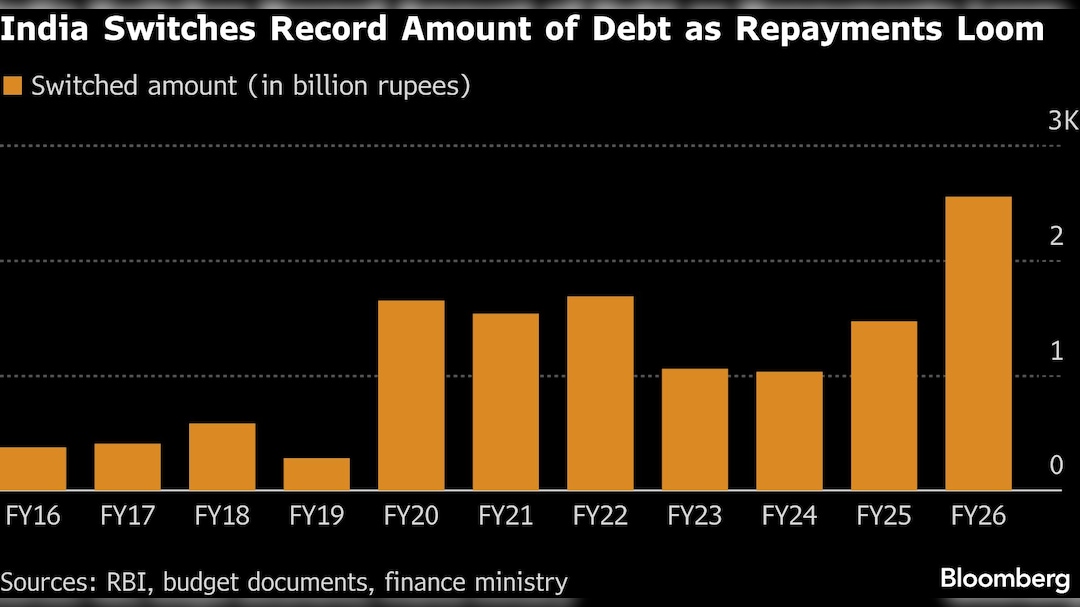
New Delhi carried out a 755-billion rupee swap with the Reserve Bank of India last month and has conducted two rounds of switches with investors since last week. The government plans to swap another 200 billion rupees worth of debt held by investors next week, the RBI said late Wednesday.
By extending maturities, the government is giving itself more breathing room and easing the strain on next year's borrowing plans. As a result of the swaps, gross borrowing for the fiscal year starting April 1 is expected to be about 1 trillion rupees lower than the budgeted 17.2 trillion rupees.
The lower borrowing number for next year is likely to reassure investors, said Rajeev Pawar, head of treasury at Ujjivan Small Finance Bank. “The yields will start coming down, as the headline borrowing number for next year will be lower.”
Still, the strategy comes with trade-offs. When the government swaps debt with investors — rather than the RBI — it increases the supply of long-term bonds in the market. That additional duration can push yields higher in the near term.
Benchmark yields have risen more than 40 basis points since June despite the 75 basis points of interest-rate cuts and record debt purchases by the central bank, a sign that supply pressures are biting.
“This is additional duration supply on top of the gross borrowing numbers, which may have contributed to the rough market conditions this year,” said Abhishek Upadhyay, senior economist at ICICI Securities Primary Dealership.
For the government's debt managers, smoothening out redemptions outweigh the near-term costs, he said.
Essential Business Intelligence, Sharp Market Insights, Practical Personal Finance Advice, Daily Fuel, Gold and Silver Prices and Latest Stories — On NDTV Profit.