Hedge Funds Haven’t Lost Appeal for Biggest Danish Pension Fund
(Bloomberg) -- As a number of prominent pension funds stop using external managers they say charge too much in exchange for paltry returns, the biggest pension fund in Denmark is bucking the trend and sticking with the hedge funds it uses.
“In our case, funds have played a small but a good part in our portfolio,” Carsten Stendevad, the chief executive officer of ATP, which oversees about $118 billion in assets, said in an interview in Copenhagen.
The comments stand out at a time when a number of other pension funds have questioned the sense of continuing to rely on hedge funds to generate extra returns. There are plenty of examples of prominent skeptics. Rhode Island's $7.7 billion pension fund terminated investments in seven hedge funds, including Brevan Howard Asset Management and Och-Ziff Capital Management Group LLC, it said earlier this month.
The largest U.S. pension plan, the California Public Employees' Retirement System, voted to stop using hedge funds two years ago. Others who have stuck with the hedge funds they outsource investments to have faced criticism as the decision has led to losses, such as the New York state comptroller. Its loyalty to the industry has cost the Common Retirement Fund $3.8 billion in fees and underperformance, the Department of Financial Services in the U.S. said on Oct. 17.
Hedge fund investors pulled $28.2 billion from the industry last quarter, which is more than at any time since the aftermath of the global financial crisis, according to Hedge Fund Research Inc.
ATP declined to say which funds it uses or how much of its portfolio is managed by the industry. Investors can't lump all external managers into one bucket and there's plenty of variety left out there for it to still make sense to outsource to hedge funds, Stendevad said.
“There are so many types of hedge funds and we would look at all of them on a multi-year risk-adjusted return basis,” he said. “Looking at the ones we have, they're quite different.”
ATP divides its investments into two categories: a so-called hedging portfolio, which is by far the larger of the two and designed to guarantee pensions. Its investment portfolio tries to boost the fund's returns to top up Danes' pensions. The fund returned 5.8 percent on its investments in the third quarter. For the first nine months, ATP's investment portfolio returned 12.3 percent. It made money on private equity, bonds, real estate, infrastructure and credit instruments, but lost money on inflation hedges.
Stendevad said the double-digit returns ATP has generated probably aren't sustainable, citing extreme monetary policies and the uncertainty created by Britain's decision to turn its back on the European Union.
ATP will only continue using hedge funds as long as the returns justify doing so, Stendevad said.
“Of course the burden of proof is on them to demonstrate that they can deliver strong risk-adjusted returns,” he said. “And of course those who can do that have a good future. There are many that don't, but that's true for all active management to demonstrate added value.”
Stendevad, who joined ATP from Citigroup in the U.S. in 2013, is leaving the fund at the end of this year to spend more time with his family. He will be replaced by Christian Hyldahl, who comes from a position as head of asset management at Nordea.
To contact the reporter on this story: Peter Levring in Copenhagen at plevring1@bloomberg.net. To contact the editor responsible for this story: Tasneem Hanfi Brögger at tbrogger@bloomberg.net.

-
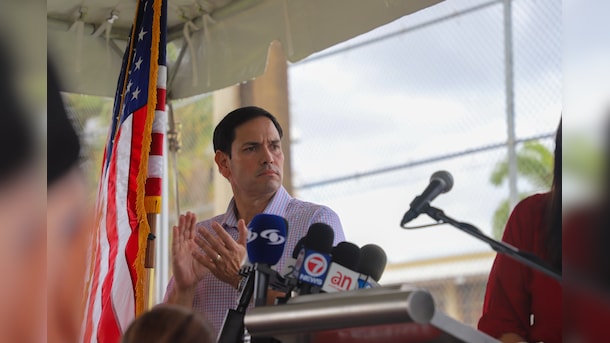
Navigating Friction And Energy Realities: An Analysis Of Marco Rubio's October Visit To India

Occurring at a critical juncture marked by stalled trade negotiations and escalating geopolitical pressures over global energy supplies, the visit offers a profound window into modern US-India relations.
-
India Exports Capital. Why Not Export Trusteeship?
The big question, then, is whether India can build an institution that global borrowers, investors, banks, and lawyers can trust, even without an Indian connection.
-
France's Economy & Politics Are In Crisis | The Reason Why
Let's look at how the French economy and politics evolved under Nicolas Sarkozy, Franois Hollande and Emmanuel Macron.
-
You May Inherit The Business. You Must Earn Its Credibility.
Succession tests the founder's ability to share authority as much as it tests the next generation's readiness to assume it.
-
Signing Deals Is One Thing; Making Them Work Is Another | The Week In Whys
Sometimes, things don't turn out as planned. Indian companies have lost some bids to rivals, some projects won't produce until 2030.
-
FOMC Wall, PERM Suspension, Hospital Stocks | Talking Points This Week
A PERM suspension would directly affect green-card sponsorship rather than H-1B visas, so the near-term earnings impact could remain relatively limited. The key question is whether this marks a new phase in US scrutiny of Indian IT.
-
Everything, Everywhere, All At Once: Dalal Street's Week To Forget | Joining The Dots
Visa curbs, a Starlink spat and cancer drug caps: what connects this week's shocks for Indian markets
-
India Is Going Abroad For Critical Minerals. But It May Take Years To Pay Off | The Reason Why
Although India's steps are in the right direction, they remain modest compared with India's growing dependence.
-
When Everyone Has AI, What Gives You An Edge?
India's young workforce is entering an uncertain world of work where powerful AI tools are becoming widely accessible. The advantage will belong to those who combine deep expertise with digital fluency, and the distinctly human capabilities that technology cannot manufacture.
-
Wrong Labels, High Pesticide Residues Holding Back Agri Exports | The Reason Why
India needs stronger domestic food-safety and labelling standards, with best practices becoming part of everyday business for farmers, traders and food companies.