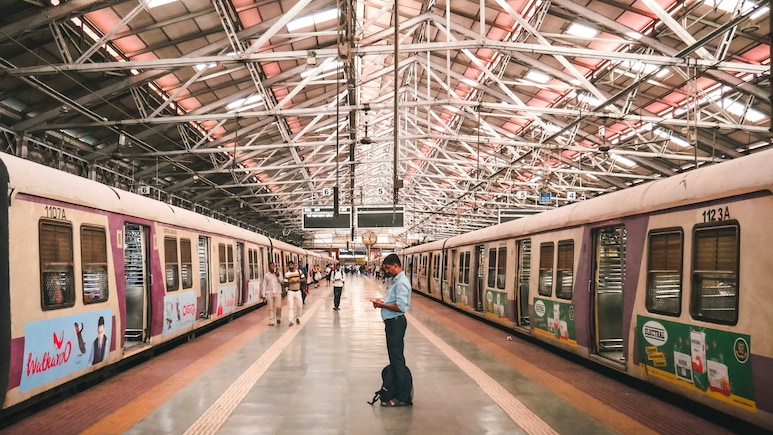
A couple of weeks ago, I was at Pune railway station, waiting for a delayed train. I had half an hour to kill. I kept checking the screen for updates, but it was tiny and far away. I had to squint to read the ridiculously small font. But the screen next to it was big. But it had an ad, not train information.
I had a similar experience in Chennai. The train announcements were barely audible, but the advertisements blared through the speakers. Worse, the ads played after every train announcement.
These experiences got me thinking about how much space advertising occupies in public places and how much it affects us.
Also Read | Layoffs Are Rising In Tech, But These Skills Are Helping People Unlock Better Pay
Purpose of Public Spaces
The main purpose of any railway, bus or metro station should be to help people get from one place to another. Everything inside that space should make the journey easier.
To board the train, you need the basics: a ticket, train updates and directions. That means counters, clear signs and a large, easy-to-read information screen. You also need to find toilets, lifts, emergency exits and accessible routes without asking for directions, especially if you are new to the station, carrying luggage, travelling with children or have a disability.
When the basic information isn't available, people waste time searching for it. At a crowded station, this confusion can also lead to congestion, delays and anxiety.
Advertising can generate revenue for the railway or metro operator. That's fine. But it is an additional activity, not the reason the station exists.
Prioritising Non-Fare Revenue
The moment an advertisement blocks essential information or makes it harder to find, it becomes a problem.
Think about it. A giant advertisement and a tiny screen displaying train timings are competing for your attention. Which one should take priority? Passenger information must come first. It should be large, spottable and distinguishable from advertisements. A station can earn money from advertising without making passengers work harder to find the information they need. The two should never come at the cost of each other.
This doesn't mean the station must be without any ads. Ads are an important source of revenue. Passenger fares don't cover all costs of repairs, maintenance, salaries and new investments. Indian Railways has explicitly recognised this opportunity.
The problem begins when the push for non-fare revenue turns every pillar, screen, construction barrier and station name into advertising space. That creates an unseen disparity. The transport agency gets paid, but all passengers bear the cost of clutter. These are economic externalities.
The Hidden Cost Of Advertising
Research suggests that excessive advertising can have consequences beyond visual clutter.
India's Supreme Court recognised concerns about advertising on railway bridges, flyovers and foot overbridges, including safety, visual clutter and aesthetics, in its August 2017 order.
UNESCO also recognises that buildings, streets and public spaces shape a city's identity. When advertisements take over, a city can lose some of what makes it special. Public spaces have value beyond the money they can make from ads.
Should Clutter-Free Spaces Be a Luxury?
Now, compare this with airports. The signs are clear, information is easy to find, and there is less visual clutter. Does that mean we get ad-free infrastructure only when we pay more? Are railway stations and bus terminals the free version of YouTube, while airports are YouTube Premium? It is a funny comparison, but it points to a serious problem.
Interestingly, a 2022 Journal of Urban Economics study estimated that Warsaw residents were collectively willing to pay millions of euros each year to reduce outdoor advertising. The study suggests that people value less clutter, even when that value doesn't show up in an advertising contract.
That doesn't mean we start charging people for ad-free railway stations. Indian policymakers, please note that. Public infrastructure is different from a streaming app. Clear signs, safe roads and usable public spaces should come with the service, not as a premium upgrade.
Final Take
Public spaces can generate revenue, but their primary purpose must remain clear.
Do the existing rules do enough to keep advertisements from getting in the way of information passengers need? If not, then we need intervention because when advertising gets priority, ordinary people suffer. Not the minister, not the brand, and not the bureaucrat who approved the contract.
At the end of the day, public spaces belong to the public. Public information must come first and advertising second.
Disclaimer: The views expressed in this article are solely those of the author and do not necessarily reflect the opinion of NDTV Profit or its affiliates. Readers are advised to conduct their own research or consult a qualified professional before making any investment or business decisions. NDTV Profit does not guarantee the accuracy, completeness, or reliability of the information presented in this article.
ALSO READ: How A Pizza Delivery Boy Turned A Frustrating Mumbai Traffic Jam Into A Business Idea
Essential Business Intelligence, Sharp Market Insights, Practical Personal Finance Advice, Daily Fuel, Gold and Silver Prices and Latest Stories — On NDTV Profit.