The government on Tuesday announced the amendment of rules to revise the pricing norms for low-grade iron ore, a move aimed at curbing wastage and enhancing utilisation of such reserves to ensure a steady supply to the steel industry.
The move is expected to bring low-grade resources into viable use, addressing depletion of high-grade deposits and promoting mineral conservation through scientific mining practices.
"The Ministry of Mines has notified the Minerals (Other than Atomic and Hydro Carbons Energy Minerals) Concession (Third Amendment) Rules, 2026 on 10th April, 2026, providing the methodology for publication of average sale price (ASP) of Haematite Iron Ore below the threshold value, including for Banded Haematite Quartzite (BHQ) and Banded Haematite Jasper (BHJ)," an official statement said.
Also Read | Layoffs Are Rising In Tech, But These Skills Are Helping People Unlock Better Pay
The amendment provides a framework for pricing iron ore with iron (Fe) content below the threshold level of 45%, including Banded Haematite Quartzite (BHQ) and Banded Haematite Jasper (BHJ), the mines ministry said.
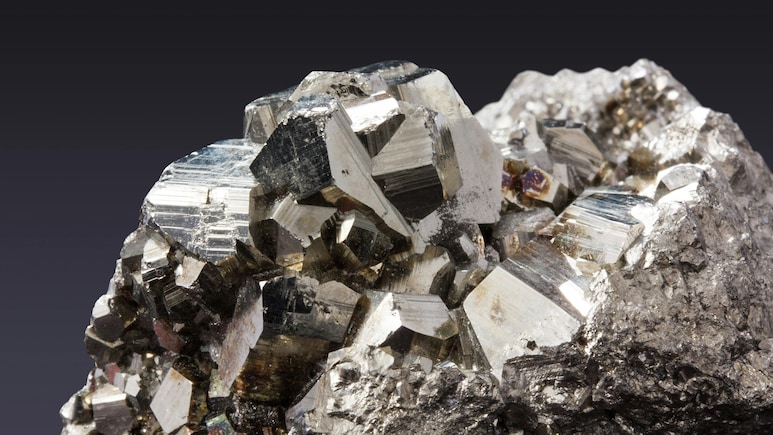
Banded Haematite Quartzite and Banded Haematite Jasper are low-grade, Precambrian iron-bearing rocks often treated as low-grade ore.
Under the revised rules, the average selling price (ASP) for iron ore, with 35% to below 45% Fe content, will be fixed at 75% of the ASP of 45% to below 51% grade ore.
While for ore with Fe content below 35%, the ASP will be 50% of the same benchmark.
The threshold value of a mineral is the limit below which the material obtained after mining can be discarded as waste.
Advancements in processing and beneficiation technologies have made sub-threshold iron ore resources, such as BHQ and BHJ, viable for upgrading into high-grade ore suitable as feedstock for steel production.
To enable this, a dedicated policy framework was essential for low-grade ore beneficiation, the ministry said.
Before this amendment, no distinct pricing applied to such low-grade ores.
Consequently, the ASP of higher-grade (45-51% Fe) ore determined royalties and levies, rendering beneficiation economically unfeasible, the ministry said.
"Bringing low-grade resources into the usable category will address the concern of depletion of high-grade iron ore resources and will lead to a steady supply of minerals to the steel industry. Utilisation of low-grade iron ore resources will be in the interest of mineral conservation as well as promote scientific and optimal mining of iron ore resources. As a result, the country will continue to be self-sufficient in iron ore," the ministry said.
ALSO READ: Govt Proposes To Expand Lok Sabha Size To 850 Seats, Move Aimed At Implementing Women Quota: Reports
(This story has not been edited by NDTV staff and is auto-generated from a syndicated feed.)
Essential Business Intelligence, Sharp Market Insights, Practical Personal Finance Advice, Daily Fuel, Gold and Silver Prices and Latest Stories — On NDTV Profit.