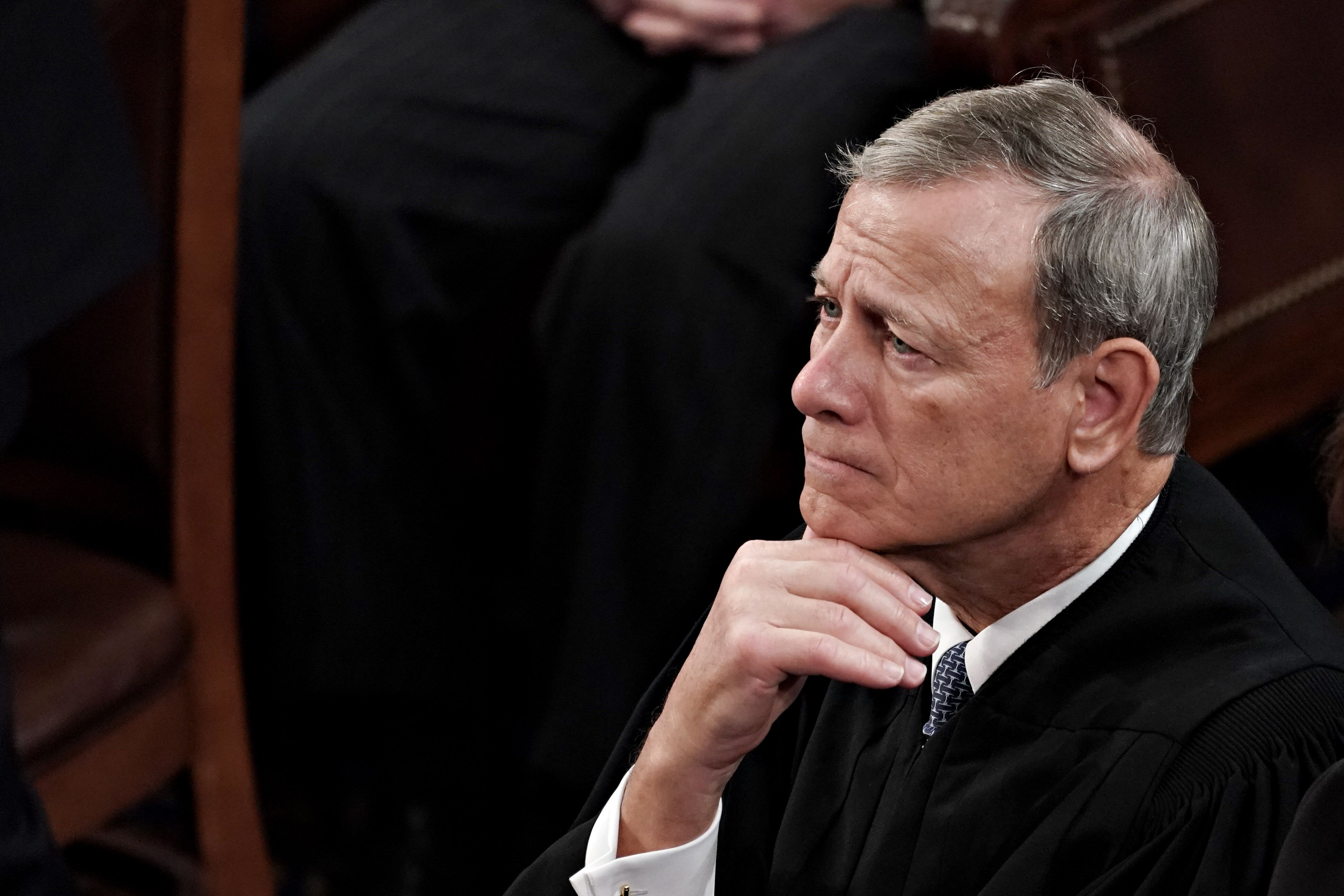
(Bloomberg) -- Artificial intelligence will change how US courts do business, though human judges will be around “for a while” yet, Chief Justice John Roberts said.
AI tools will change how judges do their jobs and how they understand “the role that AI plays in the cases that come before them,” Roberts said in his end-of-year report. The remarks are a response to this year's AI frenzy that swept the nation and financial markets, which has already started to alter how lawyers and judges approach their work.
Roberts stopped short of doomsday warnings about the automation of human jobs.
“Machines cannot fully replace key actors in court,” he wrote. “Nuance matters: Much can turn on a shaking hand, a quivering voice, a change of inflection, a bead of sweat, a moment's hesitation, a fleeting break in eye contact. And most people still trust humans more than machines to perceive and draw the right inferences from these clues.”
There's been a string of high-profile examples of AI-generated legal briefs citing fake cases and misstating facts. Generative AI, which creates texts and images based on prompts, often produces errors as part of its humanlike responses. Michael Cohen, Donald Trump's former lawyer, unintentionally included phony cases generated by AI in a brief last month, according to court papers made public Friday.
“I predict that human judges will be around for a while,” said Roberts, who joined the US Supreme Court in 2005.
Yet legal research may soon be “unimaginable” without AI, he said. “AI obviously has great potential to dramatically increase access to key information for lawyers and non-lawyers alike,” he wrote. “But just as obviously it risks invading privacy interests and dehumanizing the law.”
Courts have historically struggled to adapt to new technology. Roberts himself is known for drafting his opinions by hand, rather than on a computer.
Read more: Supreme Court Adopts Code of Conduct Amid Ethics Revelations
The chief justice's year-end report on the federal judiciary didn't mention the swirl of controversy that engulfed the Supreme Court this year, prompting it to create of code of ethics for the first time. Scandals included Justice Clarence Thomas' failure to disclose decades of gifts and trips from billionaire benefactors.
--With assistance from Greg Stohr.
More stories like this are available on bloomberg.com
©2024 Bloomberg L.P.
Essential Business Intelligence, Continuous LIVE TV, Sharp Market Insights, Practical Personal Finance Advice and Latest Stories — On NDTV Profit.