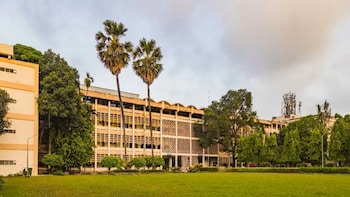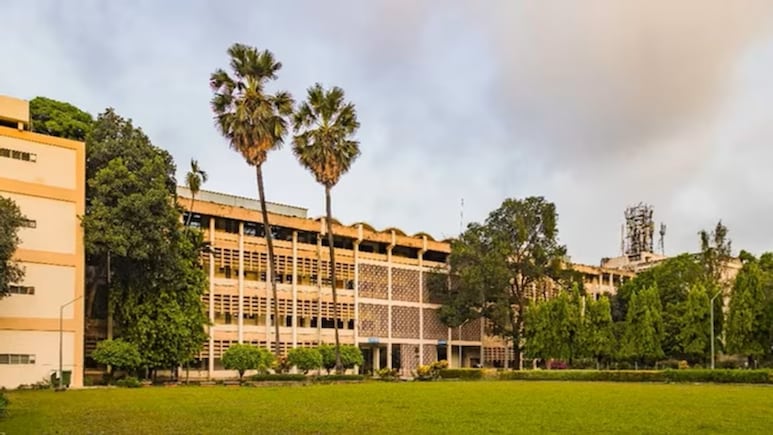
The Indian Institute of Technology (IIT) Bombay has found an innovative way to manage its campus waste by converting fallen leaves and garden debris into cooking fuel. The initiative is helping prepare meals for over 1,200 students and has reduced LPG consumption in one of its hostel kitchens by nearly 60 per cent, reports suggest.
The IIT Bombay project addresses a major waste management expense for the institute as it previously spent approximately Rs 50 lakh annually on transporting and disposing of garden waste. According to The Times of India, the institute generates nearly two tonnes of garden waste every day, including dry leaves, twigs and other organic material. Instead of sending this waste for disposal, IIT Bombay has developed a system to process it into biomass pellets that can be used to generate energy for cooking.
The technology involves collecting garden waste and processing it through a dedicated facility that transforms them into pellets. The resulting compact fuel pellets are supplied to a unique gasifier, which converts the biomass into combustible gas.
Also Read | Layoffs Are Rising In Tech, But These Skills Are Helping People Unlock Better Pay
This gas is then used to power a burner that produces heat and steam for cooking. The system can support the preparation of food items such as rice, dal, potatoes and milk, reducing a hostel's dependence on conventional cooking fuel.
ALSO READ | Engineer Loses Rs 83 lakh In Stock Trading, Becomes Swiggy Delivery Partner
According to IIT Bombay's Research Hub for Green Energy and Sustainability (GESH), the pelletisation facility has the capacity to process up to two tonnes of organic material per day.
The initiative was developed by Professor Sanjay Mahajani from the Department of Chemical Engineering and Professor Sandeep Kumar from the Department of Energy Science and Engineering. The project, which received support from the Tata Centre for Technology and Design, was designed to address campus waste disposal and explore more sustainable energy alternatives.
The research dates back to 2014, when Professor Mahajani began investigating biomass gasification as a potential solution for converting organic waste into useful energy.
However, developing a reliable system presented several technical challenges. Early experiments encountered problems with ash accumulation, equipment blockages and smoke generation. Researchers subsequently developed an improved gasifier design that significantly reduced these operational difficulties.
A major breakthrough came in 2016 when the team developed a patented system capable of reducing clinker formation, a process in which ash deposits accumulate and obstruct gasification equipment.
ALSO READ | 5 Simple Business Ideas To Explore Under Rs 2 Lakh That Can Generate A Steady Income
The technology was initially introduced at IIT Bombay's staff canteen on February 26, 2025. A month-long evaluation recorded a reduction of approximately 10 kg in daily LPG consumption.
Following the initial trials, the technology was expanded to larger cooking facilities. It is now being used at Hostel 16, where meals are prepared for more than 1,200 students.
A video report by The Better India highlighted that the system has reportedly reduced LPG requirements in the hostel kitchen by around 60 per cent.
The technology has also been licensed to Infixen Energy Pvt. Ltd., a startup associated with IIT Bombay, to support its wider deployment.
Beyond reducing fuel consumption, the project could help the institute lower its waste transportation expenses by processing more organic material within the campus itself. However, the actual financial savings would depend on the operating costs and the amount of waste diverted from external disposal.
The initiative also demonstrates how educational institutions can use research-based solutions to address everyday operational challenges.
Large universities, residential campuses and institutional kitchens often generate substantial quantities of organic waste while simultaneously consuming significant amounts of energy for food preparation.
ALSO READ | 'Being 21 In Mumbai': Woman's October Expense Breakdown Sparks Online Interest
By converting some of that waste into fuel, such institutions could reduce their reliance on commercial cooking gas while improving waste management practices.
For IIT Bombay, the project represents an example of how engineering research can move beyond laboratories and be applied to daily campus operations, potentially offering a model for other educational institutions seeking sustainable alternatives to conventional cooking fuels.
Essential Business Intelligence, Sharp Market Insights, Practical Personal Finance Advice, Daily Fuel, Gold and Silver Prices and Latest Stories — On NDTV Profit.