- Bangladesh plans to revise garment workers' wages amid ongoing labour unrest and protests
- Workers demand a hike from 12,500 taka to 30,000 taka due to rising living costs
- Higher wages could reduce Bangladesh's cost advantage over apparel exporters like India
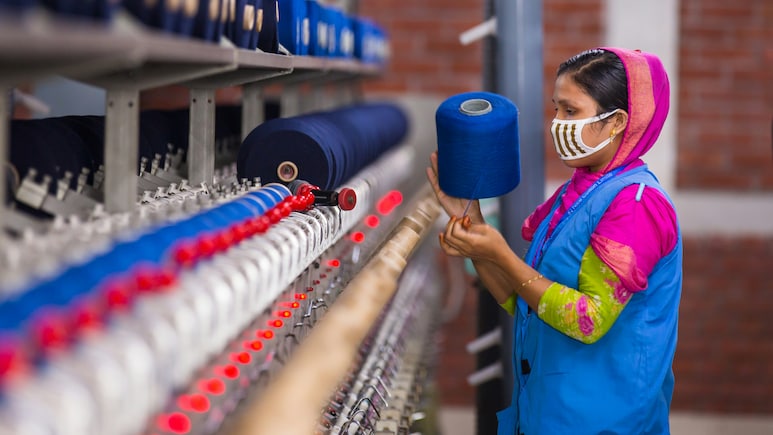
India's apparel industry could gain a fresh competitive opportunity as Bangladesh moves towards revising minimum wages for garment workers amid escalating labour unrest, raising the possibility of higher production costs in one of the world's largest clothing-exporting nations, according to reports.
Bangladesh's newly formed wage board agreed on Wednesday to roll out a revised pay structure for garment workers from December, though the quantum of the increase remains undecided, Reuters reported.

-
 Indian Markets Turning Corner After Two Tough Years, Says Sandeep Tandon
-
 NDTV Profit Ignite 2026: Experts See Opportunity In Equities, Stay Bullish For Long-Term
-
 Buy Right, Sit Tight Does Not Work for Individual Stocks, Says Dinshaw Irani
-
 'Worst Is Behind': Quant MF Sees Market Bottom, Flags 'Extreme Euphoria' In Midcaps
-
 India's Mutual Fund Industry Could Become A $1 Trillion Opportunity, Say Fund Managers
-
 'Foreign Investors Are Baraatis': Raamdeo Agrawal's Take On LTCG Tax
-
 Stay Invested Through Market Cycles: Raamdeo Agrawal at NDTV Profit Ignite
-
 Ramesh Damani Remains Bullish On India For Next 20-30 Years, Sees Bargains Amid Market Weakness
-
 CAS Came After A Long Consultation Process: SEBI Chairman Tuhin Kanta Pandey AT NDTV PROFIT IGNITE
-
 Aim To Cut FPI Onboarding Time From Mth To Five Days: SEBI Chairman Tuhin Kanta Pandey AT NDTV PROFI
The move comes as wage protests entered their fifth day, disrupting factory operations and raising concerns over export delays. Workers are demanding that the monthly minimum wage be increased to 30,000 taka ($242) from the existing 12,500 taka ($101), arguing that rising food, housing and transportation expenses have made it increasingly difficult to meet basic household needs.
Also Read | Layoffs Are Rising In Tech, But These Skills Are Helping People Unlock Better Pay
Any substantial increase in wages could narrow Bangladesh's traditional cost advantage over competing apparel-exporting countries, including India, potentially making Indian manufacturers more attractive to international retailers looking to diversify their sourcing bases. The timing could prove significant for India's textile and garment industry, which has already begun witnessing an improvement in export enquiries amid political uncertainty and supply-chain disruptions in Bangladesh.
Tiruppur, India's leading knitwear and apparel export hub, has reported a revival in business, with manufacturers receiving increased orders from buyers in the US and the UK. The development follows a period of subdued activity, with exporters attributing the improvement partly to global buyers exploring alternatives to Bangladesh.
The city, home to nearly 5,000 apparel export units, is currently operating at around 95% capacity, compared with 60-65% a few months ago, according to K M Subramanian, president of the Tiruppur Exporters Association. Tiruppur generated revenue of Rs 35,000 crore in FY24, with the figure projected to rise to Rs 40,000 crore in FY25, reflecting the improving outlook for the sector.
Several American companies that earlier sourced garments from Bangladesh have approached Indian manufacturers, while exporters are also receiving orders for the upcoming spring season. British buyers, meanwhile, have begun seeking samples ahead of a possible India-UK free trade agreement.
READ | Explained: How US Law Sanctioning Russian Oil Buyers Could Hit Indian Garment Exports
Bangladesh's Cost Advantage Faces Fresh Pressure
Bangladesh's garment industry has traditionally benefited from relatively low labour costs, large-scale manufacturing capacity and an established network of international buyers. The sector employs approximately four million workers, contributes more than 80% of the country's export earnings and supplies global retailers such as H&M, Zara and Walmart.
However, the proposed wage revision could alter the cost equation, particularly if the government moves closer to the workers' demand. A comparative assessment cited by the Centre for Policy Dialogue in 2023 showed Bangladesh's monthly minimum garment-sector wage at approximately $113, significantly below the corresponding figures for India and several other competing countries.
The minimum wage stood at around $171 in India, $170 in Vietnam, $200 in Cambodia and $243 in Indonesia, while China's figure was approximately $303. The comparison, though based on 2023 figures and subject to differences in wage structures and regional regulations, highlights how Bangladesh's relatively inexpensive workforce has supported its position in the global apparel market.
If the proposed increase takes Bangladesh's minimum wage close to $242, its wage floor would move substantially above India's benchmark cited in the CPD comparison. Such a shift could strengthen India's appeal among international brands, particularly those seeking to reduce dependence on a single manufacturing destination.
However, the final impact will depend on the wage increase approved, productivity levels, exchange rates and the overall cost of manufacturing in both countries.
READ | Bangladesh Govt Forms Wage Board As Garment Workers Strike Shuts Factories. 140% Hike Next?
Essential Business Intelligence, Sharp Market Insights, Practical Personal Finance Advice, Daily Fuel, Gold and Silver Prices and Latest Stories — On NDTV Profit.