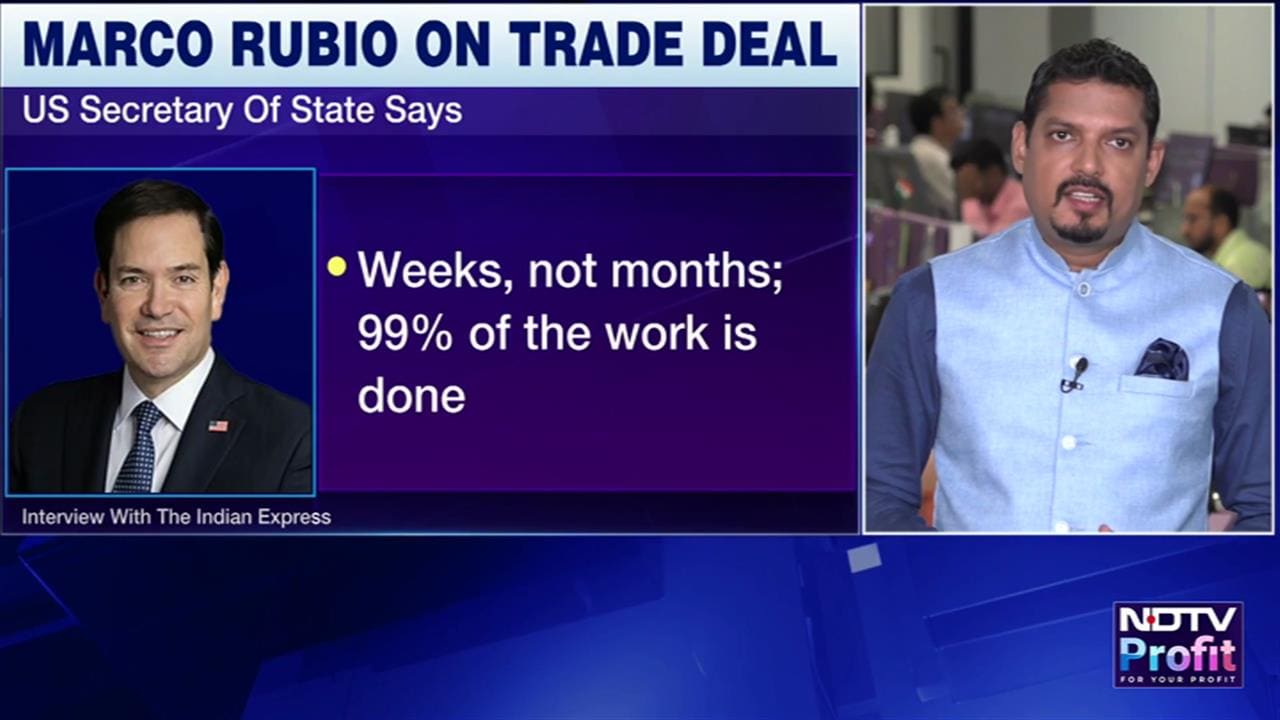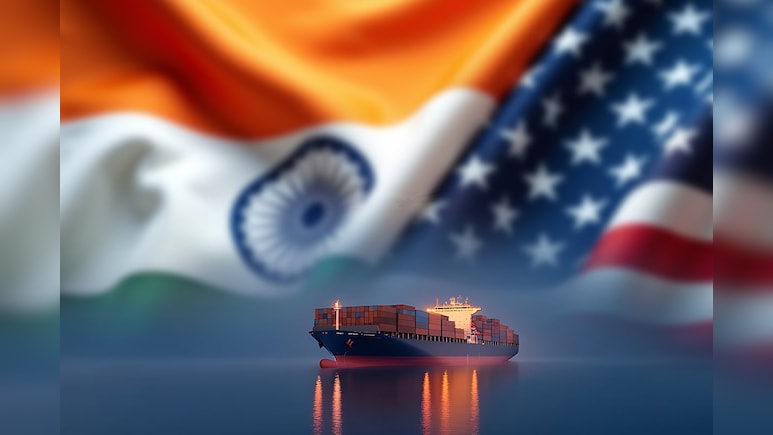
- India and the US finalised a trade deal lowering tariffs to 18% after year-long talks
- India will increase US energy imports and expand market access under the new agreement
- The deal benefits Indian exporters and US firms in dairy, medical devices, and technology
India and the United States have taken a decisive step toward reshaping their economic relationship, with Prime Minister Narendra Modi and President Donald Trump finalising a long-awaited trade agreement.
In this infographic-led explainer from NDTV Profit, we break down what changed, why it matters, and how the agreement could impact markets, companies, and consumers on both sides.
What Led To The Deal?
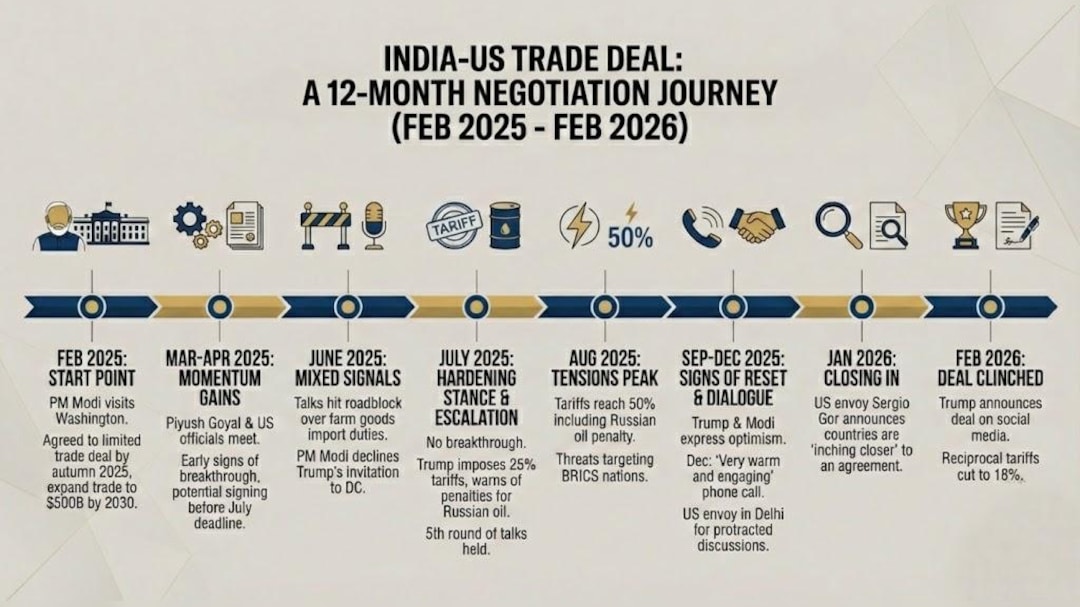
Photo Credit: NDTV Profit
Also Read | Layoffs Are Rising In Tech, But These Skills Are Helping People Unlock Better Pay
Over the past year, India–US trade negotiations moved through phases of tariff escalation, diplomatic outreach, and ultimately resolution. Beginning in early 2025, both sides launched talks to deepen trade ties even as the US imposed steep duties on Indian goods, prompting several rounds of high‑level meetings.
Despite intermittent breakthroughs, by late 2025, tariff hikes reached 50%, intensifying pressure for a deal. Persistuent diplomacy continued into early 2026, culminating in a landmark agreement cutting tariffs to 18% and ending the year‑long dispute.
Why Was The Deal Stuck?
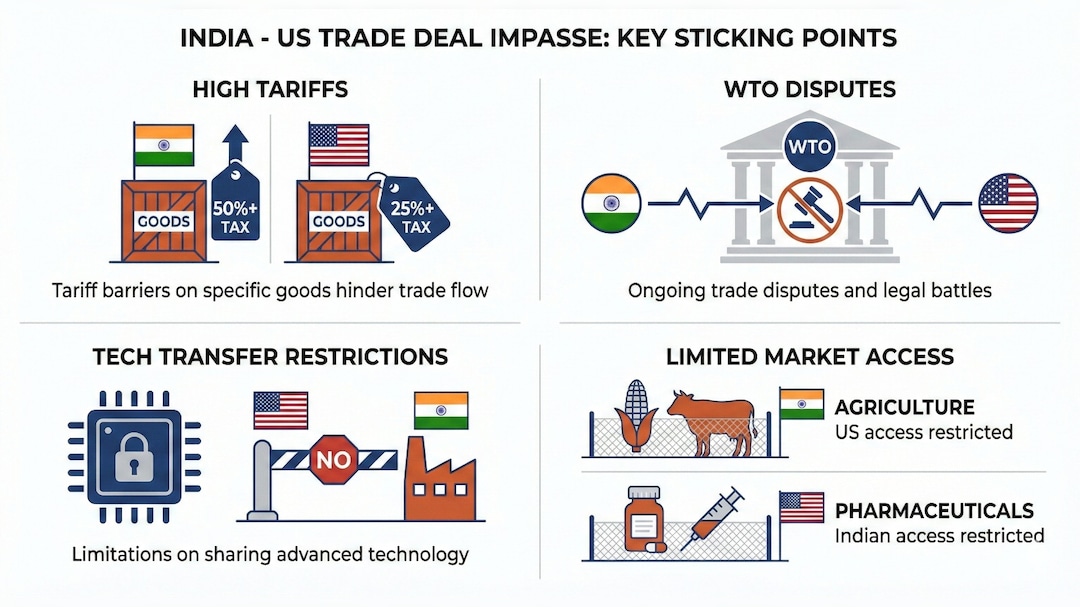
Photo Credit: NDTV Profit
The India–US trade deal was stuck mainly due to disagreements over tariffs. The US criticised India's high tariffs, complex standards and regulatory uncertainty, while also pushing India to open its market to genetically modified crops — a key Indian red line.
Digital trade was another hurdle, with the US seeking a permanent e‑commerce moratorium. Geopolitics complicated matters further: US displeasure over India's purchase of Russian oil and uncertainty around Russia‑linked sanction tariffs slowed momentum.
What The Deal Includes
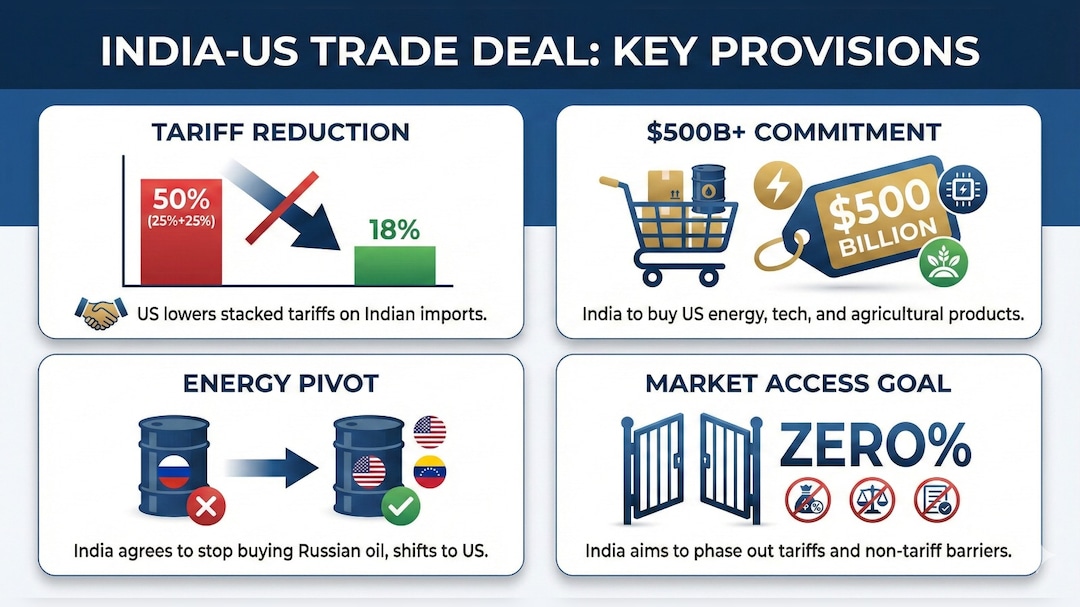
Photo Credit: NDTV Profit
Washington and New Delhi announced a trade deal lowering U.S. tariffs on Indian goods to 18%, while India pledged to move on tariff and non‑tariff barriers to expand market access under a bilateral trade framework.
President Trump said Prime Minister Modi would halt Russian oil purchases and increase U.S. energy imports, including crude oil and possibly Venezuelan barrels. He also claimed India would buy “over $500 billion” of U.S. energy, technology, agriculture and other goods, though the specific scope and timeline remain unconfirmed.
Who Benefits?
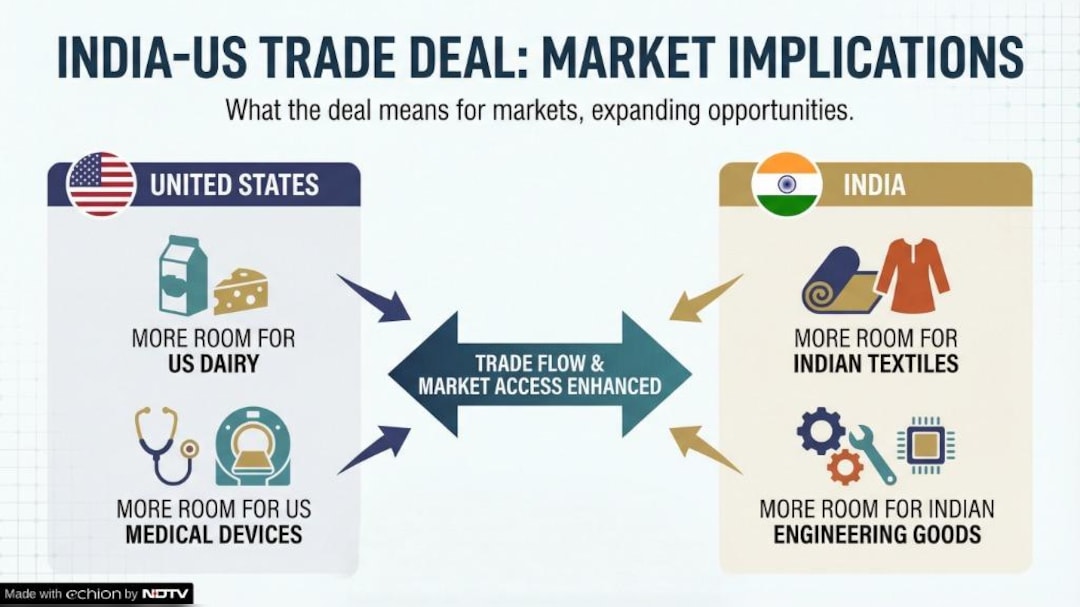
Photo Credit: NDTV Profit
Dalal Street is cheering the India–US trade deal. Indian exporters should see a tailwind in textiles and engineering/auto ancillaries as pricing improves and order visibility strengthens in the US. For US firms, India signals more room for premium dairy and high‑value medical devices, a gradual opening that could lift volumes and ease price controls.
What It Means For Tech & IT Sectors
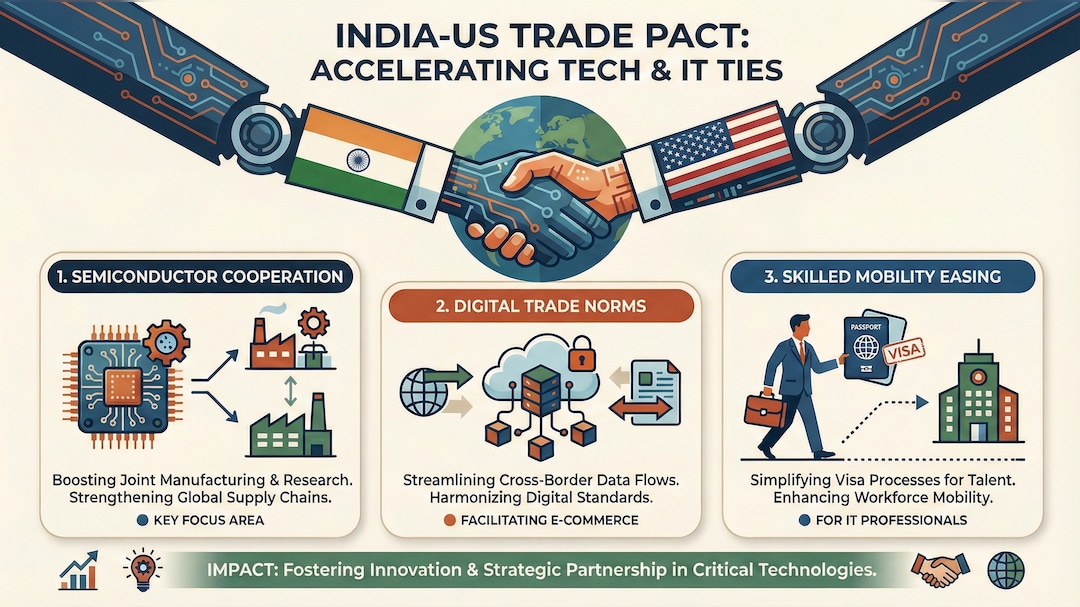
Photo Credit: NDTV Profit
A deeper India–US trade deal would unlock broad, complementary gains. For India, tariff cuts, clearer standards and smoother customs could accelerate export growth, attract patient capital, and catalyse high-value manufacturing.
For the United States, partnering with the world's fastest‑growing major economy offers new customers, resilient supply options, and room for American farm goods and services.
What Changes For Consumers & Businesses?
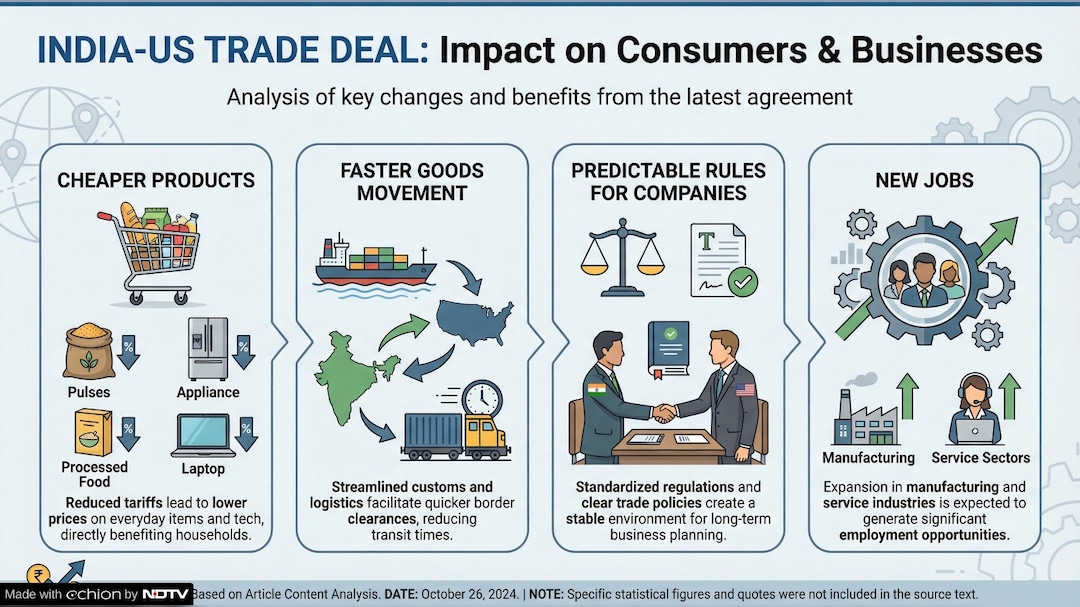
Photo Credit: NDTV Profit
An India–US trade deal would be a catalyst for the tech and IT sectors. Deeper semiconductor cooperation can de-risk supply chains, unlock joint R&D, and accelerate fabrication, packaging, and talent development, reducing import dependence and lead times.
Easing visa and work mobility for skilled professionals—through faster processing, longer durations, and reciprocal recognition—would alleviate talent bottlenecks, enable onsite delivery, and strengthen innovation linkages.
Why Analysts Say It's Big
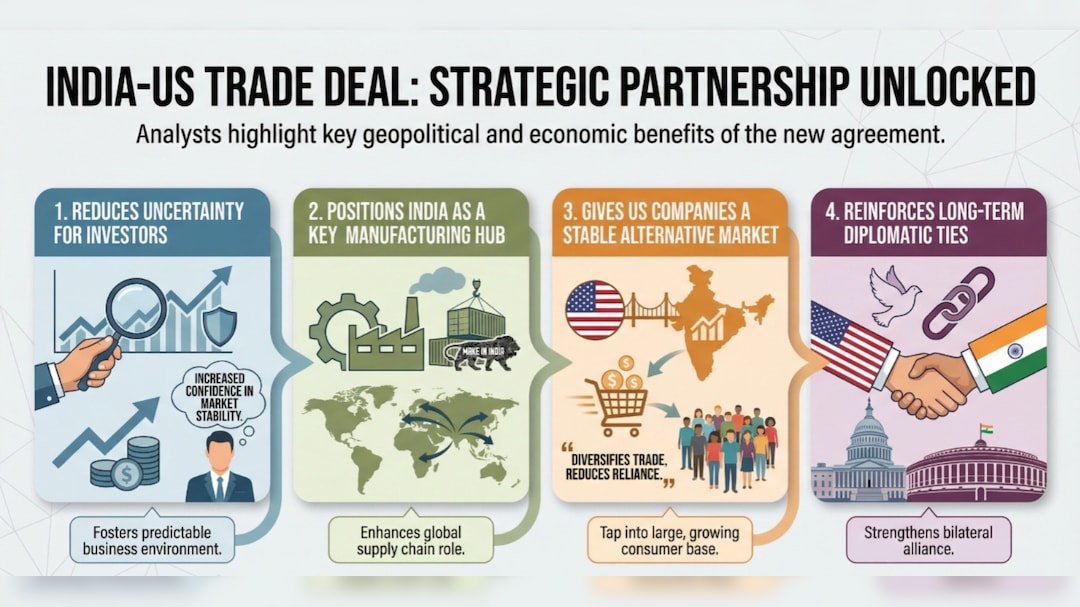
Photo Credit: NDTV Profit
Analysts say that the India-US trade deal is big because it reduces uncertainty for investors, signalling policy continuity and predictable returns.
It also positions India as a key manufacturing hub, accelerating supply-chain relocation with scale, skilled labor, and infrastructure incentives. For US companies, it offers a stable alternative market, diversifying exposure beyond China and cushioning demand cycles with a growing consumer base.
What Happens Next?
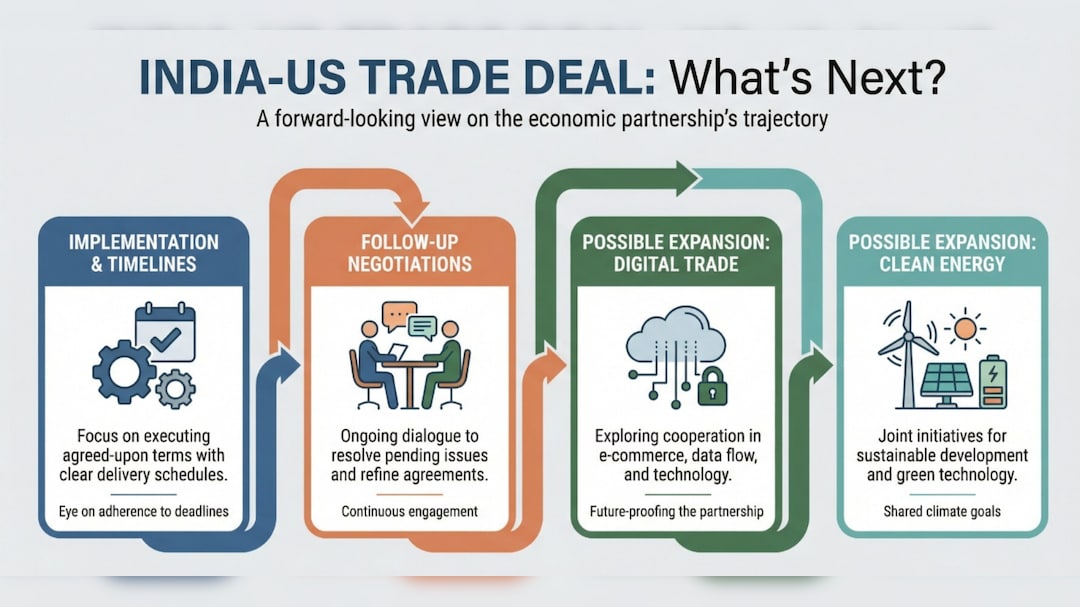
Photo Credit: NDTV Profit
With the India–US trade deal inked, the focus shifts from headlines to delivery. First, ministries and agencies on both sides will look at clear implementation timelines, sequenced milestones, and grievance channels to keep industry aligned.
New Delhi and Washington are likely to pilot expansion in digital trade and clean energy: interoperable data regimes, trusted AI and cyber standards, e-payments, and cross-border cloud; plus green hydrogen, battery value chains, critical minerals, and carbon accounting.
ALSO READ: India-US Trade Deal Live: Modi Says Patience Has Paid Off, World Order Shifting In Our Favour
Essential Business Intelligence, Sharp Market Insights, Practical Personal Finance Advice, Daily Fuel, Gold and Silver Prices and Latest Stories — On NDTV Profit.