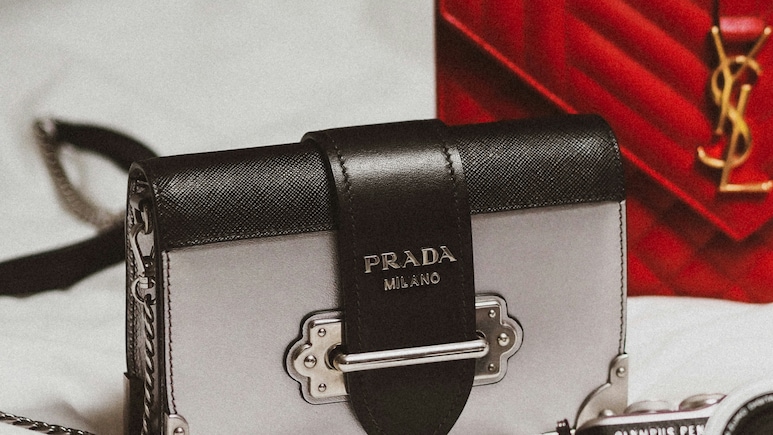
Last year, luxury brands made visible moves in India. Jaguar Land Rover opened in Hyderabad, BMW in Gurugram, Tesla entered Mumbai and Delhi, and Apple scaled up to six stores. Prada, notably, chose to enter through beauty in Delhi, the first step before a full fashion play.
It looks like the luxury market is taking off. And in some ways, it is. India's luxury market is growing at one of the fastest rates globally. But this growth depends on an uneven and small affluent base. Let's dive deeper.
Growth Drivers
Growth in high‑income families is the main driver of India's luxury segment. The number of dollar‑millionaire households — those with a net worth more than Rs 8-9 crore — has nearly doubled to 8.71 lakh in 2025 from 4.58 lakh in 2021, according to Hurun India. That's a fast-growing consumption base.
Also Read | Layoffs Are Rising In Tech, But These Skills Are Helping People Unlock Better Pay
A 2023 Kearney report classifies luxury consumers into three types: traditionally wealthy (40% of the target market), rising wealthy (37%), and ambitious achievers (23%).
The traditionally wealthy are typically business families with multigenerational assets and global exposure. For them, luxury is a way of life. The rising wealthy are first‑generation professionals and entrepreneurs who feel luxury as a reward. Their choices are deliberate and globally influenced. Ambitious achievers sit at the entry point of luxury. They believe more in signalling status.
Some would argue that high incomes existed even earlier. So why is this boom happening now? Income alone does not explain it. What matters as much-sometimes more-is exposure. The earlier generation had limited access to global lifestyles. International travel was not frequent, and social media did not shape aspirations in real time. Thus, consumption remained local and restrained.
Today, Indians are consuming more global content and travelling abroad more often. Exposure to retail environments in Dubai, Singapore, Paris, and Bangkok sets expectations and compels brands to bring similar experiences either online or offline.
Tier‑2/3 Expansion and Tier‑1 Deepening
Usually, the first step for expansion is digital. It is the testing ground for most premium brands. According to Luxe Analytics, over 60% of luxury discovery happens online. Platforms such as Tata Cliq, Myntra, and Ajio have dedicated luxury segments within their apps.
For tier two and three cities, this has been the game-changer. An increase in online demand has also pushed brands to open showrooms in smaller cities. The expansion of Westside, Zudio, Levi's, US Polo, Starbucks, Tanishq, and such entry-segment premium brands into these cities reflects a broad horizontal upgrade in consumption.
Simultaneously, tier‑1 cities have upgraded. Brands like Dior, Prada, Louis Vuitton, Balenciaga, and Bulgari are slowly finding their consumers in these cities. The emergence of luxury retail spaces such as Mumbai's Jio World Plaza and Galeries Lafayette, and New Delhi's Emporio and Chanakya malls, highlights the demand for such high-quality retail formats-though they remain limited to a few pockets within Indian cities. This brings us to another big problem: space.
Retail Infrastructure: Binding Constraint
Getting retail spaces in India remains a tricky ride for many brands.
DLF's Saurabh Bharara stated that the top 15 brands are ready to enter India, but there is zero availability of quality retail space. This keeps India's luxury potential unrealised. India has barely 0.07 sq. ft. of Grade-A retail space per person, over 30 times lower than Thailand. That gap explains why luxury demand exists, but scale does not.
That results in many brands not having stores in India. Some brands are even willing to compromise on store formats, area, and design. Still, they find limited options.
One way these brands enter India is through partnerships and joint ventures. Reliance Brands Limited (RBL) and Aditya Birla Fashion and Retail (ABFRL) act as gateways to the market. Although there are benefits from this arrangement, it also reflects regulatory complexity, heavy duties, and operational hassles. Recent trade deals might change this setup.
Final Take
This takes us to a key paradox in India's consumption story: its K-shaped structure.
China's luxury boom was built on broad income growth and strong urban infrastructure. On the other hand, India's luxury market depends on a smaller, globally connected elite scattered in smaller pockets around the cities, where infrastructure is poor. Yes, it can be a strong growth market, but not yet a scalable one. At roughly $12 billion, India's luxury market is less than 3% of China's — so even slow growth there adds more value than India's entire segment.
There is room to expand, but that growth depends on the broader base. Luxury retail cannot scale in isolation; it needs deeper urban consumption and supporting infrastructure. Until then, it will remain concentrated in enclaves.
ALSO READ: Guar Gum Is More Than An Oil Story | The Reason Why
Essential Business Intelligence, Sharp Market Insights, Practical Personal Finance Advice, Daily Fuel, Gold and Silver Prices and Latest Stories — On NDTV Profit.