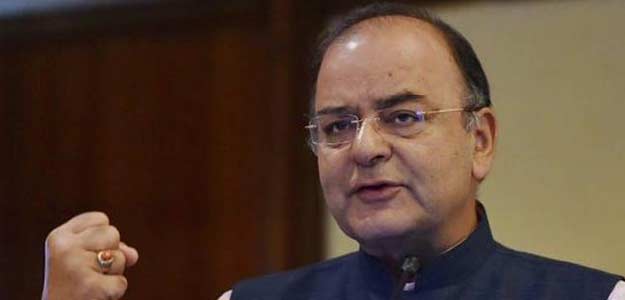
Finance Minister Arun Jaitley is staring at a big revenue shortfall for the current fiscal
Finance Minister Arun Jaitley will present the union budget on February 29, six days after Parliament meets.
Here's your 10-point guide to this big story:
1) After the budget session of Parliament begins on February 23, the rail budget will be presented by Union Minister Suresh Prabhu on the 25th, followed by the economic survey on the 26th.
2) The government is under pressure to push through key economic reforms including the GST, the national Goods and Sales Tax, which replaces a complex matrix of levies and is seen as a landmark tax legislation. The Congress, which once championed the tax while in power, has so far refused to cooperate in clearing the proposal.
3) Mr Jaitley has been holding consultations with the country's industrial chambers and other stakeholders while prepping the government's budget.
4) Sources say he wants to present realistic targets for tax revenues and asset sales, but businesses could end up picking up much of the tab.
5) The finance minister is staring at a big revenue shortfall as India again misses an unrealistic target for raising cash from selling off state assets, while sliding commodity prices and exports have dented revenues.
6) Prime Minister Narendra Modi recently questioned whether businesses should continue to benefit from tax "incentives" worth Rs 62,400 crore ($9.2 billion) that he described as subsidies in all but name. "My aim is not to eliminate subsidies, but to rationalise and target them," the PM said in a speech last week.
7) Mr Jaitley may set an economic growth target of 7.5 to 8 per cent for the fiscal year starting in April, an official said to news agency Reuters, while the asset-sale target could be halved to some Rs 35,000 crore ($5.17 billion).
8) India has revised down its projection of economic growth to 7 per cent to 7.5 per cent for the current fiscal year that ends on March 31, from the earlier estimate of 8.1 per cent to 8.5 per cent.
9) As of now, the government is not considering raising its deficit target of 3.5 per cent of GDP for 2016-17 fiscal.
10) The first half of the budget session will end on March 16; second part will run from April 25 to May 13.
Here's your 10-point guide to this big story:
1) After the budget session of Parliament begins on February 23, the rail budget will be presented by Union Minister Suresh Prabhu on the 25th, followed by the economic survey on the 26th.
2) The government is under pressure to push through key economic reforms including the GST, the national Goods and Sales Tax, which replaces a complex matrix of levies and is seen as a landmark tax legislation. The Congress, which once championed the tax while in power, has so far refused to cooperate in clearing the proposal.
3) Mr Jaitley has been holding consultations with the country's industrial chambers and other stakeholders while prepping the government's budget.
4) Sources say he wants to present realistic targets for tax revenues and asset sales, but businesses could end up picking up much of the tab.
5) The finance minister is staring at a big revenue shortfall as India again misses an unrealistic target for raising cash from selling off state assets, while sliding commodity prices and exports have dented revenues.
6) Prime Minister Narendra Modi recently questioned whether businesses should continue to benefit from tax "incentives" worth Rs 62,400 crore ($9.2 billion) that he described as subsidies in all but name. "My aim is not to eliminate subsidies, but to rationalise and target them," the PM said in a speech last week.
7) Mr Jaitley may set an economic growth target of 7.5 to 8 per cent for the fiscal year starting in April, an official said to news agency Reuters, while the asset-sale target could be halved to some Rs 35,000 crore ($5.17 billion).
8) India has revised down its projection of economic growth to 7 per cent to 7.5 per cent for the current fiscal year that ends on March 31, from the earlier estimate of 8.1 per cent to 8.5 per cent.
9) As of now, the government is not considering raising its deficit target of 3.5 per cent of GDP for 2016-17 fiscal.
10) The first half of the budget session will end on March 16; second part will run from April 25 to May 13.
Essential Business Intelligence, Sharp Market Insights, Practical Personal Finance Advice, Daily Fuel, Gold and Silver Prices and Latest Stories — On NDTV Profit.