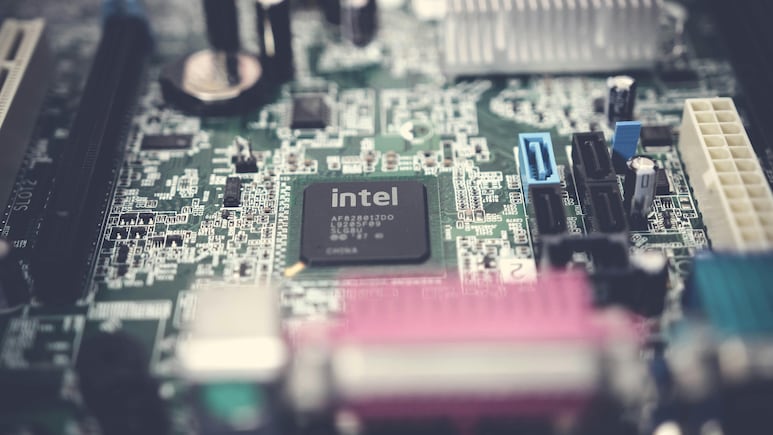
Chip prices are going through the roof. In just the past few quarters, memory chip prices have jumped 50-100%, marking one of the sharpest increases in recent years.
We've seen this movie before. In 2020, we bought new laptops and TVs, thanks to lockdowns and work-from-home. At that time, logic chip prices touched new highs. Today, it's about memory chips. And this time, the pressure is broader, deeper, and far more persistent.
Introducing Memory Chips
Let's get into some basics and understand the differences in memory and logic chips. Memory chips store and feed the data that makes computing possible. Logic chips, on the other hand, do the computing. Every device needs both to function. South Korea leads in memory chip production, while Taiwan leads in logic chips.
Also Read | Layoffs Are Rising In Tech, But These Skills Are Helping People Unlock Better Pay
Three types of memory chips matter in the current cycle: DRAM, NAND, and HBM. DRAM, short for Dynamic Random-Access Memory, is volatile, operates at nanosecond latency, and needs constant refreshing. NAND (Not-AND memory) is used in storage devices and USB drives. HBM (High Bandwidth Memory) is a high-speed memory used for AI computing. Companies like NVIDIA consume vast quantities of HBM for their AI-focused GPUs. DRAM and NAND can be called traditional memory chips compared to the newest and most advanced HBM chips.
Samsung, SK Hynix, and Micron control nearly the entire global memory chips market. Samsung and SK Hynix alone control 70% of global DRAM revenue, with SK Hynix being the critical supplier of HBM for Nvidia.
Why Chip Prices Were Already Rising Before The War?
Over the past few years, AI has taken off — and with it, the demand for HBM chips. But producing more of them comes at a cost. Chipmakers have limited capacity, and it can't be ramped up in the short run. Thus, creates a trade-off.
To make one unit of HBM, companies must give up roughly three units of traditional memory. Most companies have chosen advanced memory chips due to high margins in this emerging field. In December 2025, Micron even exited parts of its consumer memory business. The industry is, therefore, facing a shortage in traditional memory chips. The result is a rare price inversion, where traditional memory has become more expensive than advanced chips.
Hidden Costs Of Iran War
And just as this imbalance was building, the US-Iran war worsened the industry math. On March 2, Iran struck Qatar's Ras Laffan Industrial City, the world's largest LNG hub. The real shock for the industry came from the helium shortage.
Helium is extracted as a byproduct of natural gas processing. When LNG production stops, helium supply falls with it. Qatar alone produces nearly one-third of global helium, making this a critical chokepoint. In chip manufacturing, helium is irreplaceable. It is used for wafer cooling, EUV lithography, and leak detection in vacuum systems.
Well-prepared firms like Samsung and SK Hynix hold about six months of supply, while others only two months. And even if LNG flows resume, it will take months to stabilise helium supply chains. The industry is, thus, staring at a prolonged helium shortage.
Chip Shortage Impact Across Industries
Helium is just one part of the problem. The war is disrupting other critical inputs as well. Bromine, used in chip etching, comes largely from Israel and Jordan. LNG shortages are raising electricity costs, especially in Taiwan, where chip factories depend on gas. Even logistics is affected, as Dubai acted as a key hub for moving wafers across regions.
These disruptions are now spilling into other industries.
Missiles, drones and radar systems rely on the same chips as AI systems. With demand rising from both sides, costs are going up and supply is getting tighter at a time of rising geopolitical tension.
The auto industry is feeling it too. Shortages are forcing automakers to prioritise premium models over affordable ones. Elon Musk remarked that companies must either face the shortage or create their own chip facility, underscoring the seriousness of the issue.
Fragile Backbone Of Chip Industry
There's a deeper issue here. The chip supply chain depends on a handful of critical inputs and regions that are hard to replace.
A single town in North Carolina produces up to 90% of the world's high-purity quartz, which is used in silicon wafers. Ukraine supplies most of the world's neon and a large share of krypton. Qatar dominates helium.
Production is just as concentrated. TSMC in Taiwan makes over 90% of the world's most advanced chips, while Korean companies like Samsung and SK Hynix control roughly 70% of global memory. ASML is the only company that makes EUV machines. Japan dominates photoresists and wafers, while China controls most rare earth processing and critical elements like gallium and germanium.
Final Take
Each layer — materials, manufacturing and machinery — is a chokepoint. The entire system rests on a fragile web of dependencies. A disruption in any one part can ripple across the whole chain. In an era of rising geopolitical tensions, prolonged wars and an obsessive self-reliance goal, the next crack in this supply chain is only a matter of time.
Disclaimer: The views expressed in this article are solely those of the author and do not necessarily reflect the opinion of NDTV Profit or its affiliates. Readers are advised to conduct their own research or consult a qualified professional before making any investment or business decisions. NDTV Profit does not guarantee the accuracy, completeness, or reliability of the information presented in this article.
ALSO READ: India Exports Seen Ending FY26 Higher Despite Middle-East Tensions, US Tariff Pressure
Essential Business Intelligence, Sharp Market Insights, Practical Personal Finance Advice, Daily Fuel, Gold and Silver Prices and Latest Stories — On NDTV Profit.