Lenders Must Not Allow AI, BigTech To Ride Them, Says RBI Governor Das
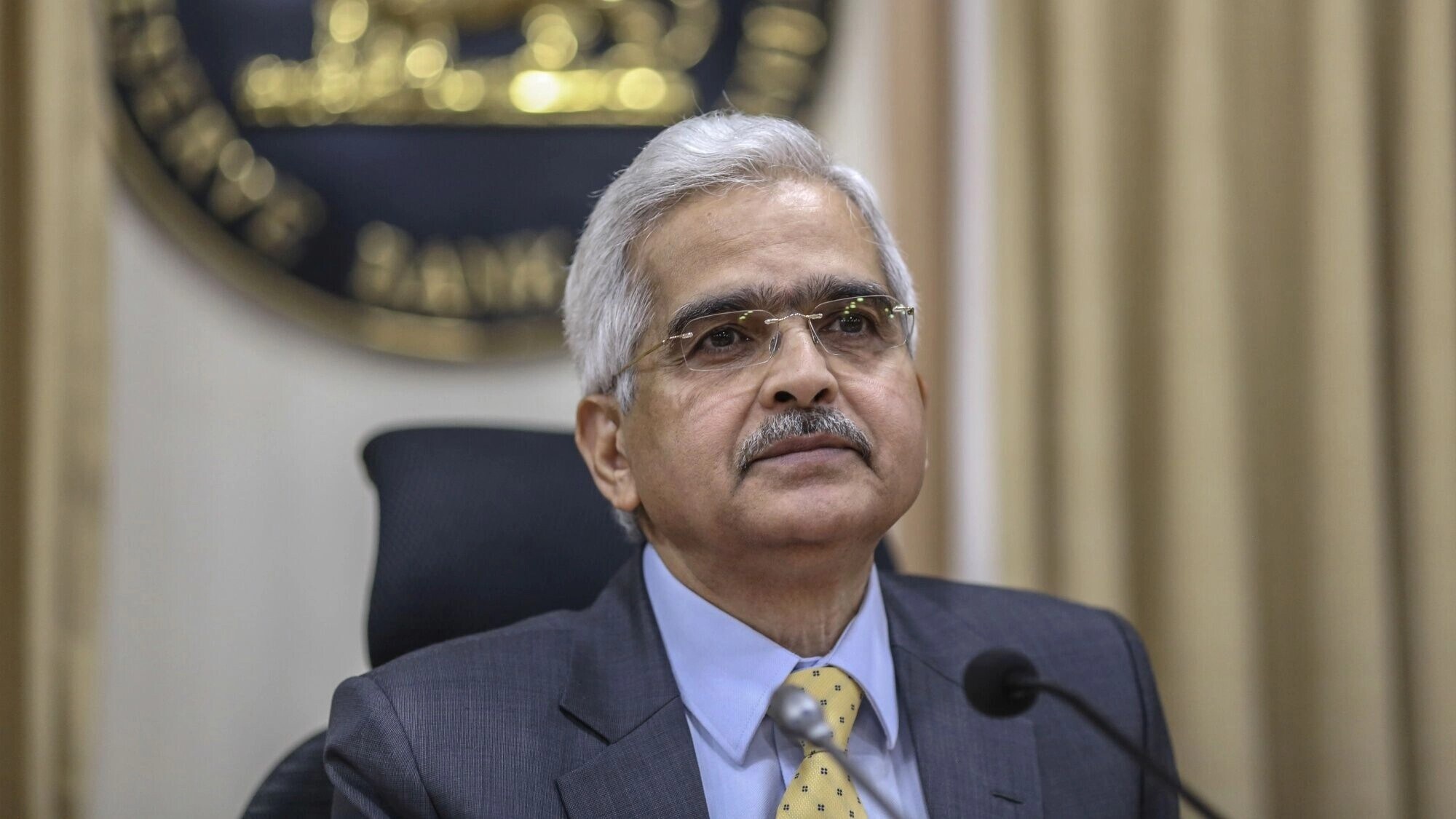
While artificial intelligence and machine learning have opened new avenues of business and profit expansion, banks and financial institutions must not allow them to ride on, Reserve Bank of India's Governor Shaktikanta Das said on Monday.
"Banks and other financial institutions must put in place adequate risk mitigation measures against all these risks. In the ultimate analysis, banks have to ride on the advantages of AI and Bigtech and not allow the latter to ride on them," Das said at the RBI@90 high-level conference on ‘Central Banking at Crossroads'.
The latest technological advancements can pose financial stability risks; the growing use of AI introduces increased susceptibility to cyberattacks and data breaches.
AI's opacity makes it difficult to audit or interpret the algorithms which drive decisions and can potentially lead to unpredictable consequences in the markets, Das said.
"The heavy reliance on AI can lead to concentration risks, especially when a small number of tech providers dominate the market. This could amplify systemic risks, as failures or disruptions in these systems may cascade across the entire financial sector," he said.
Speaking of financial stability risks, Das said that the correction in commercial real estate prices in some jurisdictions can put small and medium-sized banks under stress. This is because of their large exposures to this sector.
He also said that the interconnectedness between commercial real estate prices, non-bank financial institutions and the overall banking system amplifies these risks.
This has come as higher interest rates have led to increase in debt servicing costs, financial market volatility, and risks to asset quality.
Stretched asset valuations in some jurisdictions could trigger contagion across financial markets, creating further instability.
The rapid expansion of the private credit markets with limited regulation can also pose significant risks to financial stability, particularly since they have not been stress-tested in a downturn, he added.
On payment systems, Das said that harmonisation of standards and interoperability would be important for central bank digital currency for cross-border payments and to overcome the serious financial stability concerns associated with cryptocurrencies.
The fact that countries may prefer to design their own systems as per their domestic considerations could be a key challenge. However, developing a plug-and-play system that allows replicability of India's experience while also maintaining the sovereignty of respective countries can help overcome it.
With rising social media presence and vast access to online banking with money transfer, banks have to remain alert in the social media space and also strengthen their liquidity buffers because rumours and misinformation can spread very quickly.
Das also said that remittances are the starting point for many emerging and developing economies, including India, to explore cross-border peer-to-peer payments.
"We believe there is immense scope to significantly reduce the cost and time for such remittances," he said.
The RBI governor also stressed on how soaring public debt is becoming a challenge for central banks.
Global public debt has surged post the pandemic to 93.2% of GDP in 2023 and is likely to increase to 100% of GDP by 2029.
Overall, central banks must remain vigilant, adaptable, continuously assess risks and build resilience.

-
A New Samvat Wishlist: Inclusive Prosperity And Human Development

India has strengthened its economic foundations through infrastructure, digital access and enterprise. Its next growth chapter must deepen productivity, create better livelihoods and widen participation in prosperity.
-
Love, Sex Aur Dhokha: The Audacious Plot To Spy On Jensen Huang
A Taipei dinner, a Singapore chip buyer and a suspected Chinese asset: inside the alleged spy operation that got close to NVIDIA's Jensen Huang.
-
Ten Things I Learnt This Samvat
Patience can be a trap. Cheap stocks can stay cheap. Leverage can wipe you out. What did Samvat 2082 teach us? Niraj Shah writes on 10 lessons from the year gone by.
-
Talking Points This Week: Tech Nerves, FII Buying, And A Faraway Banking Shock
The global markets are not shining this Diwali. The exception in the large markets is, India.
-
Midterm Rally Lasted A Day. The Hard Reality Of A Divided US May Last Two Years | Opinion
Between a contested AI boom, a debt ceiling that arrives in 2027 and a president with every incentive to act alone, the next two years may prove more volatile than the first day's rally suggests.
-
Blue Wave Will Derail the AI Trade but Won't Dismantle the AI Era | Unhedged Position
The Democrats' sweep of the US Congress will see politics collide with economic forces both over the long and short term.
-
It's Time To Take The GST Council's Bet On Trust Global
Payment records can prove India's services exports, and clear, proportionate rules can bring foreign digital sellers into the tax net.
-
Opinion | India at 38: From Innovation Overperformer to Innovation Powerhouse
India now has 453 VC-backed deep science startups, 18 of them late-stage, after 117 percent growth since 2020. Laurus Labs, at USD 9.3 billion, is the most valuable deep science company in any middle-income economy outside China.
-
Navigating Energy Crossroads: S Jaishankar's Call For Diversified Supply Chains At G20 Ministerial Meeting
As geopolitical fault lines continue to test maritime trade routes and commodity flows, Jaishankar's message remains pertinent: true economic resilience requires open markets, protected transit lines, and a genuine commitment to multilateral cooperation rather than coercion.









