Davos 2019: Two Pillars Of Bharat Forge’s Double-Digit Growth Strategy
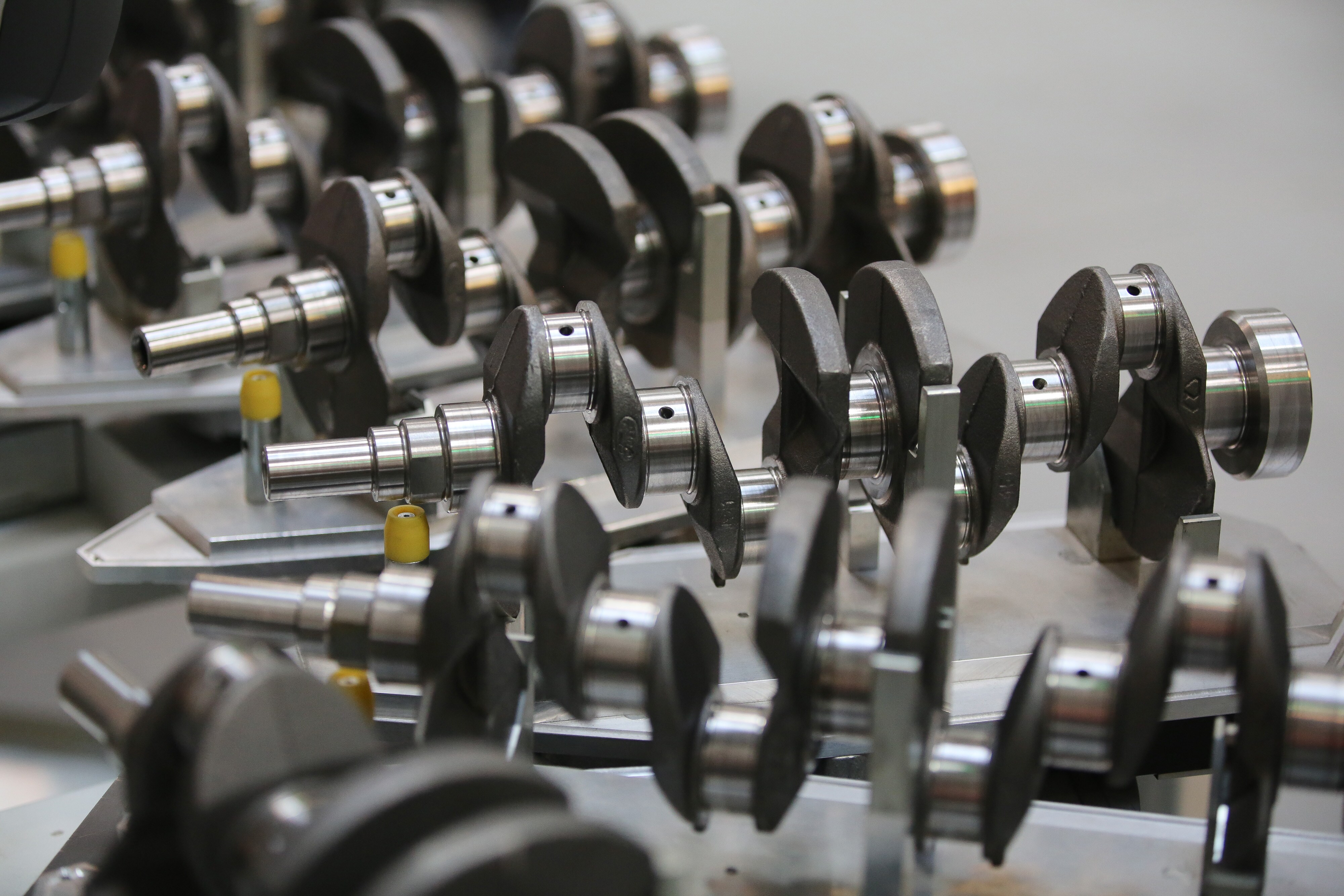
Bharat Forge Ltd. seeks to achieve double-digit growth in its international business by venturing into newer verticals and developing more “content per vehicle”.
“We've developed a lot of jazzy component products, value-added products for passenger cars and creating structural products for electric vehicles, ” Kalyani, executive director of Bharat Forge, told BloombergQuint on the sidelines of World Economic Forum, Davos. “ We're targeting electrification of industrial products as well.”
India's largest exporter of automotive parts also plans to expand its aluminium-forging business in the U.S. and its light-weighting business five-fold in the next five years, said Kalyani.
He said domestic demand was affected by “hangover of a bad mood” due to global factors, and “outliers” such as slower than expected progress of Insolvency and Bankruptcy Code cases.
People have gone from let's do things now to let's wait and watch.Amit Kalyani, Executive Director, Bharat Forge
Kalyani maintained that there's "nothing wrong with the Indian economy" and that investments will start again soon.
Capacity utilisation levels in India have gone up. We are on the cusp of a pretty large capex cycle starting in the next 18-24 months.Amit Kalyani, Executive Director, Bharat Forge
Watch the interview here:
Here's the edited transcript of the conversation:
Some might argue that we are still seeing tail effect of global financial crises. Would you say that we are witnessing it now?
I have little to do with stock prices. While the orders on class 8 trucks are lower, the backlog is so large that next year could still be a good year. Besides the class 8 trucks, we also have new growth coming from passenger car sector and many other sectors that we were incubating from last few years. Notwithstanding catastrophic (events), we should have a good year next year.
What is your broad outlook for key contributing sectors?
We're focussed on creating new capabilities in order to supply components and solutions that we haven't been doing at scale of what the potential is today. We have set up the light weighting centre. In India, we have expanded aluminum forging business. We've expanded our aluminum forging business in Europe, and we'll do the same in the U.S. This will add significant quantum increase in those businesses and provide new platform for growth going forward. We see the light weighting business potentially, today, is about 100 million which could easily become in range of 400-500 million in five-six years. In passenger car sector, we are predominantly present in engine components. We have now developed jazzy components, new engine component value added products.
We are now creating products for electric vehicle sector. EVs have lot of structural, mechanical, electrical components which we never used to do. We have developed technologies to make products for this sector. These are things which come on line in next two-three years.
We are targeting electrification of industrial products and control systems for it. We have been doing initial work on it for last two years. We are broadening our base, adding new capabilities. That's how we will grow our business by growing content per vehicle and getting into sectors that we have not been present in.
What is the mood back home? Do you think there is enough demand in economy that the underline strength is sustainable?
There is nothing wrong with the Indian economy. It's just a hangover of the bad mood coming from all the global cues and uncertainty about what is happening globally, some major events coming up in India. People have gone from let's do things now to let's wait and watch. That's the kind of thing we are seeing. There are some issues around the IBC (insolvency and bankruptcy code) process which should have been expected to happen more expeditiously. Only few of them have panned out. So, lot of things which came as outliers which have mood effect in India.
What is the outlook on order books for next two years?
We work with derived demand in this business. We talk about our demand based on what our customers tell us. The Indian automotive sector is supposed to grow at double digits domestically. Our global business should also grow at double digit. Overall, we are in a strong position. In Indian sector industrial side, the investments will start again. Like power, they will start seeing investments again.
Are you seeing green shoots there?
Not yet. The capacity utilisation has gone up. Lot of old plants have to shut down and new plants have to come up. Across sectors like steel, cement, power, we are on the cusp of a large capex cycle starting in the next 18-24 months. I have seen capacity utilisation and that is what giving us the sense.
We have seen softening in profit margins on last two-three years. Might have been outcome of diversification. Right now, your margins are at 2015 levels at 25 percent.
Our operating margins are upwards of 28.5 percent. They have not softened. We have a raw material pass through which inflates your topline and raw material cost. Our operating margin per product is at the levels we have, more or less same or even higher if you have to account for inflationary impact of price increases. They will remain stable between 28-29 percent.
Do you see that if the capex cycle kicks in, an improvement in margins in the next 2-3 years? Or do cost pressures keep that in check?
This is a very strong level of margin to operate as you have new business coming up and all kinds of things. I would like to keep this in ballpark. There may be times when it could be slightly higher or lower. If you look at the whole year, it will remain at that level.

-
The Curious Case of Equitas Small Finance Bank And A CEO Who Quit For Stock

PN Vasudevan believes persistent investor concerns over a perceived conflict of interest had become a governance overhang on Equitas Small Finance Bank's stock, even as the lender improved profitability and asset quality.
-
Talking Points This Week: AI Cash Burn, A Tiger Comeback And An India That Still Finds Its Own Path
India is not immune to higher oil or tighter global liquidity, yet its earnings base is broader, its domestic policy levers are still available.
-
Foreign Investors Own Half Of HDFC Bank and ICICI Bank. An LTCG Cut Could Matter Most Here
Foreign portfolio investors have US$115 billion parked in HDFC Bank, ICICI Bank. If the government cuts long-term capital gains tax, Jefferies says returning foreign money could land here first.
-
'Never Seen This Level Of Negativity': Sandeep Tandon Says The Next Rally May Be Closer Than You Think
Veteran investor Sandeep Tandon says foreign selling is easing, large-caps are due a comeback and mid-caps are crowded, while he turns positive on gold, power and pharma this Diwali.
-
Indians Stay With Family, Not In Hotels | The Reason Why
India still lacks enough clean, reliable and affordable hotels for budget-conscious travellers.
-
The Economic Imperative: Analysing The Material Driving Force Behind India-Canada Strategic Reset
This economic complementarity is further reinforced by deep institutional investment ties and talent mobility, which form the bedrock of the bilateral framework.
-
Medicine Pricing: Where Must Profit Stop?
India must confront excessive margins, hidden incentives and regulatory gaps that threaten the integrity of medicine.
-
Why Amazon And Flipkart Are Struggling To Beat Meesho In India's Smaller Cities
With 274 million users and lowest-cost logistics, Meesho is defending its value commerce crown against giants like Amazon and Flipkart.
-
High US Salaries, No Green Card Certainty: The Financial Calculation Facing Indian H-1B Families
The suspension of PERM processing at eight technology employers does not cancel existing H-1B visas. What it does is force a question many Indian families have been avoiding: is the US salary worth tying your career and family plans to one employer?
-
Swiggy vs Eternal: Food Delivery's Two Rivals Are No Longer In The Same Race
Eternal is building a private AI assistant, dark.ai. Swiggy is still working out how to make Instamart pay, with an operating loss of Rs 895 crore in the July-September quarter while Blinkit stayed profitable.










