US Put On Notice By Key Bond Panel To Mind Fiscal Deterioration
(Bloomberg) -- US policymakers were advised this week by an influential panel of bond market participants to pay attention to the deteriorating federal budget, with investors demanding steeper premiums to buy the government's longer-term securities.
“Effectively, while there is still reasonable demand for US Treasuries from many domestic and international market participants, it has not kept pace with the increase in supply,” according to a Treasury Borrowing Advisory Committee analysis released on Wednesday.
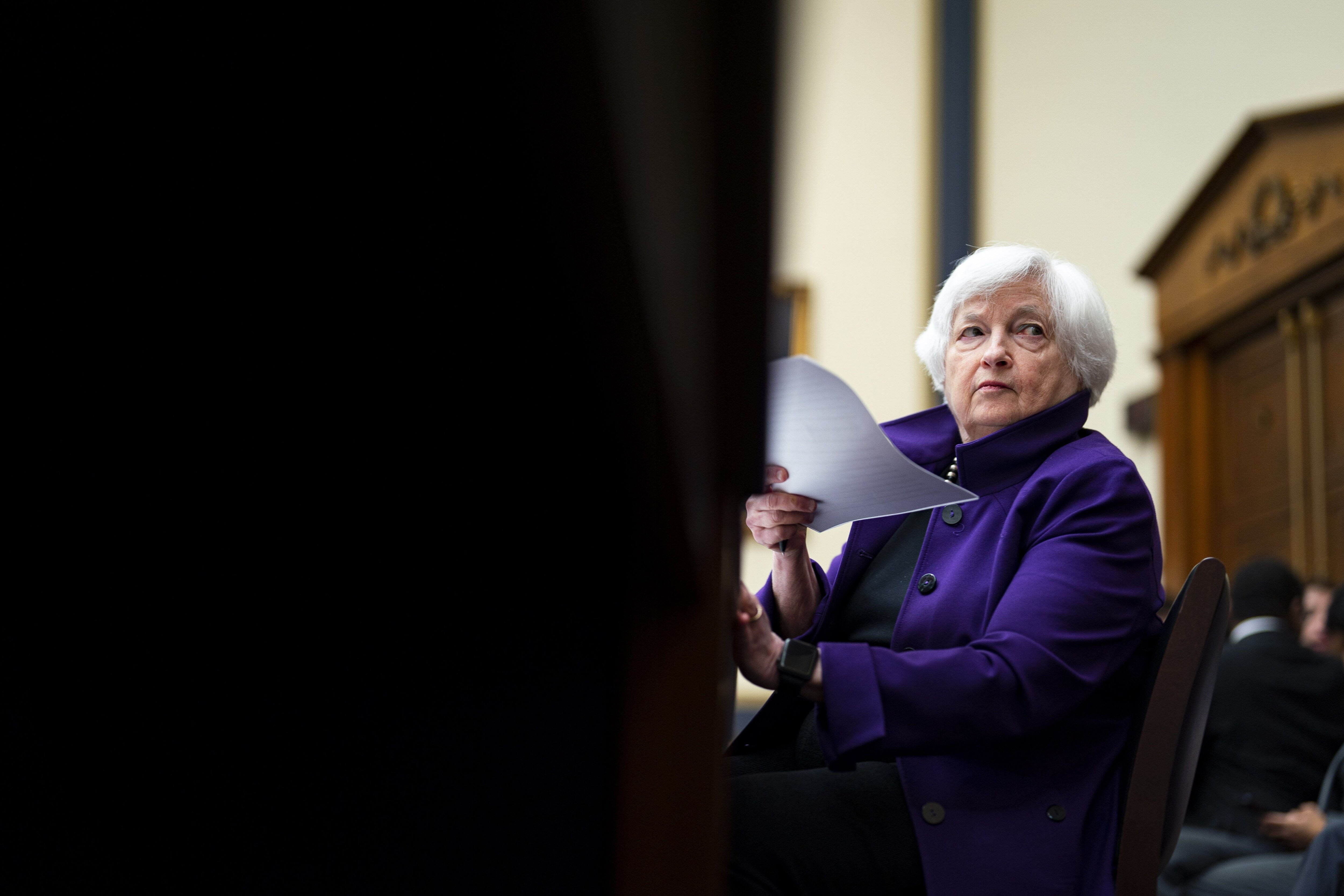
Treasury Secretary Janet Yellen, who last week played down the impact of bigger supply in driving a months-long selloff in longer-term Treasuries, met with the TBAC panel on Tuesday. The group includes major bond market participants such as Citigroup Inc., JPMorgan Chase & Co., BlackRock Inc. and Pacific Investment Management Co.
One of Yellen's top lieutenants, Josh Frost, the Treasury's assistant secretary for financial markets, on Wednesday reiterated Yellen's analysis, which highlighted that higher long-term yields are a global phenomenon and not unique to the US. Frost also expressed confidence in demand for Treasuries, saying it had been quite strong in the government's auctions.
Nevertheless, TBAC advised Yellen in a report to the Treasury chief that “there is a view among market participants that the growing imbalance between supply of and demand for US Treasury debt may also have contributed to the selloff.”
Refunding Plan
Treasury officials decided, in their quarterly debt-sale plan released Wednesday, to step up sales of longer-term securities by slightly less than most major dealers had expected. Treasury also said it expects just one more quarterly boost to such issuance, a more constrained outlook than some had anticipated.
The decisions occur against a backdrop of sharply higher yields, with 10-year securities as of Wednesday at around 4.81%, compared with 3.96% at the end of July — before the Treasury boosted its long-term debt issuance plan for the first time in more than two years. Yields tumbled on Wednesday after the Treasury's issuance plan, known as the quarterly refunding, was released.
A key reason for the increase in yields is the higher compensation that investors are now demanding to buy longer-term Treasuries instead of just purchasing short-term securities and rolling those over — a concept known as the term premium.
“The Committee also felt that the return of term premium served to emphasize the importance of fiscal sustainability,” TBAC said in its report to Yellen. “Both gross debt outstanding and debt servicing costs are projected to increase meaningfully, and that should increasingly be a consideration for policymakers.”
TBAC analysis also showed that stronger economic data have played a role in the rise in yields. By contrast, expectations for tighter Federal Reserve policy over time “have only had limited pass-through into longer term yields,” the analysis showed.
--With assistance from Liz Capo McCormick and Alexandra Harris.
More stories like this are available on bloomberg.com
©2023 Bloomberg L.P.

-
Talking Points This Week: Leadership Shock At Nvidia, Earnings Strength, And The Fog Over Hormuz

The Anthropic IPO pricing and first trading day, Nvidia's upcoming earnings, and any fresh signals from Iran will set the tone for the following week.
-
Signature Play: The Classic Cocktail Is Dead. Or Is It?
Classic cocktails are disappearing from India's cocktail menus. But they're still being ordered, taught to bartenders and borrowed from. So, who's really having the last drink?
-
A New Samvat Wishlist: Inclusive Prosperity And Human Development
India has strengthened its economic foundations through infrastructure, digital access and enterprise. Its next growth chapter must deepen productivity, create better livelihoods and widen participation in prosperity.
-
Love, Sex Aur Dhokha: The Audacious Plot To Spy On Jensen Huang
A Taipei dinner, a Singapore chip buyer and a suspected Chinese asset: inside the alleged spy operation that got close to NVIDIA's Jensen Huang.
-
Ten Things I Learnt This Samvat
Patience can be a trap. Cheap stocks can stay cheap. Leverage can wipe you out. What did Samvat 2082 teach us? Niraj Shah writes on 10 lessons from the year gone by.
-
Talking Points This Week: Tech Nerves, FII Buying, And A Faraway Banking Shock
The global markets are not shining this Diwali. The exception in the large markets is, India.
-
Midterm Rally Lasted A Day. The Hard Reality Of A Divided US May Last Two Years | Opinion
Between a contested AI boom, a debt ceiling that arrives in 2027 and a president with every incentive to act alone, the next two years may prove more volatile than the first day's rally suggests.
-
Blue Wave Will Derail the AI Trade but Won't Dismantle the AI Era | Unhedged Position
The Democrats' sweep of the US Congress will see politics collide with economic forces both over the long and short term.
-
It's Time To Take The GST Council's Bet On Trust Global
Payment records can prove India's services exports, and clear, proportionate rules can bring foreign digital sellers into the tax net.
-
Opinion | India at 38: From Innovation Overperformer to Innovation Powerhouse
India now has 453 VC-backed deep science startups, 18 of them late-stage, after 117 percent growth since 2020. Laurus Labs, at USD 9.3 billion, is the most valuable deep science company in any middle-income economy outside China.









