It was supposed to be a magnum opus. The first event after the Maharajah had his homecoming back into the Tata fold, where they proactively sought engagement rather than sat with their lips sealed. So, a whole bunch of Air India top brass got together in the Durbar Hall of the Taj Palace Hotel in Delhi earlier this week. In attendance were partners from the aviation ecosystem, such as airports, OEMs, banks, members of the media and some aviation enthusiasts as well. The agenda was to know more about Air India's new brand identity.
At the touch of a button by N Chandrasekaran, executive chairman of Tata Sons and Air India, a video was launched on a massive video wall set-up for the event. Air India's new logo was revealed. Designed by London-based agency FutureBrand, who've in the past worked with airlines such as American Airlines and Fiji Airways on their rebrands, the agency went about a reveal of the logo, brand colours and how the aircraft for Air India would look in the future.
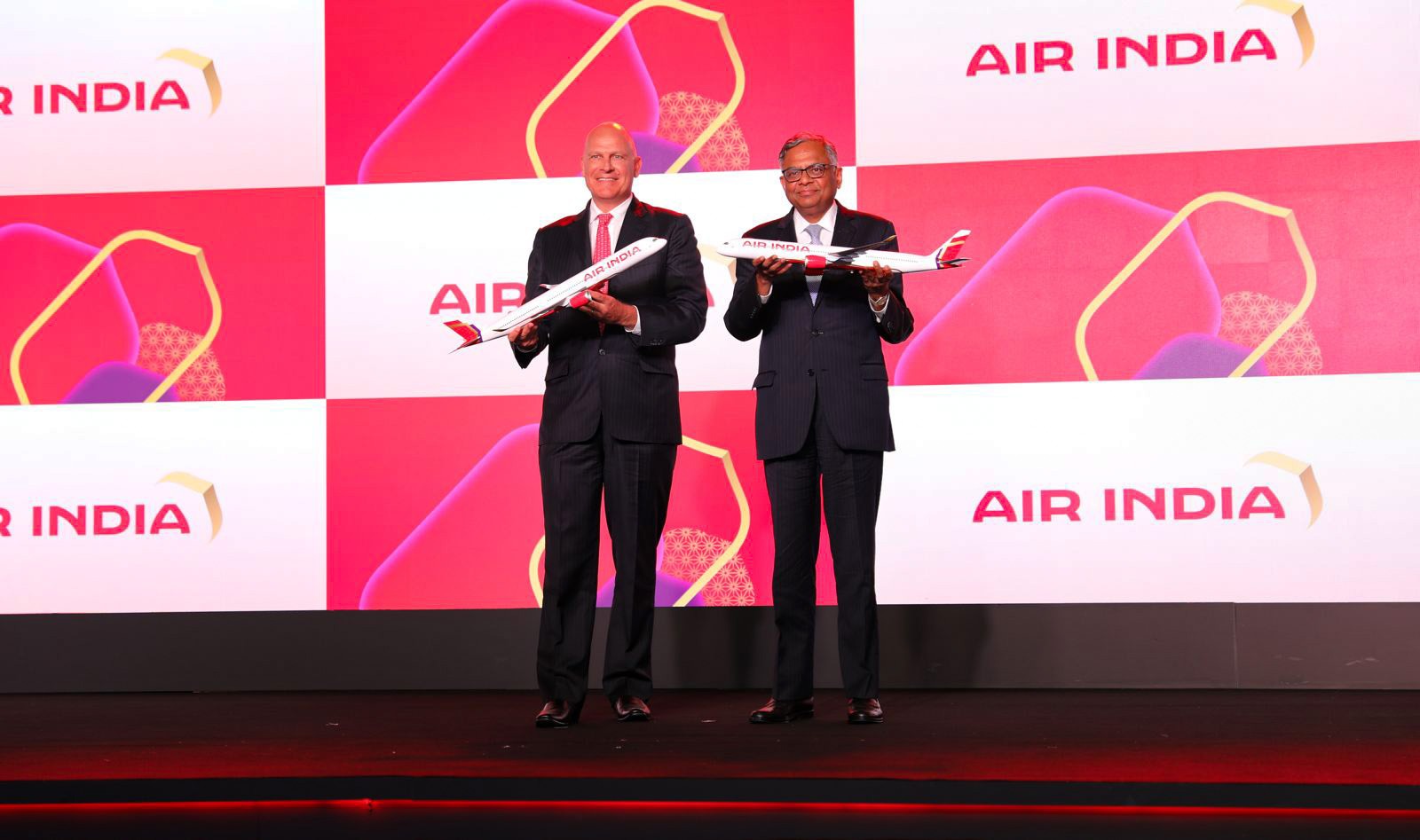
Campbell Wilson and N Chandrasekaran at the unveiling of the logo and livery. (Source: Tata Group handle/X)
Air India's People-Pleaser Livery Holds On To The Past
Air India and FutureBrand did not cut away too much from the past in their pursuit for the future, and they claimed as much as the evening progressed. The logo sports a new font, which will be progressively rolled out across the Air India touchpoints, and it hosts a new logo unit that is being called a Vista, arguably inspired by the Jharokha windows that Air India's aircraft sport for a long time now. However, it looks more like a curly bracket than a symbol for an airline. The name is no coincidence, in my opinion, an attempt to hang on to a bit of Vistara.
But while this was a time which could have been used to signal a new start, the airline and their design partner perhaps got too busy keeping everyone happy to cut away from the past. It is no coincidence that Air India's new brand colours include the reds of the past but also include aubergine and gold now, in what is perhaps another homage to Vistara. What has been lost has been the oranges and the blues, which used to signify Indian Airlines of the past.
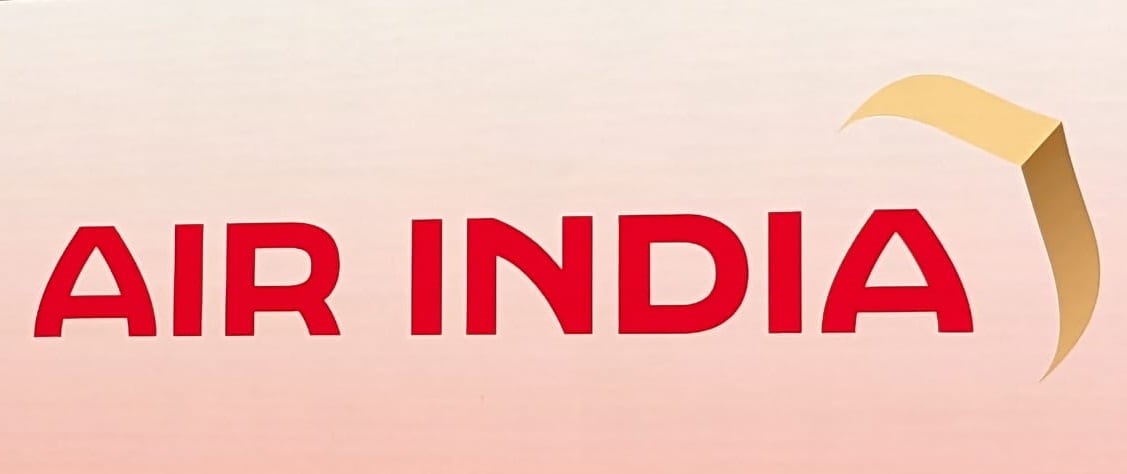
The logo sports a new font and it hosts a new logo unit that is being called a Vista. (Source: Vinay Khulbe/BQ Prime)
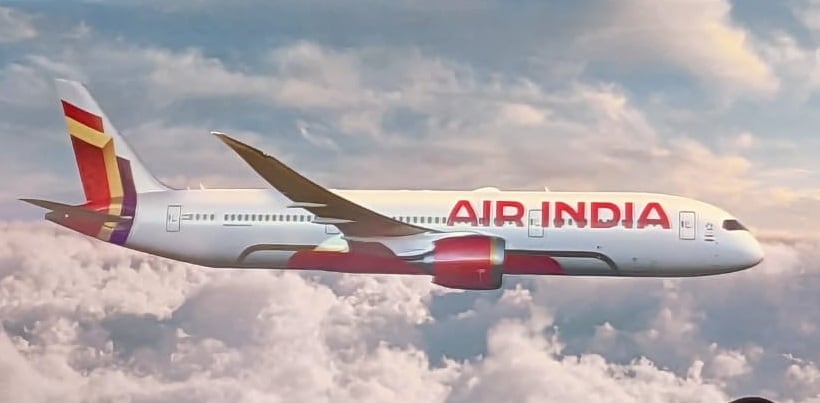
It all comes together on the aircraft, the first of which will be delivered in November 2023 by Airbus. A computer graphics render of the livery that was revealed at the event shows that Air India will now have a new tail, giving up on the Konark Chakra at the back and moving to a red, aubergine and gold ribbon at the tailfin, along with some fine instances of the Jharokha showing up as well. The main helm of the aircraft will just have Air India in all caps across the body while also losing Air India in the Devanagari script on one side of the aircraft.
At the bottom of the aircraft, though, is where it turns too busy and perhaps looks inspired by Emirates. Too much red at the bottom of the aircraft with a white logo painted under it and all of it is housed under a gold casing.
The new-look Air India is a house divided on social media, arguably the first place people have an opinion on everything nowadays. Some called it a school project, others a wasted opportunity, and some even called the tail design a saree border. Some see the colour combinations reminding them of other airlines. But here is the thing about livery design, there is always shock value around it, and there are an equal number of people who love it and hate it almost all the time. And unless you are not trying to go too far away from your roots, most of the effective colour palettes would have been already used elsewhere.
Ultimately, this was a good place to start, although with obvious misses, and it will hopefully turn out great when it turns up on a real aircraft rather than just a computer screen. I'd call it a people pleaser, although it wants to please more people inside the airline than outside.
Holding On To The Past Even More Tightly With The Maharajah
“The rumours of the death of the Maharajah have been greatly exaggerated,” announced Campbell Wilson, as he attempted his version of Steve Jobs' one last thing in his address. In what came across as a dire attempt to hold on to the Maharajah, the airline will sport the mascot on the service ware aboard the airline and the china. However, one look, and the plate design displayed looked inspired by the golden rims of Kingfisher Airlines' First china but on Jet Airways' Premiere crockery.
Ultimately, the Maharajah really did not have to be around and should have been given a respected farewell rather than be held on too tight, just like the colours of Vistara. The airline should have the conviction to put things to bed, but instead, we got an array of iconography inspired by the past, reworked for the future.
What was missing from the night were Air India's frontline staff, the people who deliver the brand promise day in and day out, at the airport or on board a plane. Other airlines bring them to such events, and they eventually turn up in pictures flanking the top brass or representing the brand with the managers taking the backseat. Here, it wasn't to be the case.
Endgame
In the long run, liveries don't sell tickets. People choose an airline basis the price, customer focus, network and product, and the brand marks are a reflection of the promise of quality of an airline. So, if Air India is really determined to showcase a change and become the crown jewel of India it once was, these are the areas to focus on and get right. That journey has just begun, and the only thing that matters there, are the details and customer obsession.
Ajay Awtaney writes about aviation and passenger experience at LiveFromALounge.com, and Tweets at @LiveFromALounge.
The views expressed here are those of the author and do not necessarily represent the views of BQ Prime or its editorial team.
Essential Business Intelligence, Continuous LIVE TV, Sharp Market Insights, Practical Personal Finance Advice and Latest Stories — On NDTV Profit.