“I have some thoughts I intend to share with Prime Minister Modi,” Michael Porter said to me as our brief, too brief, 15 minute interaction came to an end. On a whirlwind visit to India, one after eight years, Porter was appreciative of the many changes he noticed.
“I am very impressed by the direction India as a country is moving in,” he said, referring to India's work on “core, economic competitiveness issues”.
That's an important endorsement from a man who wrote THE book on competitive strategy, many of them infact.
Competitive Strategy , 1980
Competitive Advantage, 1985
The Competitive Advantage of Nations, 1990
On Competition, 1998
But India was the last question on my list. Read below for the others or watch the full interview video at the end.
So much has changed in business,since you set down the first principles of competitive strategy. Do you believe they still hold firm?
Well,my work has focused on underlying fundamental drivers, say industry structureor how to think about better positioning. But of course, the opportunitiesand the technology are constantly changing and what I find is the samefundamental framework applies. You still must have a competitive advantage.
I remember when the internet came along everyone said “the internet just changes everything”. And all the traditional ideas about strategy and competition don't apply anymore. And there were all these internet companies that were growing and having big market valuations and so forth.
Well, it turned out that most of those companies failed. Actually they had to live by old rules – you have to make a profit, you have to be able to sustain your profit, you have to have some sustainable advantage. The competitive structure of your industry matters. What I've always tried to do is work at the level of the underlying principle, not describe the current phenomena. So much of the writing in business is about what's going on now. And I think managers are hungry for underlying fundamentals. So with any luck I won't have to retract any of my earlier work, it will stand the test of time.
How do you assess the impact of technology and tremendous amounts of data on businesses and their managers? Has it made identifying ‘competitive strategy' more challenging?
I don't know ifwe can evaluate whether it is more challenging or less challenging. I think there has always been a lot of change in society and in anyera we are always saying how fast things change for our time than in previous time, and this has gone on probably for centuries. But if you look at the actual data on theamount of innovation and the amount of knowledge created, it is exponentiallygrowing now and part of that is because we are able to store, capture andtransmit it better.
It's not changing the need for competitive advantage. It's not changing the need to think about your industry. But it is changing the tools, the data and the visibility that we have. So, I think the defining characteristic of today's technological development is, as you said, “DATA”.
We now have this ability in data in real time, on things we have never known before. I think that means we have to raise our bar in terms of the rigour and discipline with which we make a lot of traditional strategic choices, such as customer segmentation and meeting customer needs.
I think every company is going to have to learn some new skills. This is early stage. We are just learning how to do this and we are going to run hospitals differently, we are going to run restaurants differently, we are going to run auto companies differently...
I think this is still early stage, this revolution of smart, connected products.
Is there anything like too much data? And I have a follow up question to that – when you look at the business landscape today which companies stand out to you? Are they the Facebooks and the Googles of the world or the Teslas of the world?
If you analyse data in historical ways there is too much of it. We are just drowning in it. And so, what we are learning to do is, we are buildinga whole new set of ways of storing data and data analytics, to make sense of the data. And that is one of the cutting-edge skill sets which everycompany needs more of.
In terms of who is really innovating – I think the social media companies, the companies that became the vanguard of this era or at least part of the era, like Facebook, I think those companies are what I'd call more ‘platform companies'. They are providing these cloud platforms and they are combining these new aggregations of data and ways of communicating, but I think in a way they are not innovating any more. They are just getting bigger and bigger and are playing a bigger role in marketing and advertising.
It'll be interesting to see how truly sustainable some of the social media companies are. There is only so much time in the day and there's only so many sites you can go on and there's only so many friends' posts you can look at. And so eventually I think we are going to sort out and winnow down the social media phenomena. It's important, it's here to stay, but it is not going to define everything.
I think we have created every kind of social media you can think of, I am not sure we need more. We went from Facebook to Snapchat to Twitter, to this to that! And we are slicing and dicing and the incremental improvements are getting more incremental.
I think the real innovation is how the companies are taking on board this phenomenal data and analystical capability to really transform how we do business.
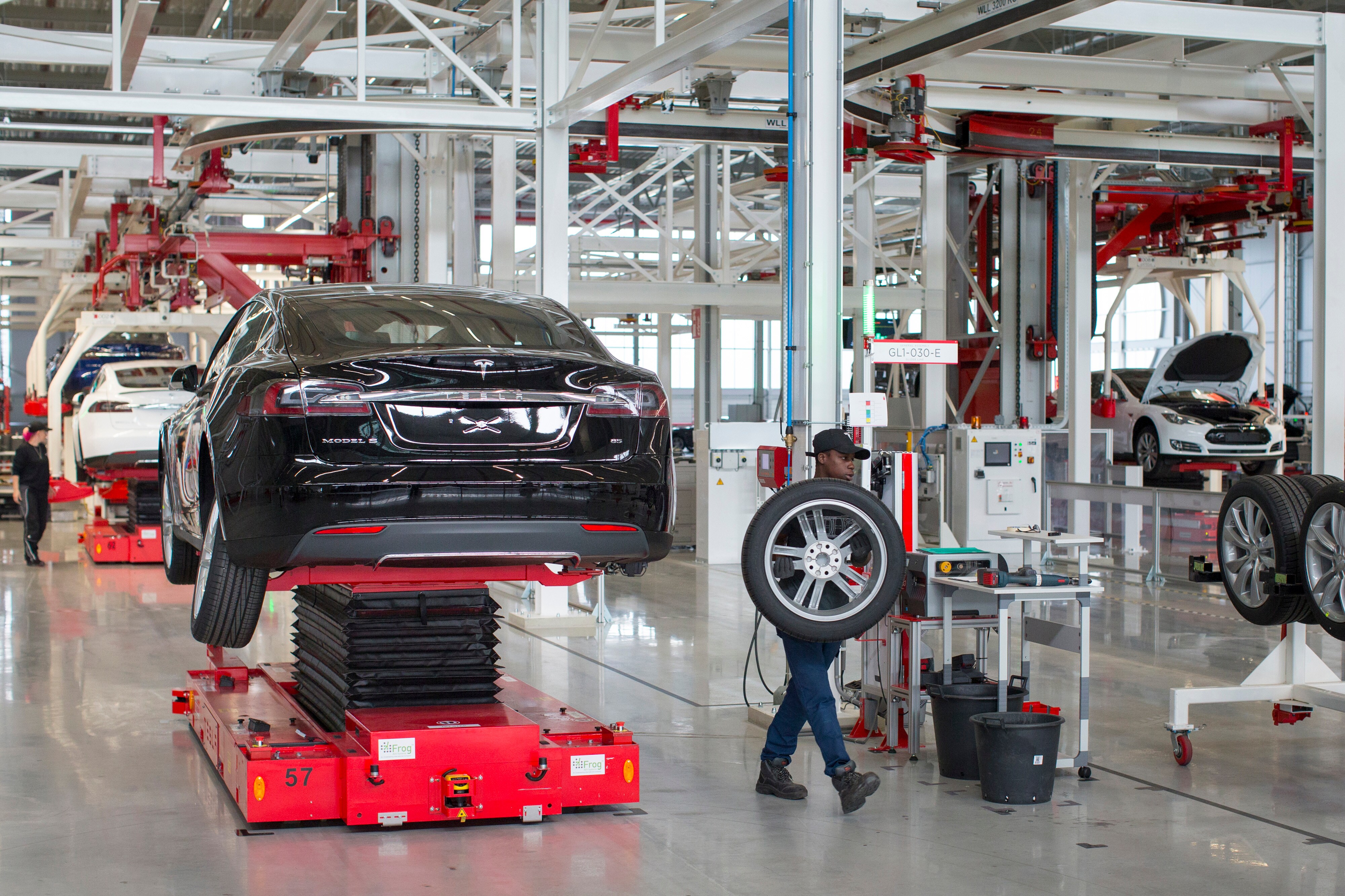
You mentioned Tesla. I think Tesla is quite remarkable because they have been able to change almost everything about being a car company. Part of it was easier because they were all electric, which simplified the job a little bit. But they changed the whole role with dealerships and in terms of the break-and-fix model of service, a lot of repairs that they do are online and you don't even know that it's happening and they can keep improving their car even after it's been produced.
And so, there's been a lot of innovation in Tesla. I think they realised that the battery was a critical constraint. And so rather than just say “oh I can only do what I can do with the established battery producers” they said “okay that's so strategic to us we got to get into that business”.
I think I would classify them as one of the true innovators.
Which other companies feature on Michael Porter's list of companies to admire?
Well, there's a lot of greatcompanies. Right now some of the companies that I admire the most are companieslike Tesla that are figuring out how to really take advantage and bring to lifethe new digital ways of operating. So, I put them on the list.
We have a new list in Fortune, of companies changing the world. And those are companies that have embodied the ‘shared value' framework in terms of seeing that the social impact is actually the greatest current driver of growth in innovation and competitive advantage.
One fascinating company I've got to know quite well is Walmart (Wal-Mart Stores Inc.). Here is a company that was most criticised of any American company, by everybody...
For what it did to communities...
And the idea that they were justnot benefiting their associates and were just not benefiting theircommunities and they were making a lot of money and growing. But Walmart, during the last six to seven years, has completely transformed itself. And now it arguably isone of the biggest ‘shared value' companies in the world. Of course, it is such a big companythat almost nobody is as big as they are. But in terms of theirproducts, in terms of shifting their philosophy towards how they work withtheir employees, how they deal with communities, they're in atransformation. Wal-Mart is vibrant and growing and innovative again.
.jpg "Customers browse a Wal-Mart Stores Inc.'s Sam's Club store in Zhuhai, China. (Photographer: Qilai Shen/Bloomberg)")
And as I like to say, Walmart felt like a dinosaur. But now actually they may become the next new fierce species. I think that Amazon Inc. and Walmart are now in a very interesting and important competition. And you would think that Amazon is just going to wipe out everything, but I don't think so. I think that the merging of physical and digital retailing, which is now possible, is actually the superior model going forward. And so, you may have noticed that Amazon is now talking about opening stores and Wal-Mart has so many more distribution points than Amazon, in terms of places to ship from.
So, I would just highlight Tesla and Walmart, who seemed to be completely opposite in every way, as companies that I very much admire, that are embarking and taking advantage on the latest thinking, the latest technology.
The two defining political figures of our time – one is President Donald Trump. What do you make of his Presidency so far and his views on trade, taxes etc..
And the other – what do you think of Prime Minister Modi?
Well, let's start with PresidentTrump. I think President Trump's election was a sign of the deep dissatisfaction that Americans have with their political system. We've been ingridlock for decades. We can't fix our schools, we can't deal with environmentalissues. We're stalled on gun violence. Our health care system isn'tgetting any better. We have lots of issues in America. We probably havemore threats to the American dream than we've ever had. And yet our political system was just failing to move the ball forward. And I think President Trump'selection was a reflection that the trust in our government is at an all-timelow. And the candidates that were available to choose from were not exciting thepublic. They just seemed like the same old politicians that hadn't gotten usanywhere for so many years. So, I think President Trump was an effort on thepart of some citizens to kind of clean house.
Unfortunately, I think nothing really is going to change. Present Trump was supposed to be this great guy that was going to change everything. Well look at what's happened, he's getting nothing done. He's being stalled, blocked by the system and frankly he's not equipped. We know beyond a shadow of a doubt that open trade is good for an economy. President Trump has never done public policy before, he doesn't know how to think about trade, he doesn't know how to think about almost any issue. He has some good people around him. But we have here a leader who first and foremost is very divisive. In a society where we're already divided, this is making us more divided. And then, rather than have a measured thoughtful bipartisan discussion about issues and about what we should do as a society, instead of bringing people together, Americans together, around finding that common ground which is what we desperately need, I think President Trump has simply not been able to do that. He's tended to make Americans even more divided and separate than we were before.
I'm hopeful that as he learns how to do this job, which is a complicated job. As he learns that his job is to bring people together. As he learns that he must be very careful about how he talks and what he says. Hopefully he'll learn. He's a bright man, he can be a very good leader but he has got a lot to learn. And I think what concerns me is that instead of being the healing force that brings our society together, that brings the Republicans and the Democrats and the various constituencies together around finding the common ground, we have in some ways even more division in our society.
Prime Minister Modi, I haven't met. I hope to meet him soon. I am very impressed by the direction the country is moving in. The data is very clear. Growth is much higher, GDP-per-capita growth is much higher. A lot of metrics are getting better for India. But India is a really, really complicated economy.
It's a really challenging society and economy in which to build competitiveness. I think the government is determined to take on everything and anything that needs to be fixed. I commend them for that. But it's going to be a multi-year strategy effort and I have some thoughts about that I'll share with the prime minister.
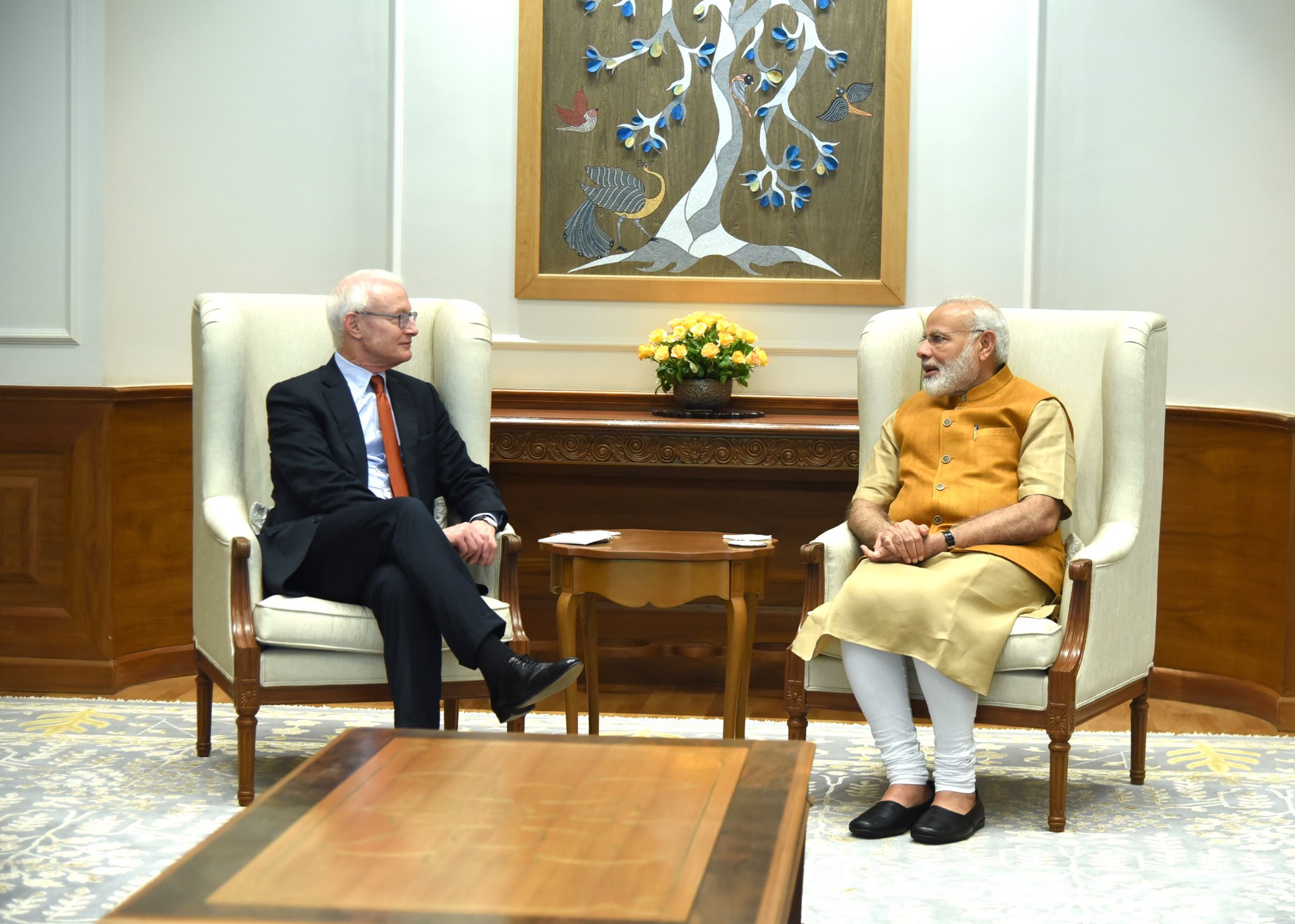
But in general I think, India is on a much better path today than it has ever been before. I know every president is controversial about something. But I think on the core economic and competitiveness issues that I know well I would be very strongly supportive of the direction.
Essential Business Intelligence, Sharp Market Insights, Practical Personal Finance Advice, Daily Fuel, Gold and Silver Prices and Latest Stories — On NDTV Profit.