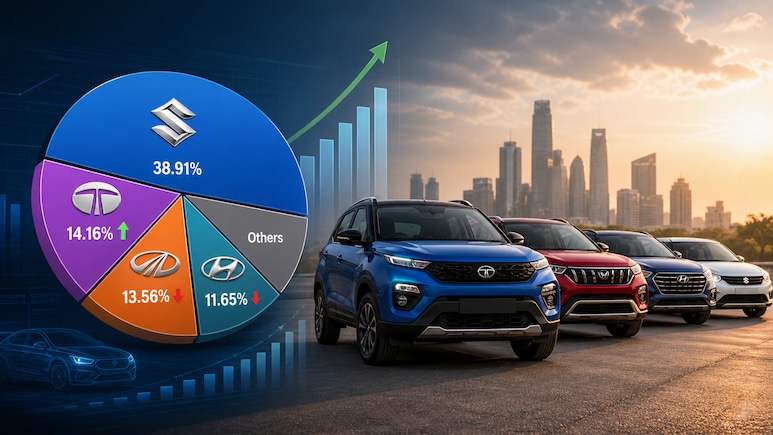
- Maruti Suzuki led April 2026 with a 38.91% passenger vehicle market share
- Tata Motors grew its passenger vehicle share to 14.16% with 57,688 units sold
- Mahindra’s share fell slightly to 13.56%, Hyundai dropped to 11.65% in April 2026
India's passenger vehicle market may have notched its best-ever April, but the more telling story lies beneath the headline number — in the shifting weights of the market share table. Maruti Suzuki retained its grip on the segment, selling 1,58,509 units in April 2026 for a 38.91% share, marginally ahead of the 38.83% it held in April 2025.
Tata Motors emerged as the month's quiet outperformer, growing its passenger vehicle share from 12.43% to 14.16%, backed by retail volumes of 57,688 units. That near two-percentage-point gain, achieved against a broader market that itself expanded 12.21% year-on-year, signals sustained momentum for the homegrown automaker. Mahindra and Mahindra saw its share ease slightly from 14.21% to 13.56%, even as it posted healthy absolute volume growth. Hyundai, too, slipped marginally from 12.45% to 11.65%.
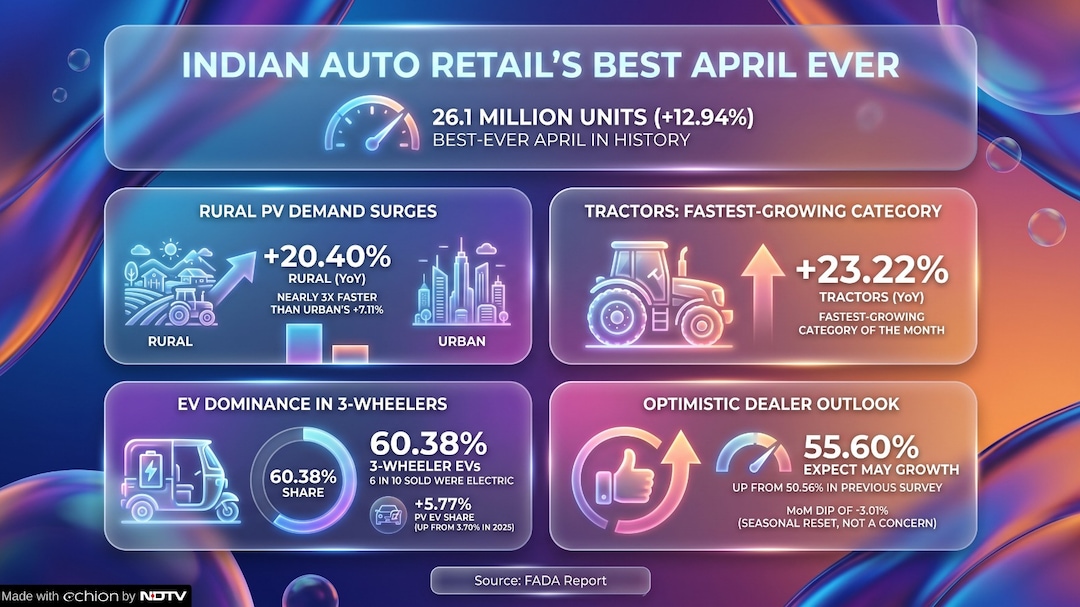
FADA Vice President Sai Giridhar attributed the segment's strength to a confluence of factors, noting that "improved affordability post-GST 2.0, the Reserve Bank of India's supportive rate stance and a healthy marriage-season pipeline" drove retail momentum. He did, however, flag that PV inventory had nudged up to 28–30 days, urging OEMs to maintain "disciplined dispatches" ahead of the seasonally softer May-June window.
Also Read | Layoffs Are Rising In Tech, But These Skills Are Helping People Unlock Better Pay
Hero MotoCorp Leads But Loses Share as Honda, TVS Close the Gap
In the two-wheeler segment, Hero MotoCorp retained pole position with 5,52,145 units and a 28.81% share — yet the number that stands out is what it gave up. A year ago, Hero commanded 30.23% of the market.
Honda Motorcycle and Scooter India posted 4,72,289 units at 24.65%, up from 24.05%, whilst TVS Motor Company strengthened its position from 18.33% to 19.25%. The gap between the leader and its two closest rivals is narrowing — steadily, if not spectacularly. Giridhar pointed to "improved rural liquidity following a healthy rabi season" and the extended marriage season as the principal demand tailwinds for the category, even as selective supply constraints in commuter and premium variants "slightly tempered the otherwise strong momentum."
ALSO READ: Auto Sector Faces Rs 25,000 Crore Hit For FY26 On End-of-life Vehicle Rule
Essential Business Intelligence, Sharp Market Insights, Practical Personal Finance Advice, Daily Fuel, Gold and Silver Prices and Latest Stories — On NDTV Profit.